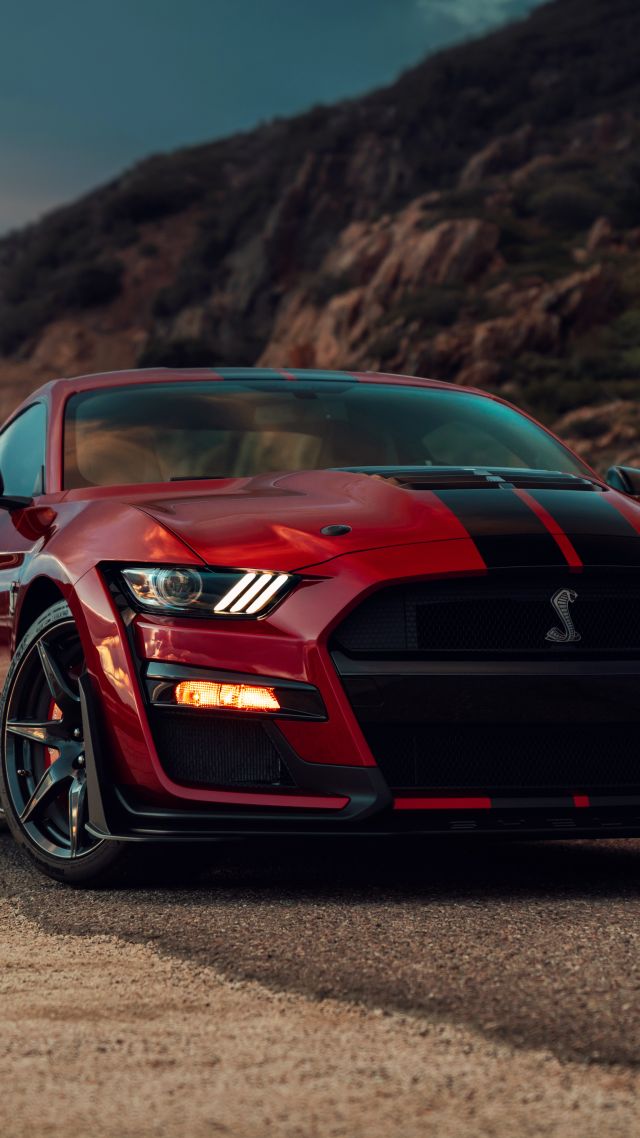

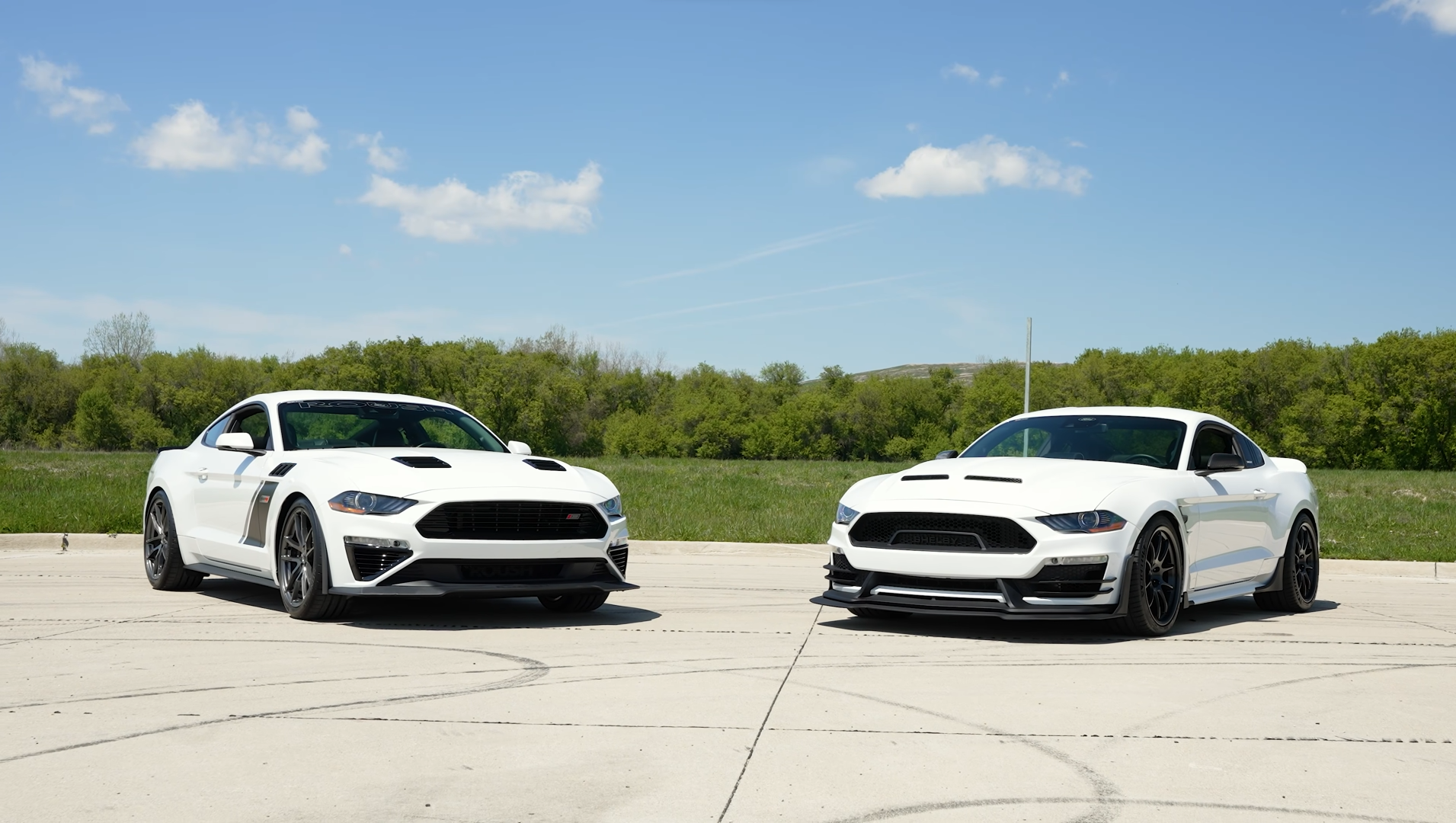
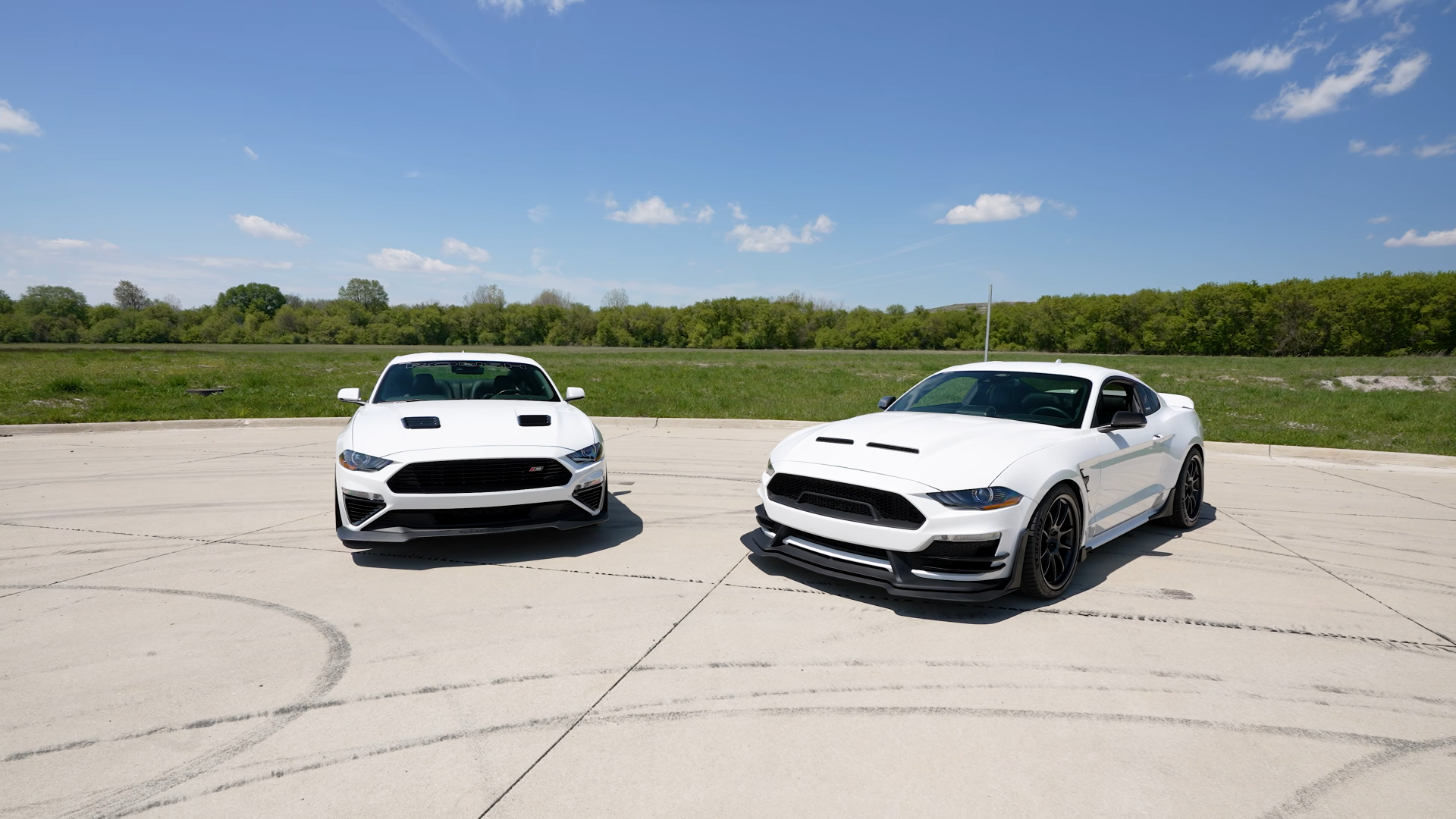
When two of the most heavily modified modern Mustangs meet on the drag strip, the comparison quickly becomes more than a question of horsepower. The Shelby Super Snake and Roush Stage 3 both begin life as Mustang GTs before being transformed into high-output, supercharged street machines, but each takes a distinctly different approach to extracting more performance from Ford’s Coyote-powered platform.
Both cars retain a six-speed manual transmission, giving the driver direct control over their supercharged V8s. Beyond that common foundation, however, Shelby American and Roush Performance have developed noticeably different personalities. The Roush Stage 3 emphasizes refinement and street usability, while the Super Snake pushes harder toward outright aggression.
Roush Stage 3: A Refined 750-HP Street Weapon
The Roush Stage 3 immediately distinguishes itself with an extensive aerodynamic package that adds visual drama without overwhelming the Mustang’s original proportions. Functional vents are integrated into the bodywork, while Roush-specific rocker moldings, graphics, wheels and rear spoiler give the car a comprehensive appearance upgrade.
The braking hardware is equally serious. Brembo brakes are fitted at both ends, providing the stopping power necessary for a Mustang producing 750 hp. At the rear, the Roush treatment continues with a diffuser and quad exhaust outlets, with two tips positioned on each side.
Under the hood sits the centerpiece of the Stage 3 package: a large Roush supercharger mounted on Ford’s 5.0-liter Coyote V8. Combined with the accompanying cold-air intake and supporting hardware, the system raises output to 750 hp.
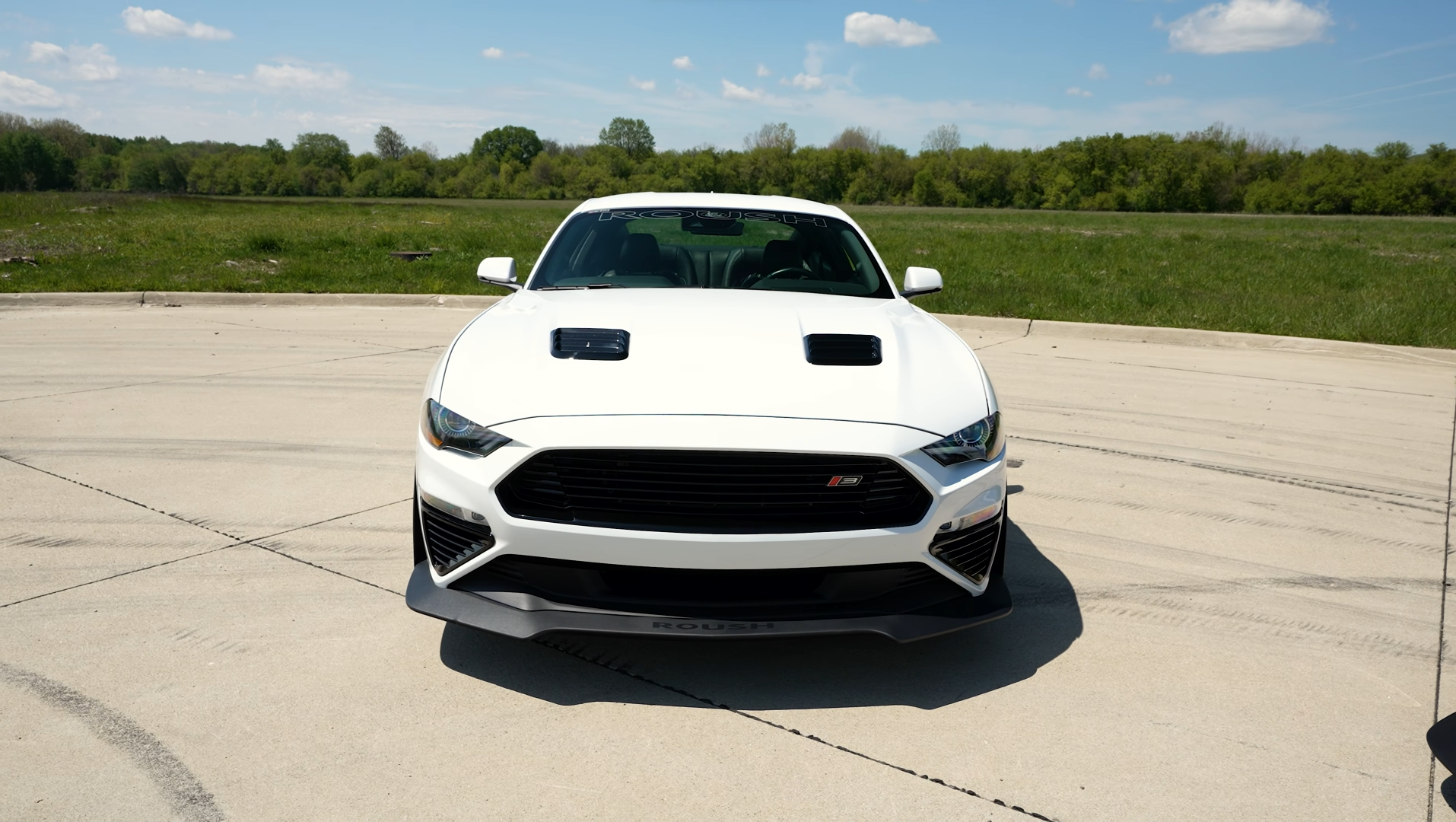
Roush’s attention to detail extends into the engine bay, where branded components and build-specific identification reinforce the car’s character as a professionally developed performance package rather than a collection of aftermarket parts.
Inside, the Stage 3 receives Roush-branded door sills, floor mats and custom seat coverings. The six-speed manual transmission is paired with a short-throw shifter, while the Mustang’s drive-mode controls allow the driver to alter the car’s behavior for different conditions.
The result is a Mustang that looks substantially more aggressive than a standard GT while retaining a relatively OEM-like level of integration. It is still a street car first, but one equipped with the hardware to become a serious performance machine when the road opens up.
Shelby Super Snake: More Power, More Aggression
The Shelby Super Snake takes the same basic formula and turns up virtually every element.
The front end is considerably more aggressive, incorporating Shelby branding and a dual-splitter arrangement that gives the Mustang a lower, wider visual stance. A Shelby hood, functional body vents, carbon-fiber mirror components and distinctive rocker treatment continue the transformation down the sides.
Shelby also equips the car with Brembo-developed braking hardware, including large rotors and Shelby-branded calipers. The rear brakes are complemented by a separate parking-brake caliper, while the rear receives a prominent spoiler and diffuser combination.
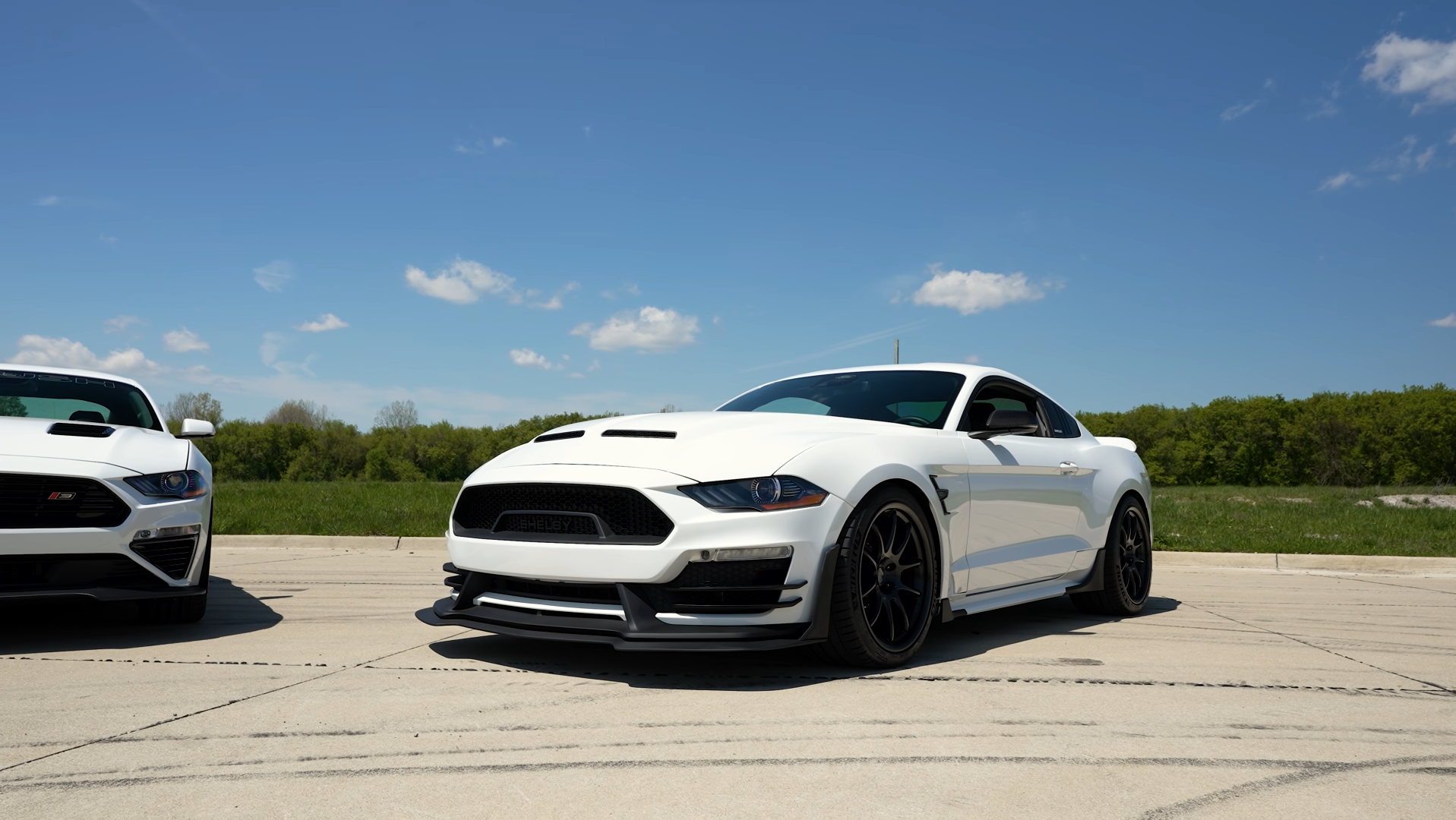
The exhaust system finishes the visual transformation, with large Shelby-branded tips integrated into the rear valance.
But the most important difference between these two Mustangs is found beneath the hood.
Instead of the Roush supercharger, the Super Snake uses a polished Whipple supercharger system. With upgraded cooling hardware and a Shelby-specific cold-air intake, the supercharged 5.0-liter V8 produces 825 hp.
That represents a 75-hp advantage over the Roush Stage 3, and on a drag strip, that additional output becomes particularly significant.
Two Different Approaches to the Same Platform
The differences continue inside the cabin.
The Super Snake receives Shelby American door sills and custom Super Snake seats, along with carbon-fiber interior trim. Its most distinctive interior feature is the additional gauge pod mounted on top of the dashboard.
The gauges monitor boost, fuel pressure and oil temperature, giving the driver immediate access to information that becomes increasingly important when extracting substantial power from a supercharged Coyote.
The Super Snake also uses a short-throw six-speed shifter, with the shift action described as even shorter than the Roush setup. Both cars retain the Mustang’s familiar physical controls for traction management, steering settings, drive modes and other vehicle functions.
The result is a cabin that remains recognizably Mustang while adding the hardware and visual cues expected from a limited-production performance build.
Even the quarter-window treatment on the Shelby adds a nostalgic element, recalling styling cues from earlier generations of Mustang.
The Drag Race
On paper, the ingredients already point toward a clear performance difference.
The Roush Stage 3 brings 750 hp to the fight. The Shelby Super Snake counters with 825 hp, giving it a 75-hp advantage. Shelby also benefits from a more aggressive tire setup, while both cars use manual transmissions that place a significant portion of the outcome in the driver’s hands.
When the two Mustangs finally line up, the Super Snake delivers the expected result.
Its combination of additional supercharged output and greater tire capacity allows it to pull ahead of the Roush Stage 3 in the drag race. The result illustrates an important distinction between the two builds: the Roush is engineered as a highly capable, refined street-oriented Mustang, while the Shelby is configured with a greater emphasis on outright performance.
That does not make the Roush an afterthought. A 750-hp manual Mustang remains an exceptionally serious street car, and its more restrained aerodynamic treatment and refined presentation give it a character distinctly different from the Super Snake.
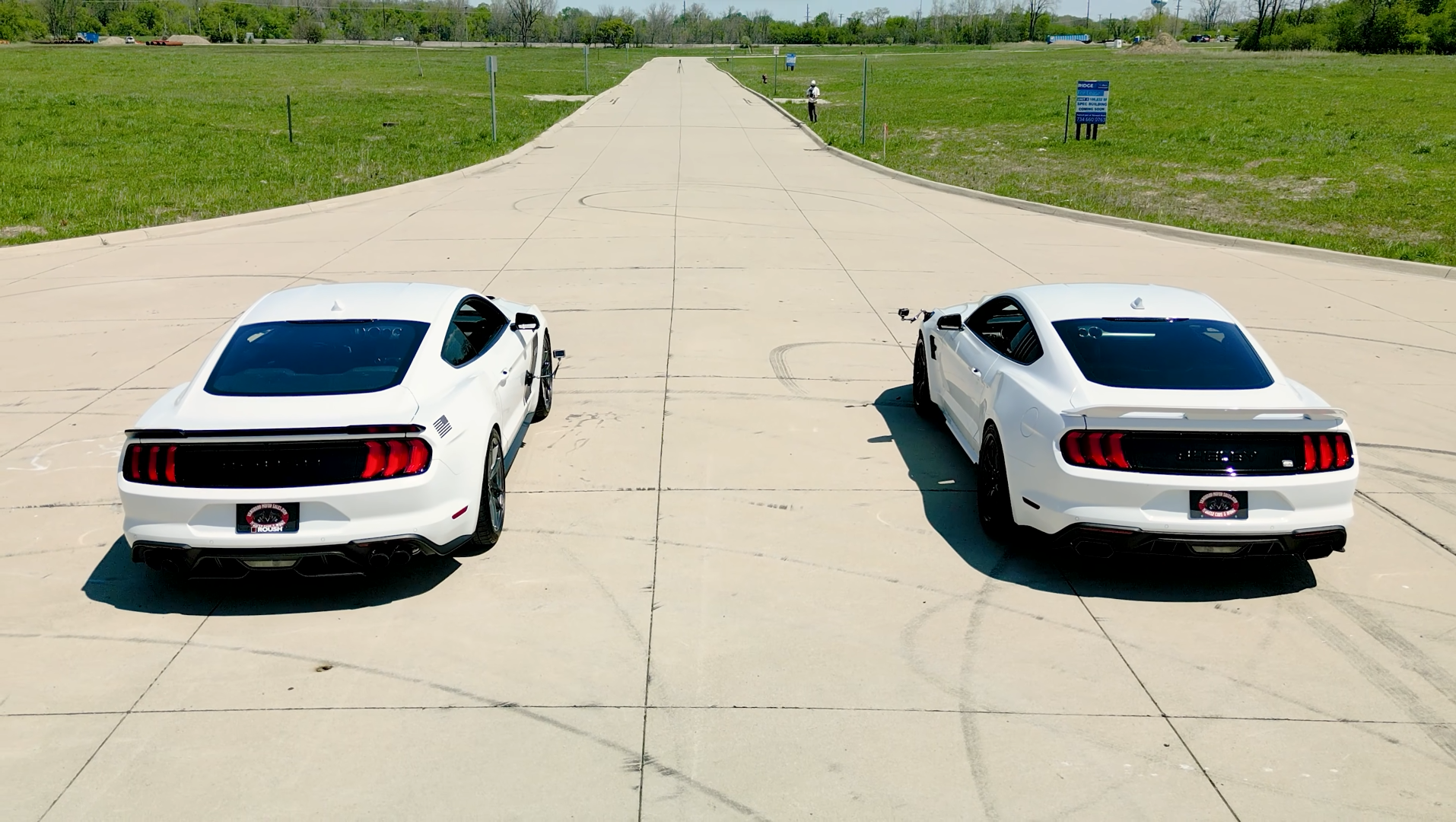
The Shelby, however, has the numbers on its side.
With 825 hp from its Whipple-supercharged Coyote, wider tires, aggressive aerodynamics and upgraded braking and cooling systems, the Super Snake brings more of virtually everything that matters when the objective is to cover the quarter-mile as quickly as possible.
Ultimately, these two cars demonstrate just how far the Mustang GT platform can be taken by two of America’s most recognizable performance specialists. Roush transforms the GT into a 750-hp street weapon with a polished, integrated character. Shelby American goes further toward the extreme, producing an 825-hp Super Snake with the hardware and attitude to match.
On the street, the differences come down to philosophy. On the drag strip, however, the stopwatch settles the argument: the extra power and tire of the Shelby Super Snake give it the decisive advantage
Source: Vanguard Media