

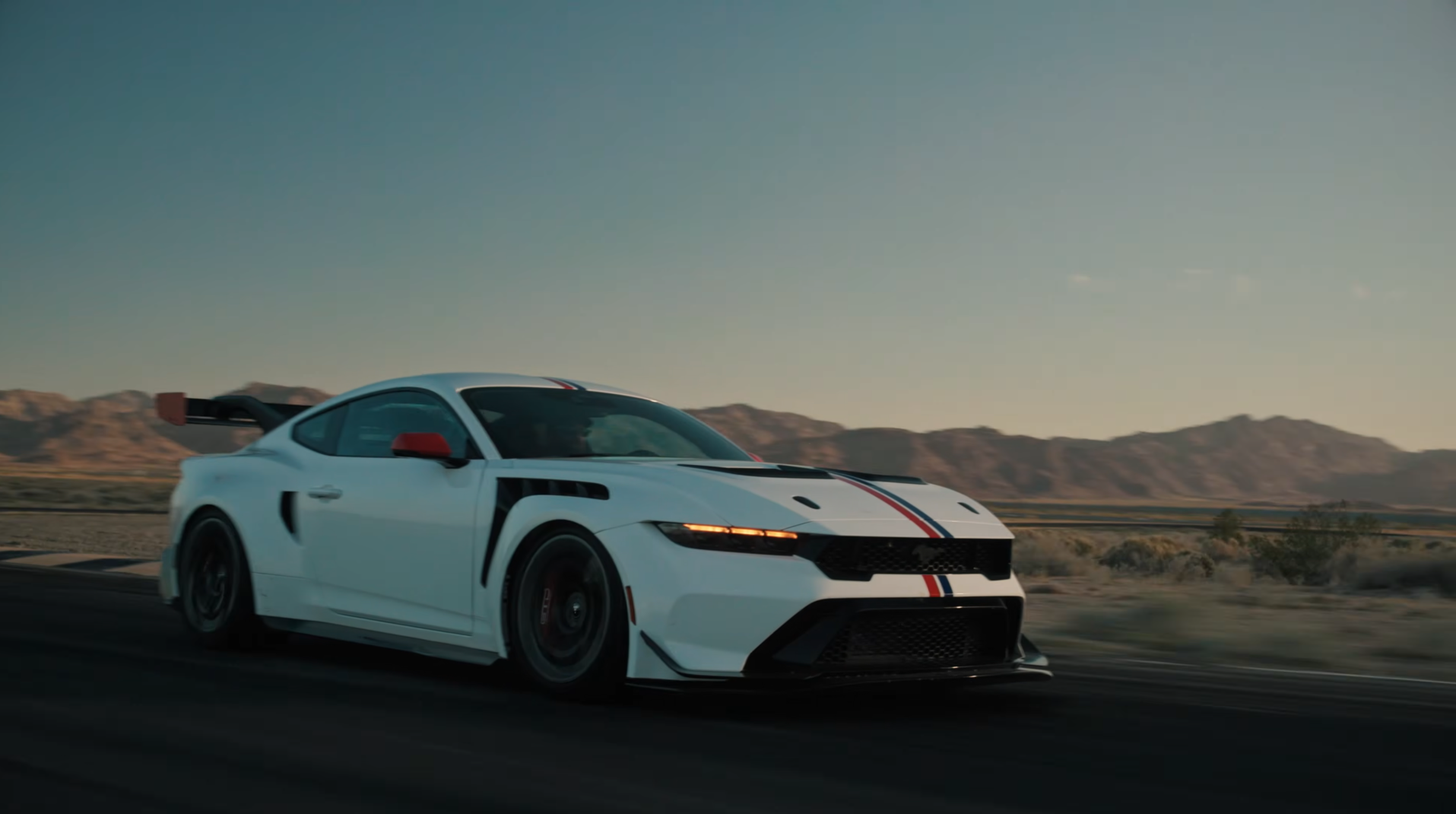
When the numbers are viewed on paper, the Ford Mustang GTD appears to be at a significant disadvantage. Tasked with competing against some of America’s most powerful performance machines on the fast and technical Chuckwalla Valley Raceway, Ford’s track-focused Mustang gives away more than 400 horsepower to rivals such as the Czinger 21C and Chevrolet Corvette ZR1X. Yet MotorTrend‘s latest circuit evaluation demonstrates that outright power tells only part of the story when lap times are the ultimate measure of performance.
Powered by a supercharged 5.2-liter V8 producing 815 horsepower and 664 lb-ft of torque, the Mustang GTD enters the comparison as the least powerful gasoline-powered contender. Even the Lucid Air Sapphire, a four-door electric performance sedan, eclipses the Ford with an astonishing 1,234 horsepower and 1,430 lb-ft of torque. Despite carrying a substantial curb weight of 4,411 pounds—nearly matching the Lucid—the GTD relies on advanced engineering rather than brute force to stay competitive.
Behind the wheel, professional racing driver Andy Pilgrim praised the Mustang’s track-focused character before heading onto the circuit. Having previously driven Ford’s Mustang GT4 race car and Shelby GT500 equipped with the Track Pack, Pilgrim anticipated that the GTD would elevate those strengths even further with its purpose-built hardware.
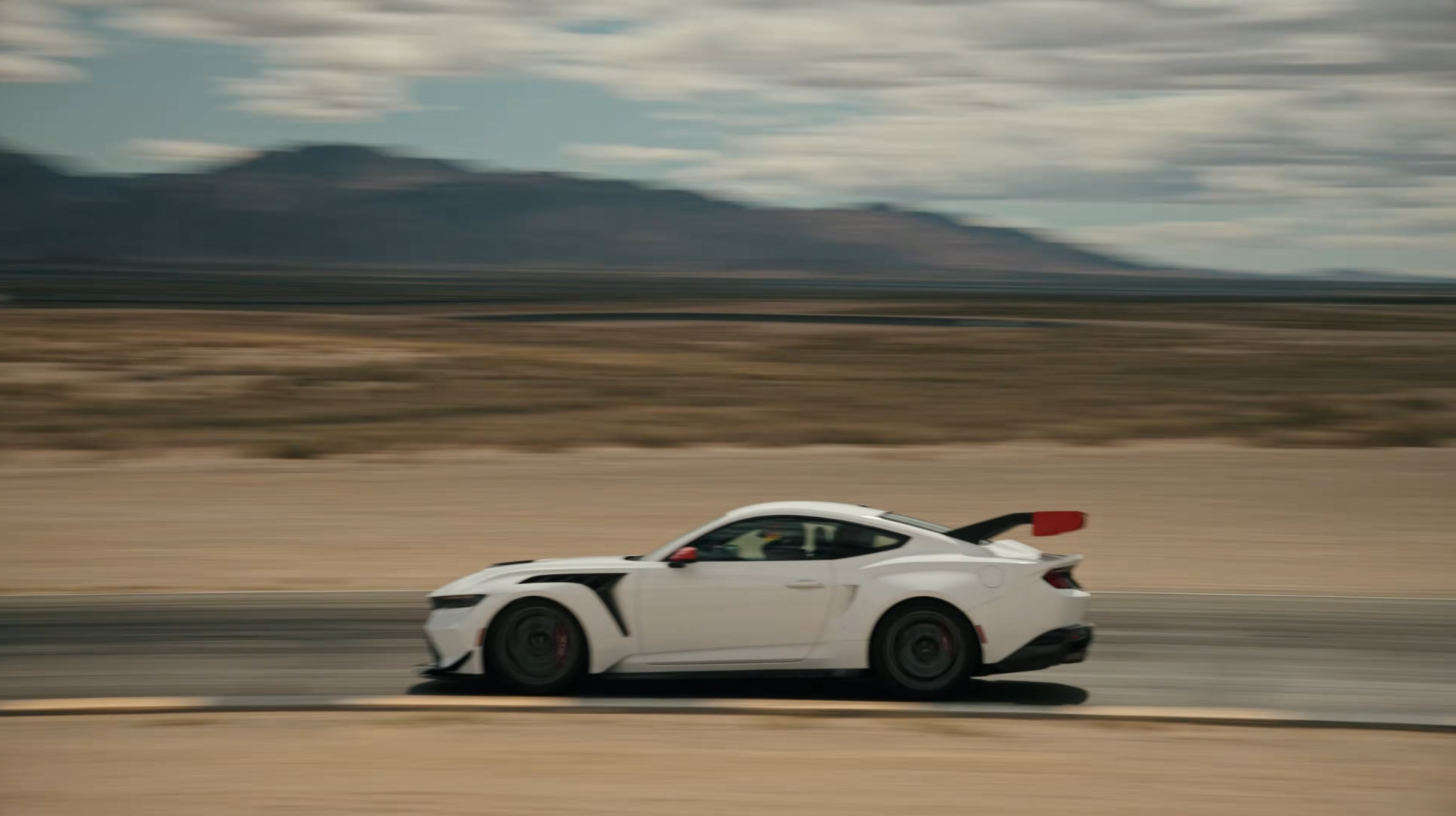
The GTD’s greatest assets quickly became apparent once the laps began. While its top speed of 131.6 mph on Chuckwalla’s front straight left it trailing the higher-powered competition by several miles per hour, the Ford consistently regained time in the braking zones and corners. Its carbon-ceramic braking system generated an impressive 1.57 g of deceleration, making it one of the strongest braking performers MotorTrend has tested.
Equally impressive was the Mustang’s cornering capability. Thanks to its sophisticated Multimatic active suspension, aggressive aerodynamic package, and exceptionally wide 325-section front tires, the GTD carried remarkable speed through turns. Its minimum cornering speeds came within two mph of the lightweight Czinger 21C while exceeding those of the Corvette ZR1X by more than two mph in certain sections. Lateral grip also proved highly competitive, reaching approximately 1.44 g—nearly matching the Corvette’s 1.5 g despite the Ford carrying roughly 300 additional pounds.
Ultimately, Chuckwalla’s layout, with its numerous acceleration zones and long straightaways, favored the higher-powered entries. The Mustang GTD finished just over two seconds behind the Corvette ZR1X, highlighting how its lack of straight-line speed prevented an even stronger showing.
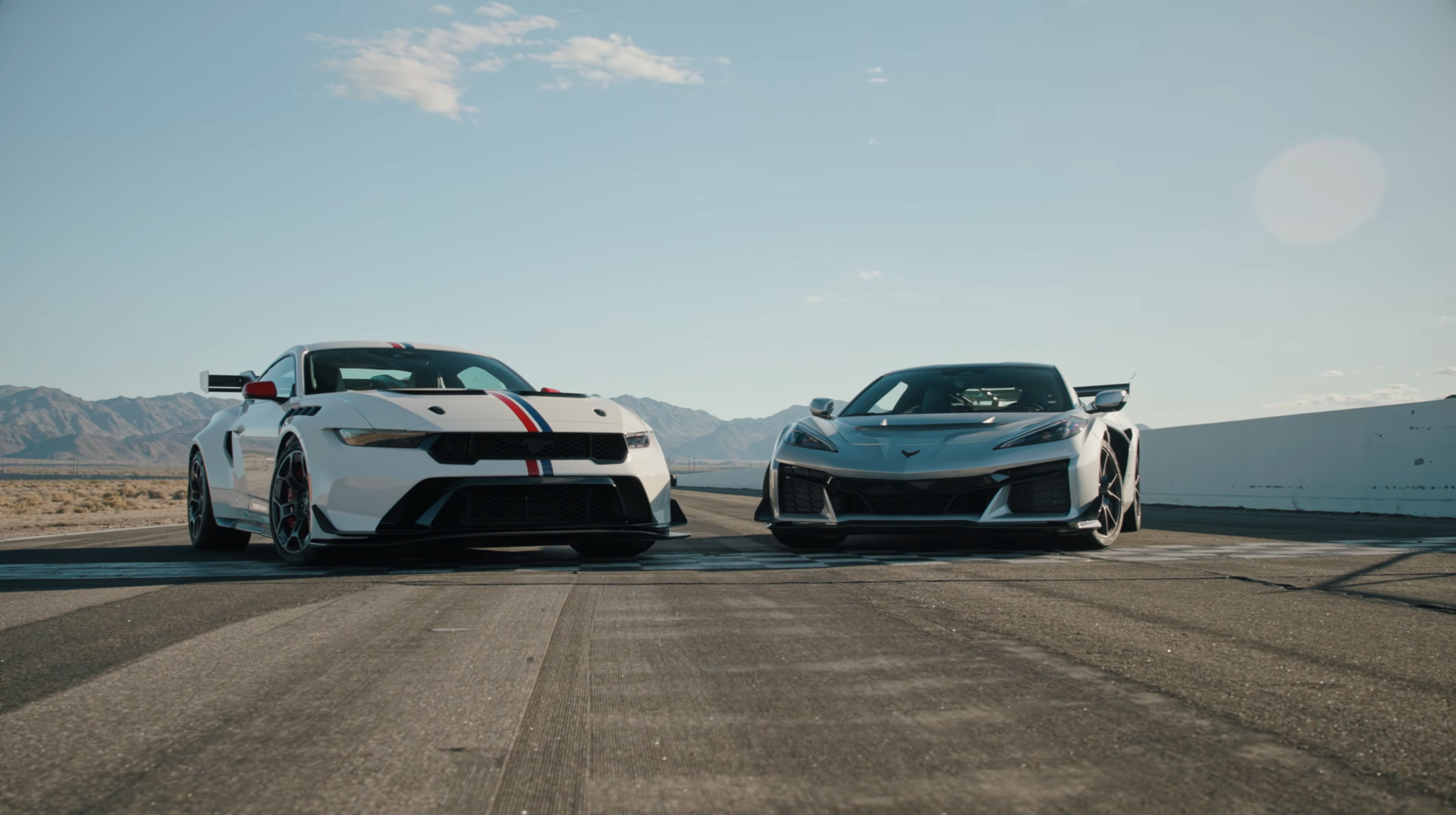
The test also arrives as Ford prepares to introduce the more aggressive Mustang GTD Competition, a model expected to exceed 900 horsepower. Although official specifications remain undisclosed, the announcement follows the new variant’s record-setting Nürburgring performance, where it reportedly lapped nine seconds quicker than Chevrolet’s benchmark effort.
MotorTrend’s evaluation reinforces a lesson long understood in motorsport: while horsepower dominates headlines, advanced suspension design, aerodynamic efficiency, braking performance, and mechanical grip often prove just as decisive when every fraction of a second counts on a race circuit.
Source: MotorTrend