

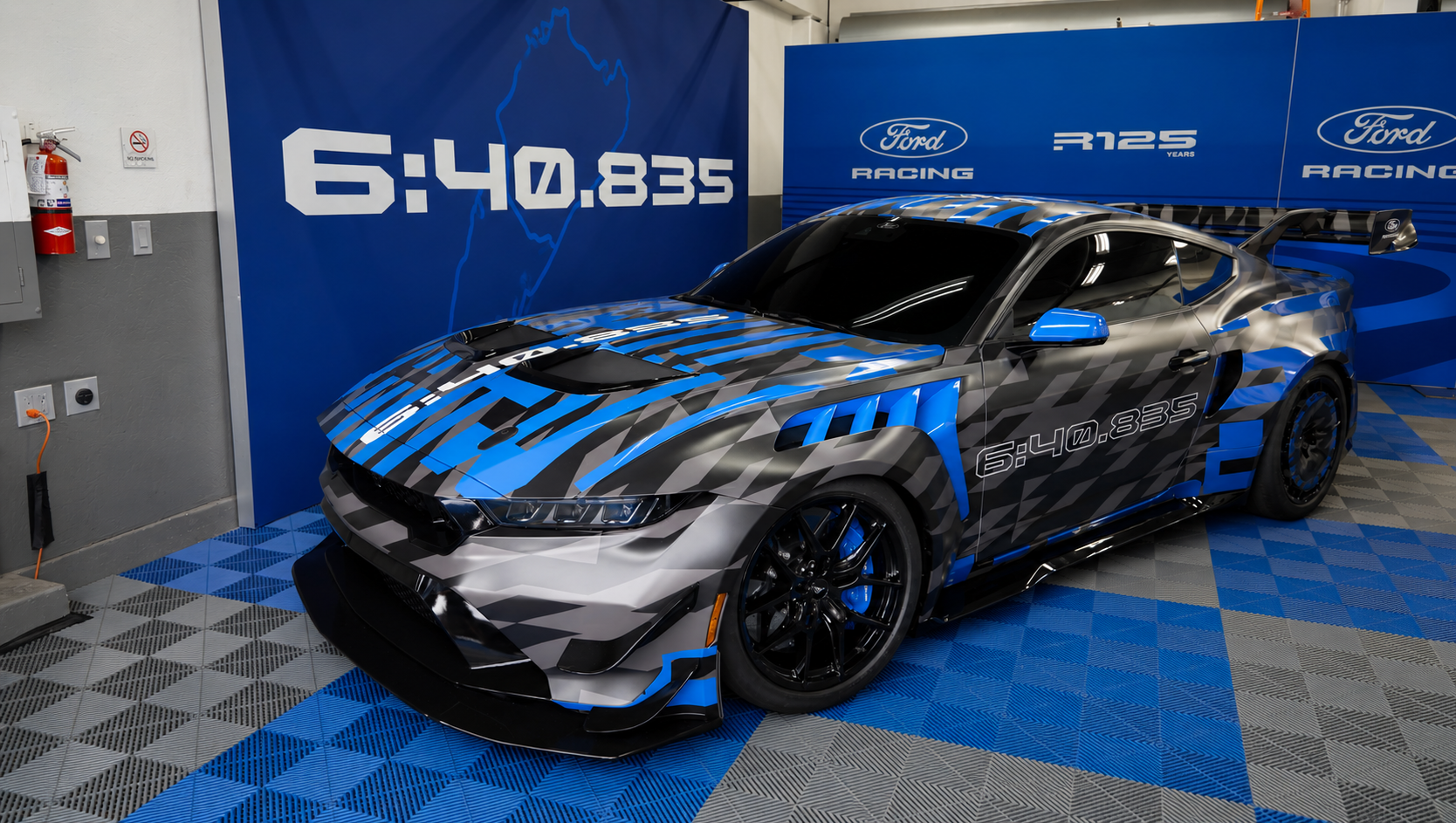
Ford has responded to the Chevrolet Corvette ZR1X’s Nürburgring challenge with an even more extreme version of its track-focused Mustang GTD. Dubbed the Mustang GTD Competition, the latest iteration combines increased power, additional aerodynamic load and significant weight-saving measures to reclaim the title of America’s fastest production car around the demanding German circuit.
The standard Mustang GTD recorded a 6:52 lap before the Corvette ZR1X went roughly three seconds faster. Ford’s answer was the GTD Competition, which returned to the Nürburgring with racing driver Dirk Müller and recorded an extraordinary 6:40.835. That result put the Mustang back at the top of the American production-car rankings and made it second only to the Mercedes-AMG One in the overall production-car hierarchy cited by Ford.
More Power, More Downforce, Less Weight
The Competition retains the GTD’s supercharged 5.2-liter V8 but receives aggressive engine calibration and supercharger revisions. Ford has indicated that output will exceed the standard car’s 815 hp, although the final figure remains under development.
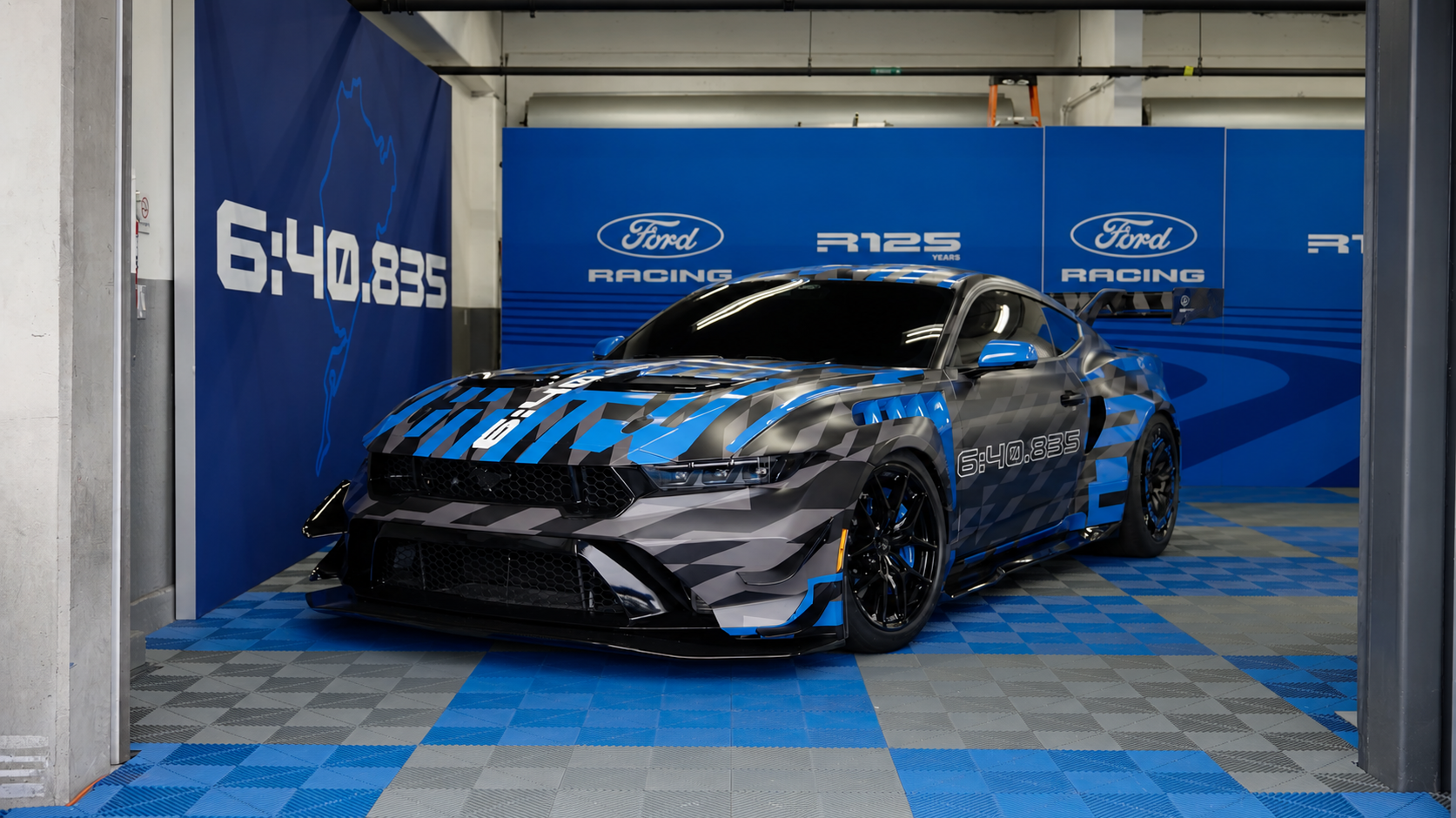
Aerodynamic development is equally important. New front dive planes increase aerodynamic load, while carbon-fiber rear-wheel aero discs improve airflow around the rear of the vehicle. The massive rear wing also receives revised end plates and inlet geometry. Together, these changes are intended to generate substantially more downforce without imposing a corresponding increase in drag.
Ford has also reduced mass from the standard GTD’s approximately 1,970-kg curb weight. Magnesium wheels and lighter dampers contribute to the weight reduction, while the production Competition model is expected to feature carbon-fiber bucket seats. These replace the more comfort-oriented seats criticized for providing insufficient lateral support during aggressive driving.
Racing as an Engineering Laboratory
Ford CEO Jim Farley described the Competition as a direct response to the Nürburgring rivalry rather than a conventional marketing exercise. The company accelerated development after the Corvette’s lap-time advantage became apparent, using competition to push its engineers toward tangible improvements.
Farley also emphasized Ford Racing’s broader philosophy: motorsport should directly influence production vehicles. The lessons learned from racing programs are intended to improve everything from high-performance Mustangs and Raptors to mainstream road cars.
That philosophy could shape Ford’s future performance strategy. Farley pointed toward increased emphasis on rallying, off-road capability and unconventional performance vehicles, arguing that future Ford supercars may avoid traditional horsepower wars in favor of unexpected combinations of on-road and off-road engineering.
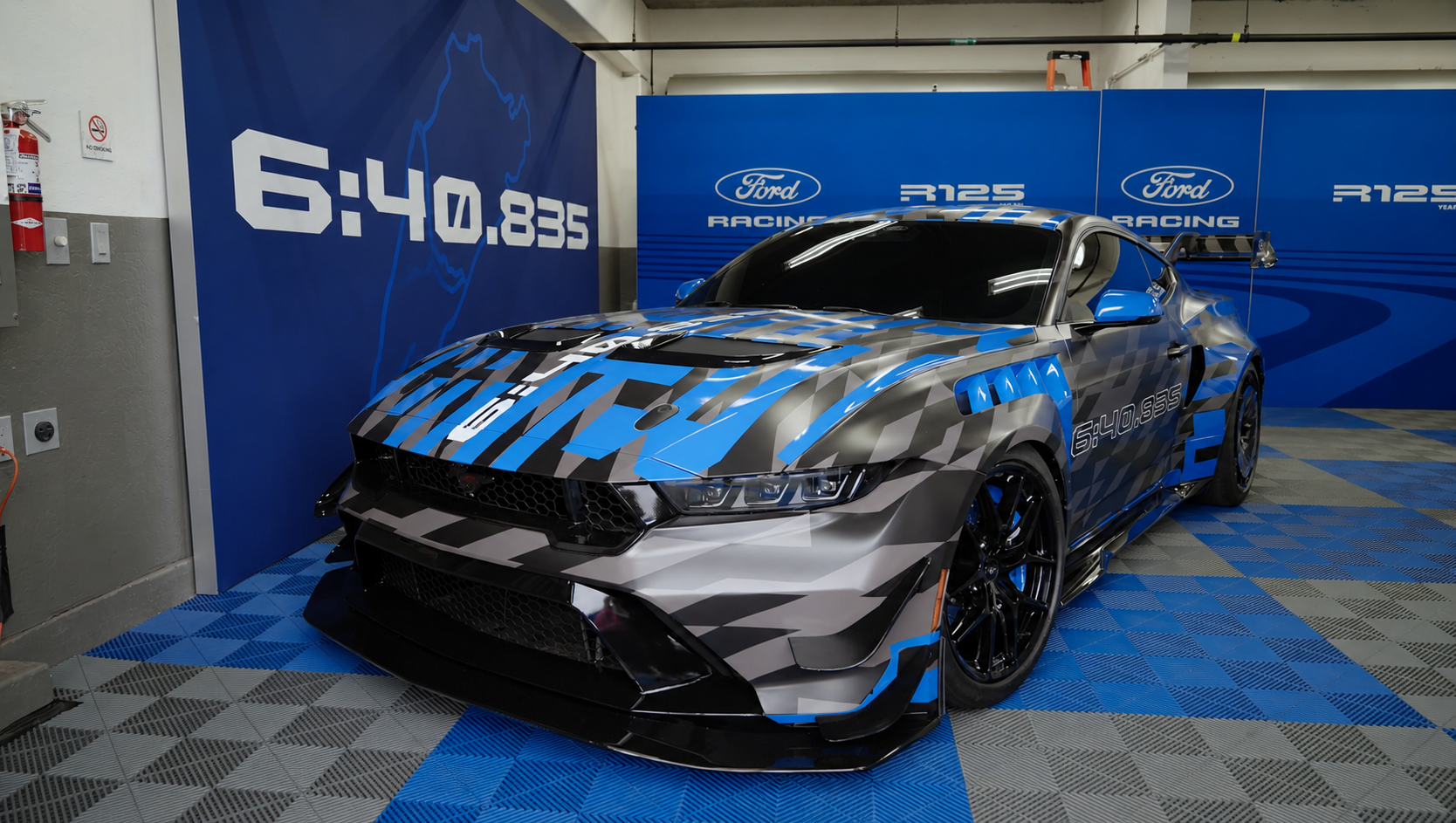
The Mustang GTD Competition therefore represents more than a faster Mustang. It is a demonstration of Ford’s increasingly aggressive approach to performance engineering—and a clear signal that the American horsepower rivalry is far from over.
Source: Top Gear