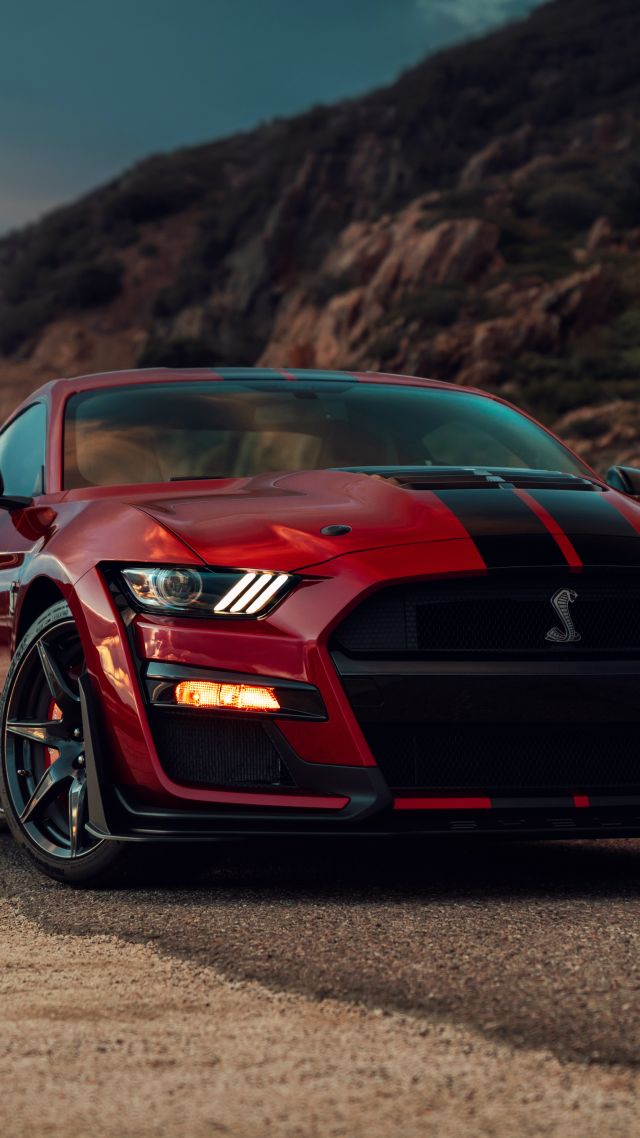
After more than two decades away, one of Ford Mustang’s most recognizable performance names is officially making a comeback. Ford has confirmed that the Mustang Cobra will return in 2027, reviving a badge associated with some of the most celebrated V8-powered Mustangs in the company’s history.
The announcement came through Ford Racing on November 10, 2026, with a teaser video that leaves little doubt about the direction of the upcoming performance model. Accompanied by the unmistakable sound of a V8 accelerating through the gears, the video delivers the message: “Ford Mustang Cobra, a Legacy Reborn. The story continues in 2027.”
Ford’s description also provides an important clue about the car’s mechanical philosophy, calling it an “all-motor heart born from racing.” That wording strongly suggests a naturally aspirated engine rather than the supercharged configuration used by the Mustang Dark Horse SC and Mustang GTD.
While Ford has confirmed the nameplate and its 2027 return, complete specifications, pricing, production numbers, and availability remain undisclosed.
A Racing-Derived V8 Could Set the Cobra Apart
Although Ford has not disclosed the engine’s displacement or output, the teaser’s reference to an engine born from racing has generated considerable speculation about its origins.
One possibility is a road-going adaptation of Ford’s 5.4-liter V8 developed for the Mustang GT3 racing program. Such an engine would give the Cobra a direct connection to Ford’s contemporary motorsport efforts while offering a different character from the supercharged 5.2-liter Predator V8 found in the Dark Horse SC.
Another possibility raised by observers is a naturally aspirated evolution of Ford’s 5.2-liter Voodoo V8, previously used in the Shelby GT350. However, neither engine has been confirmed for the production car.
The wording also suggests that Ford intends to preserve the traditional naturally aspirated V8 experience. Rather than pursuing increasingly complicated forced-induction systems, the Cobra could prioritize throttle response, high-revving performance, and a more direct connection between driver and engine.
A six-speed manual transmission is another possibility, although Ford has not officially confirmed the gearbox.
Where Will the Mustang Cobra Fit in Ford’s Performance Lineup?
The returning Cobra is expected to occupy an important position in the Mustang performance hierarchy, potentially filling the space between the naturally aspirated Dark Horse and the more extreme Dark Horse SC.
The existing models provide a useful indication of where the new car could fit.
| Mustang model | Engine | Horsepower |
|---|---|---|
| Mustang GT | 5.0L naturally aspirated V8 | 480 hp |
| Mustang Dark Horse | 5.0L naturally aspirated V8 | 500 hp |
| Mustang Cobra (2027) | Unconfirmed naturally aspirated V8 | Unconfirmed |
| Mustang Dark Horse SC | 5.2L supercharged V8 | 795 hp |
Industry reports suggest the Cobra could deliver more than 600 horsepower, potentially using a larger naturally aspirated V8. That would create a meaningful performance gap between the 500-hp Dark Horse and 795-hp Dark Horse SC.
Chassis upgrades, more powerful brakes, additional cooling capacity, and revised suspension tuning are also expected possibilities. These improvements would help distinguish the Cobra as a dedicated driver’s car rather than simply another appearance-focused Mustang variant. However, these details remain speculative until Ford releases technical specifications.
The Return of an Important Mustang Nameplate
The Cobra badge carries considerable historical significance within Ford’s performance division. Its association with the Mustang SVT Cobra dates back to the 1990s, when Ford’s Special Vehicle Team developed increasingly powerful versions of the pony car.
The name became particularly memorable with the 2003–2004 SVT Cobra, commonly known as the Terminator. Its supercharged 4.6-liter DOHC V8 produced 390 horsepower and 390 lb-ft of torque, establishing a formidable reputation among American performance cars.
The Cobra R models also helped strengthen the nameplate’s motorsport credentials, with the 2000 model featuring a naturally aspirated 5.4-liter V8, a six-speed manual transmission, and extensive track-focused modifications.
Bringing the name back therefore represents more than a nostalgic marketing exercise. It gives Ford an opportunity to reconnect its modern performance lineup with a heritage built around powerful engines, mechanical engagement, and track capability.