
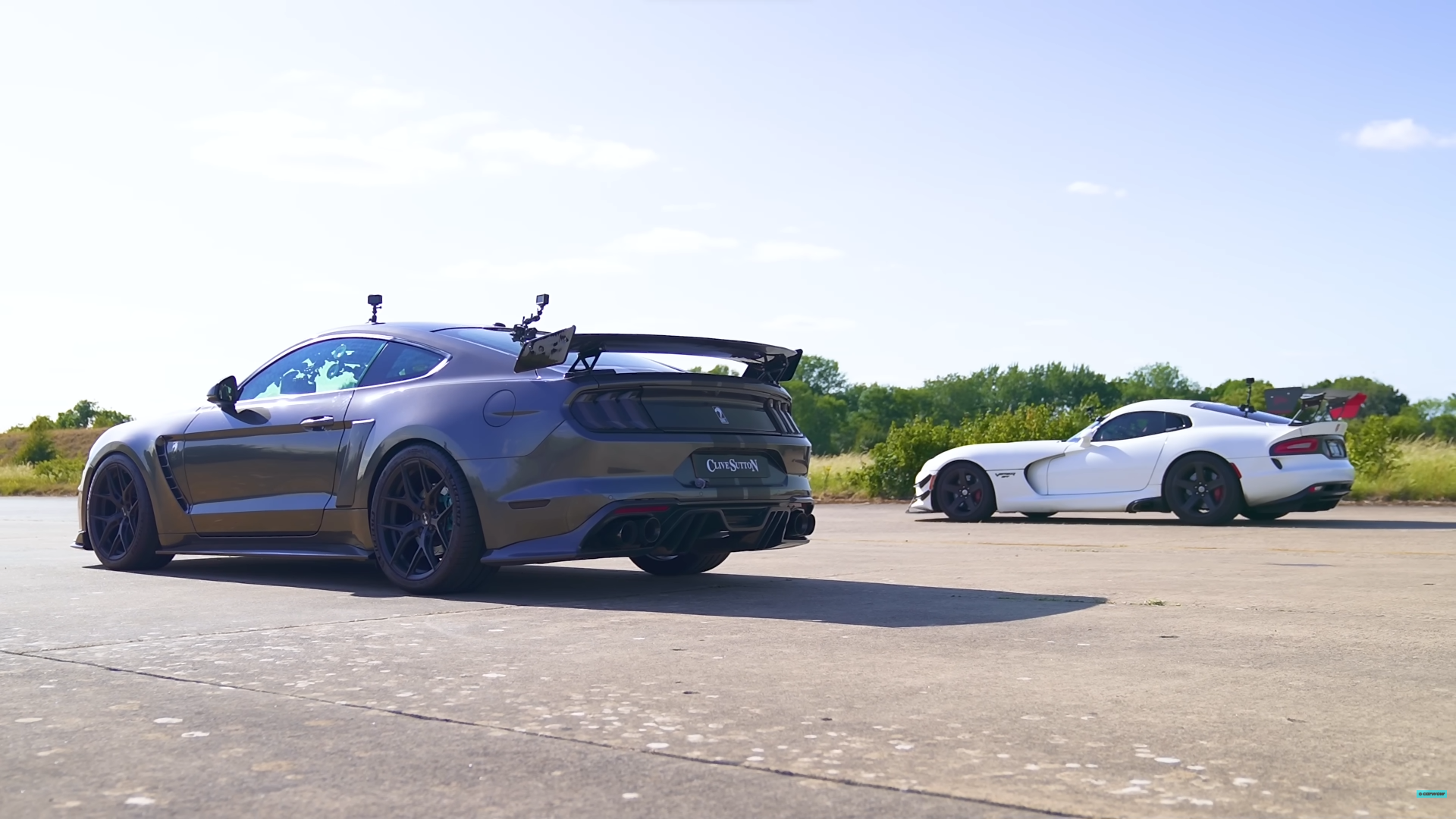
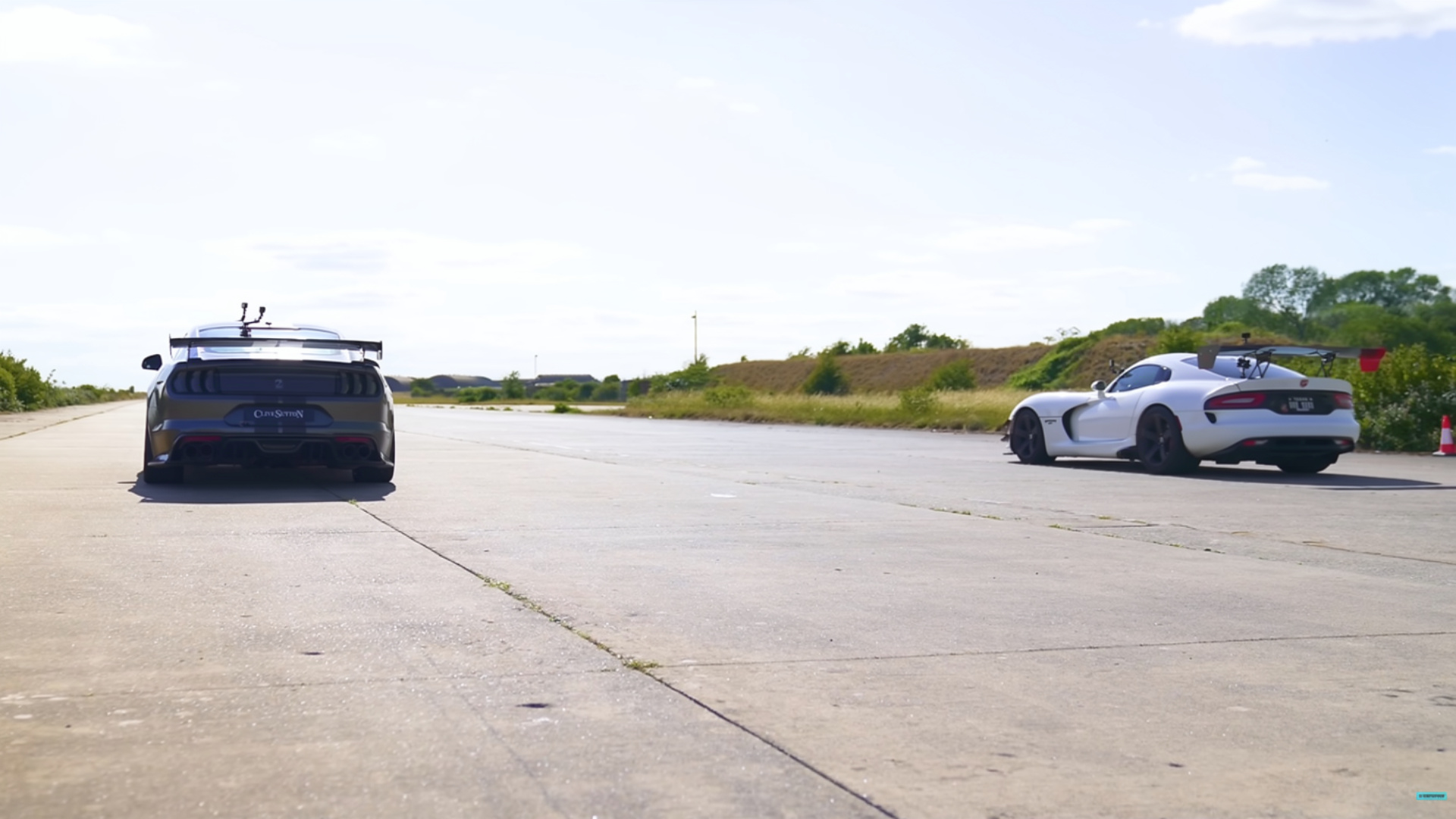
In this explosive American muscle car battle from Mat Watson and the crew at carwow, two heavily modified legends face off in a series of drag races, rolling pulls, and a braking test. One is a supercharged 850-horsepower Ford Mustang CS850. The other is a naturally aspirated, 710-horsepower Dodge Viper GTC. The question is simple: does modern forced induction beat old-school displacement?
Ford Mustang CS850: Supercharged Modern Muscle
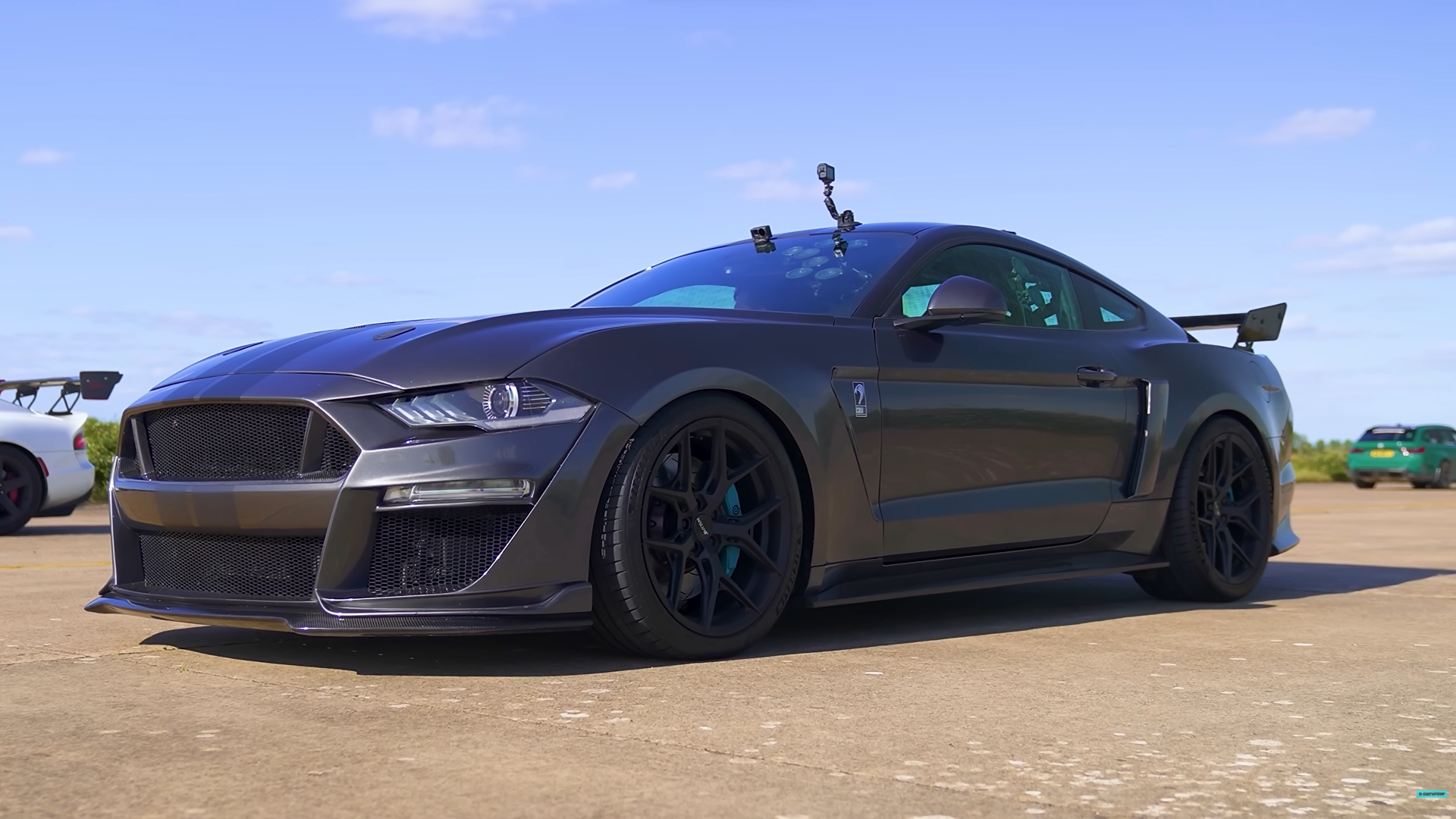
The Mustang CS850 starts with a 5.0-liter V8, but it is transformed by Clive Sutton into a high-output performance machine. A Whipple supercharger, intercooler upgrade, and performance exhaust push it to 850 horsepower and 920 Nm of torque.
It uses a six-speed manual gearbox and sends power exclusively to the rear wheels. At roughly 1,900 kg, it is heavy but brutally powerful. Despite its modern upgrades, it still demands precision from the driver, especially under hard launches where traction becomes critical.
Dodge Viper GTC: Raw V10 Power
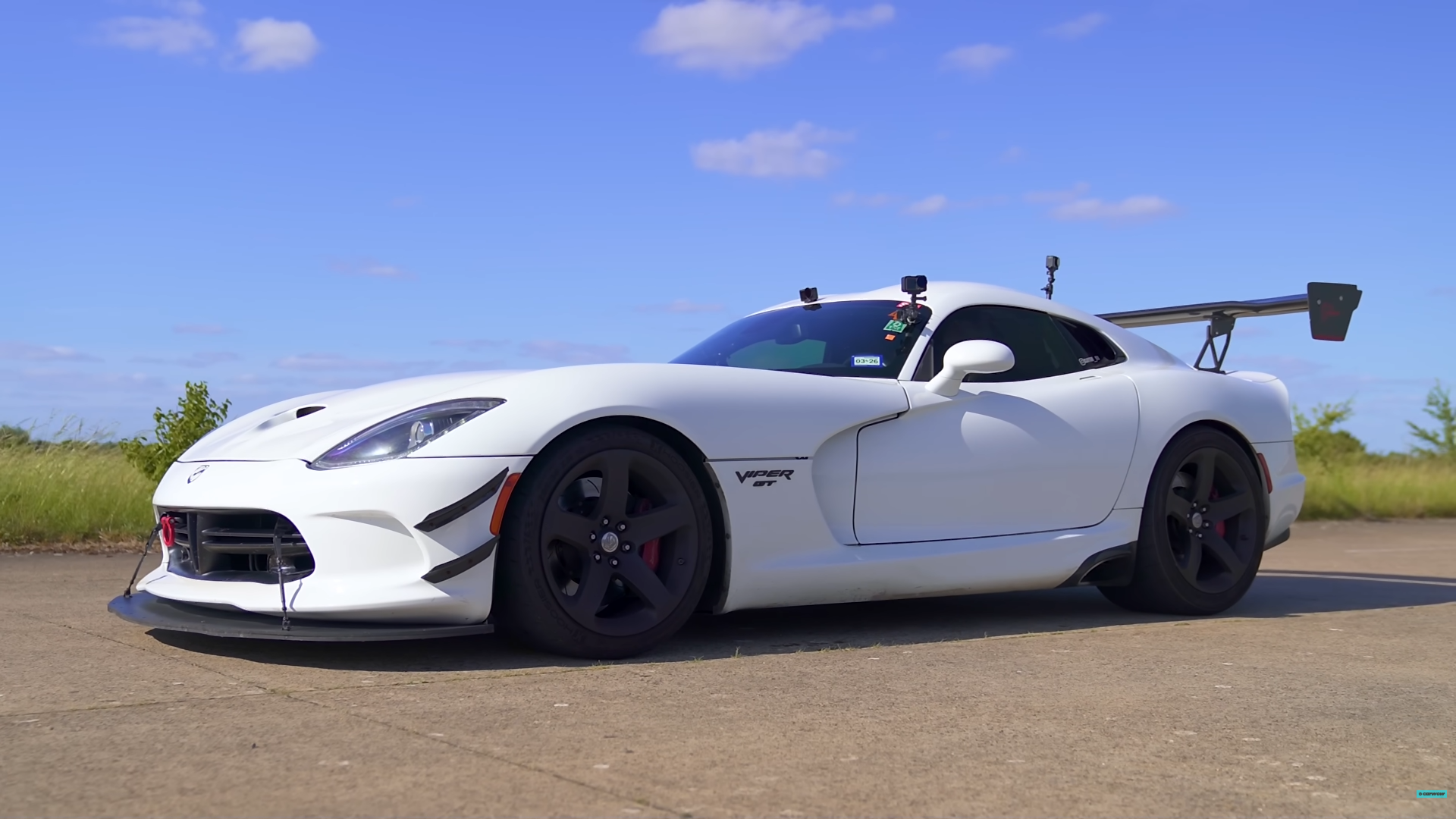
The Dodge Viper GTC takes a very different approach. Its 8.4-liter naturally aspirated V10 produces 710 horsepower and 786 Nm of torque after tuning, paired with a six-speed manual gearbox.
Weighing around 1,560 kg, it is significantly lighter than the Mustang. With no turbo or supercharger to build boost, the Viper delivers instant throttle response and linear power delivery, making it highly effective in real-world acceleration scenarios despite lower peak horsepower.
Quarter-Mile Drag Race: Launch vs Traction
In the standing quarter-mile, both cars launch aggressively but with very different results. The Mustang struggles slightly with traction off the line despite its power advantage, while the Viper hooks up more cleanly and uses its lighter weight to surge ahead.
The result is close, but the Viper completes the run in 12.3 seconds compared to the Mustang’s 12.6 seconds, taking the first win.
Rolling Race: Torque Delivery Matters
From a second-gear rolling start at around 40 mph, both cars accelerate hard. The Mustang attempts to rely on its supercharged torque, but traction and power delivery remain inconsistent.
The Viper’s naturally aspirated V10, however, delivers immediate and predictable response, allowing it to edge ahead again. The difference becomes even clearer in a higher-gear roll at 50 mph, where the Mustang struggles to stay in its boost range while the Viper pulls cleanly from low RPM.
In the braking test, the Mustang shows its more modern engineering advantage. Its chassis stability and braking performance feel more composed under heavy deceleration. The Viper, while powerful, feels heavier and less refined when slowing down from speed. This gives the Mustang its only win of the matchup.
Final Verdict: Who Wins?
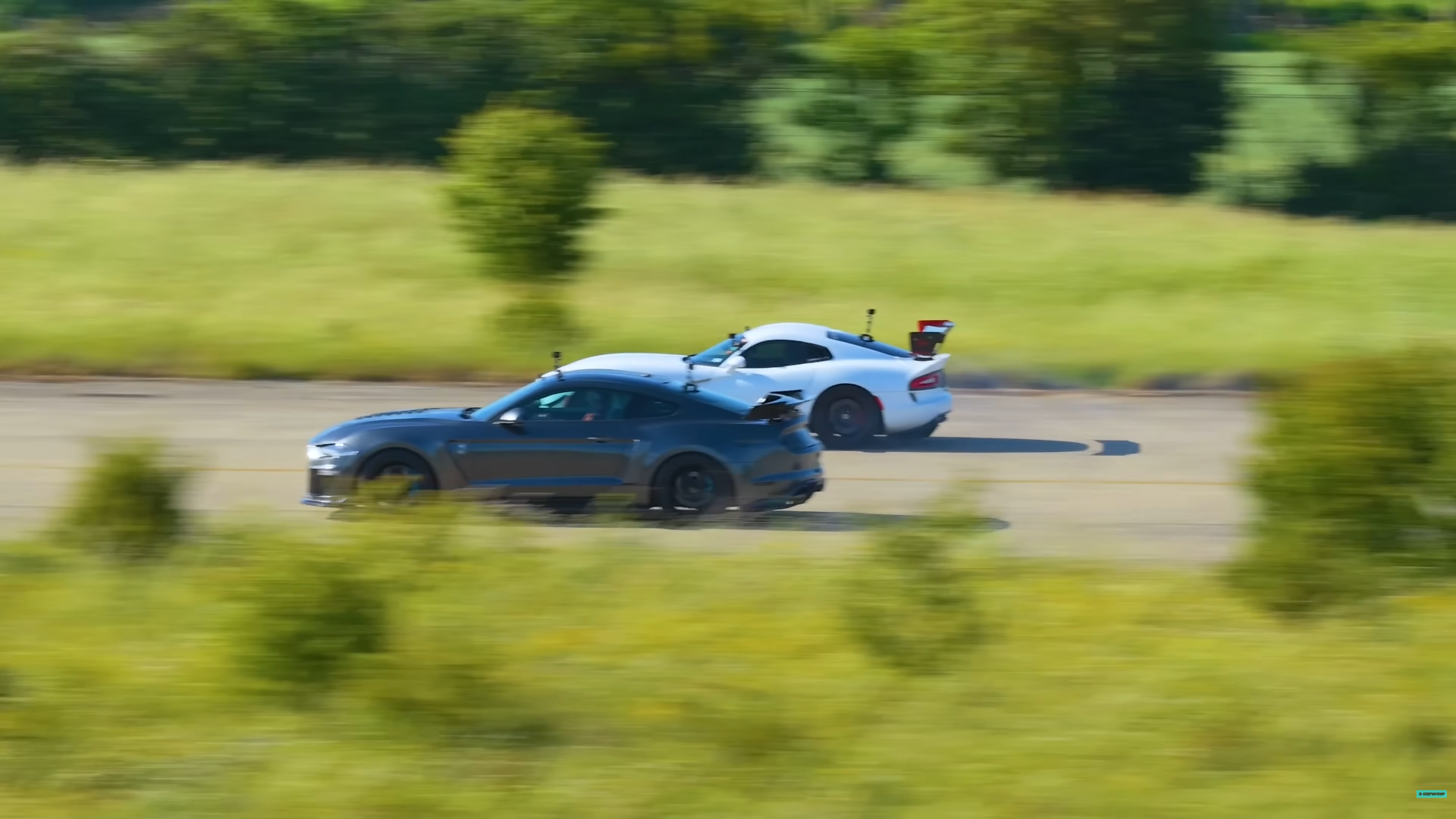
After multiple runs, the Dodge Viper GTC takes the overall victory. It wins the quarter-mile and both rolling races, while the Mustang only claims the braking test.
This showdown proves that horsepower alone does not guarantee dominance. The Mustang has more power on paper, but the Viper’s lighter weight, immediate torque delivery, and analog simplicity make it the more effective real-world performer in this battle.
Source: carwow