

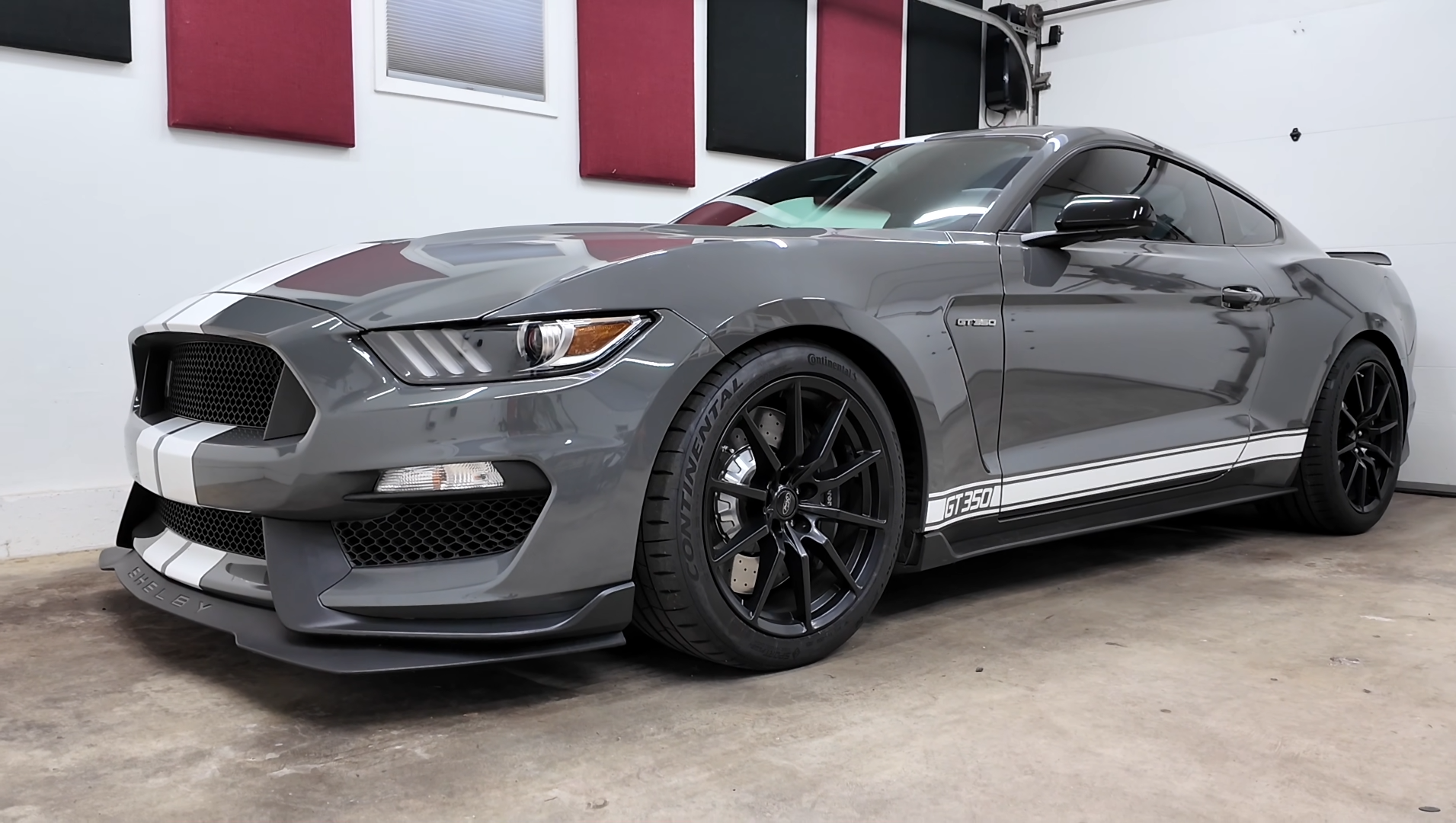
Few modern performance cars inspire the same emotional and engineering fascination as the Ford Mustang Shelby GT350. Immortalized by deep technical breakdowns from Engineering Explained, the GT350 represents a rare convergence of motorsport-grade engineering, analog driving purity, and high-revving drama. Yet, beneath its intoxicating character lies a story of complexity—and in some cases, catastrophic failure.
This article dives deep into what makes the GT350 extraordinary, why its “Voodoo” engine is unlike anything else, and the real-world ownership risks you need to understand.
The Heart of the Beast: The 5.2L “Voodoo” Flat-Plane V8
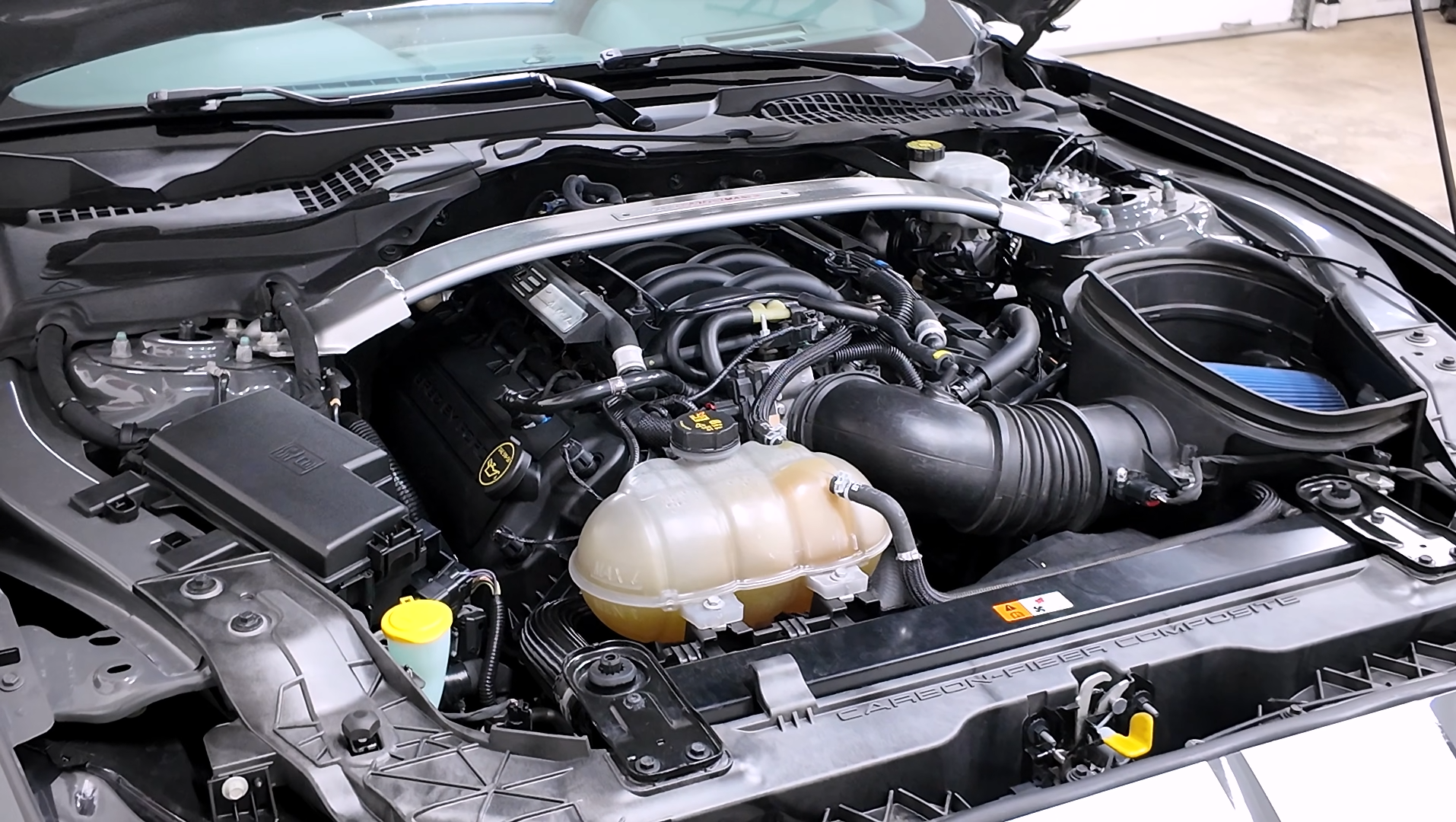
At the center of the GT350 lies the legendary 5.2-liter naturally aspirated V8—nicknamed the Voodoo engine. Producing 526 horsepower and 429 lb-ft of torque, it revs to an astonishing 8,250 RPM, placing it in rare territory for American V8s.
What sets it apart is its flat-plane crankshaft, a configuration more commonly found in exotic European sports cars like those from Ferrari. Unlike traditional cross-plane V8s used in most Mustangs, the flat-plane design alternates firing evenly between cylinder banks, improving airflow and enabling:
- Faster revving characteristics
- Sharper throttle response
- A uniquely aggressive, high-pitched exhaust note
Ford, however, didn’t follow convention. Instead of the typical flat-plane layout, it engineered a unique firing order and paired it with a 4-3-1 exhaust manifold design, resulting in one of the most distinctive engine sounds ever fitted to a Mustang.
The result? A visceral experience often described as a “V8 meets race car symphony.”
Performance Engineering Beyond the Engine
Tremec TR-3160 Manual Transmission
A key reason enthusiasts consider the GT350 the “ultimate Mustang” is its Tremec TR-3160.
- Close-ratio gears (1st through 5th) maximize acceleration
- A tall 6th gear allows relaxed highway cruising
- Dual-mass flywheel and dual-disc clutch ensure smooth engagement
This gearbox delivers one of the most engaging manual driving experiences in any modern performance car.
Torsen Limited-Slip Differential
The GT350 uses a Torsen differential, a purely mechanical system prized for:
- Predictable power delivery
- Superior corner exit traction
- Zero reliance on electronic intervention
For purists, this is a major win over electronically controlled alternatives.
MagneRide Suspension System
Ford equipped the GT350 with MagneRide, making it both track-capable and road-friendly:
- Continuously adjusts damping in real time
- Comfort mode delivers surprising ride quality
- Sport mode sharpens handling for aggressive driving
Notably, the GT350 was Ford’s first application of MagneRide, marking a turning point in Mustang chassis sophistication.
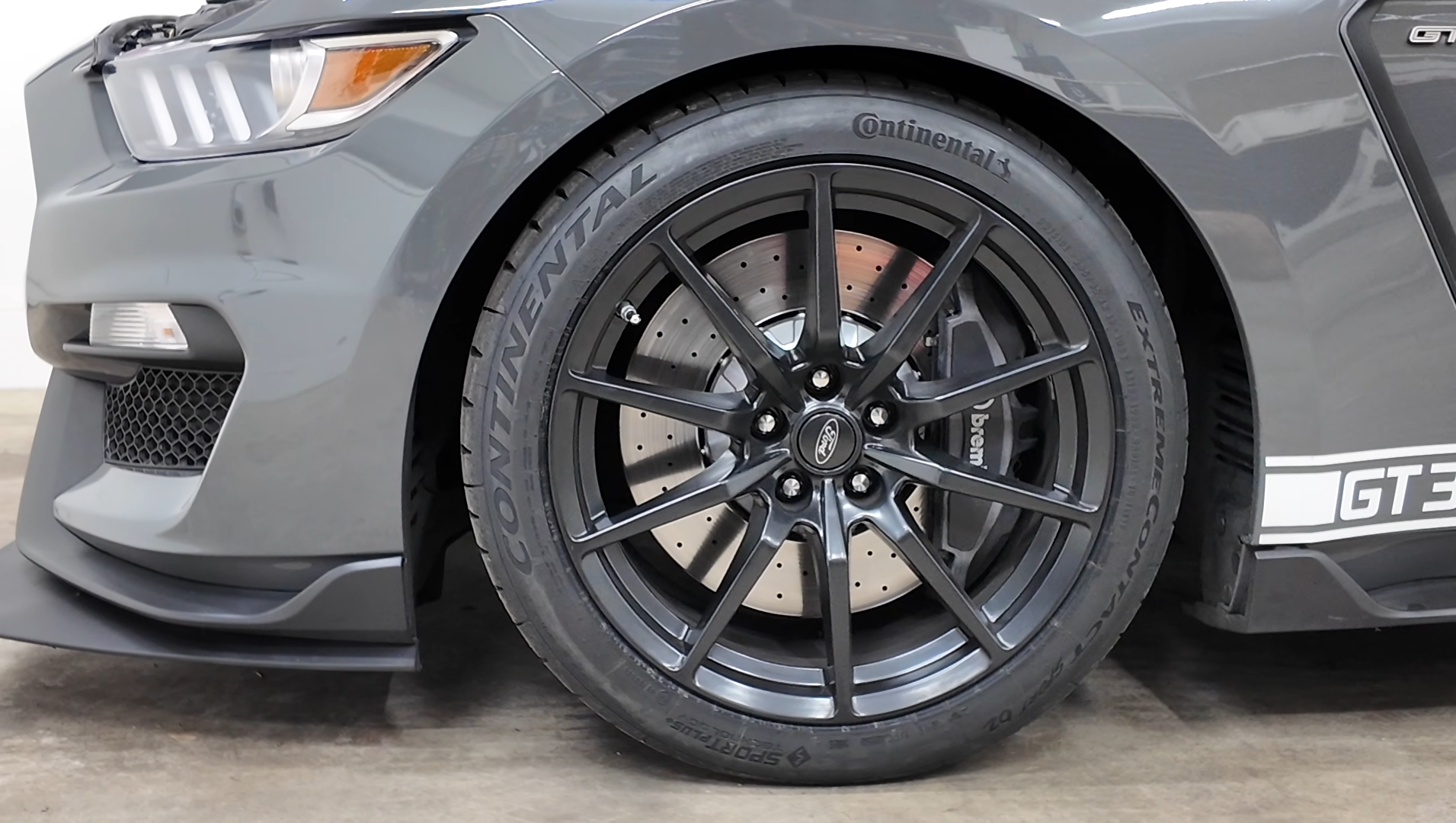
Brembo Braking System
Stopping power is handled by Brembo hardware:
- 6-piston front calipers
- 4-piston rear calipers
- Massive two-piece rotors for heat management
These brakes are built for repeated high-speed track use without fade.
The Dark Side: Engine Failures and Ownership Risks
Despite its brilliance, the Voodoo engine has earned a reputation for being… temperamental.
Real Case: Catastrophic Engine Failure
In one documented case, a GT350 suffered total engine seizure at just 38,000 miles:
- Oil system filled with heavy metal debris
- Contamination found in intake, oil cooler, and PCV system
- Likely cause: spun bearing (though unconfirmed)
The kicker? Oil level was normal.
Oil Consumption: A Critical Weakness
The GT350 owner’s manual states:
- Up to 1 quart of oil per 500 miles consumption is “normal”
With a 10-quart capacity and ~5,000-mile oil interval, this means:
👉 The engine could theoretically consume all its oil between services if unchecked.
Failure to monitor oil levels has led to numerous engine failures.
The Cost of Failure
Replacing a GT350 engine isn’t cheap:
- Typical cost: $25,000–$30,000
- Discounted dealer cases: ~$20,000+
- Often requires full system replacement (coolers, intake, etc.)
This is not a minor repair—it’s a financial gut punch.
The Role of Modifications
Another major risk factor: aftermarket tuning.
In many failure cases, vehicles had:
- ECU tunes
- Intake modifications
While gains are minimal on a high-performance NA engine, the risks can be substantial:
- Increased stress on internal components
- Potential lubrication or detonation issues
- Voided warranties
For the GT350, the consensus is clear: Stock is safest.
First-Gen vs Second-Gen Voodoo Engines
While Ford never officially labeled engine generations, the community distinguishes:
2015–2018 (First Gen)
- Higher failure reports
- Oil consumption concerns
- Less refined internals
2019–2020 (Updated Version)
- Improved durability
- Revised engine components
- Generally more reliable
Interestingly, some earlier GT350s now run replacement engines built to newer specifications, offering the best of both worlds.
Ownership Verdict: Genius with Caveats
The Ford Mustang Shelby GT350 is a rare breed—a car that blends raw emotion with engineering ambition.
Pros:
- One-of-a-kind engine
- Exceptional manual transmission
- Track-capable hardware
- Strong resale value
Cons:
- Engine reliability concerns
- High maintenance vigilance required
- Extremely expensive repairs
Final Thoughts
The GT350 is not a car for the careless owner. It demands attention, mechanical sympathy, and respect. But for those willing to embrace its quirks, it offers something increasingly rare in the modern era: A truly unforgettable, analog driving experience—wrapped around one of the most fascinating engines ever built.
Source: Engineering Explained