
The team from the YouTube channel Autotopia LA traveled to Yukon, Oklahoma, to visit the headquarters of Trick Rides, a rapidly emerging builder specializing in repeatable, production-limited carbon-fiber muscle cars. Founded by industry veterans Jason Engel and Jared Morris, the company has developed a distinctive approach that blends handcrafted craftsmanship with modern manufacturing techniques, creating vehicles that deliver supercar-level engineering while retaining the character of classic American muscle.
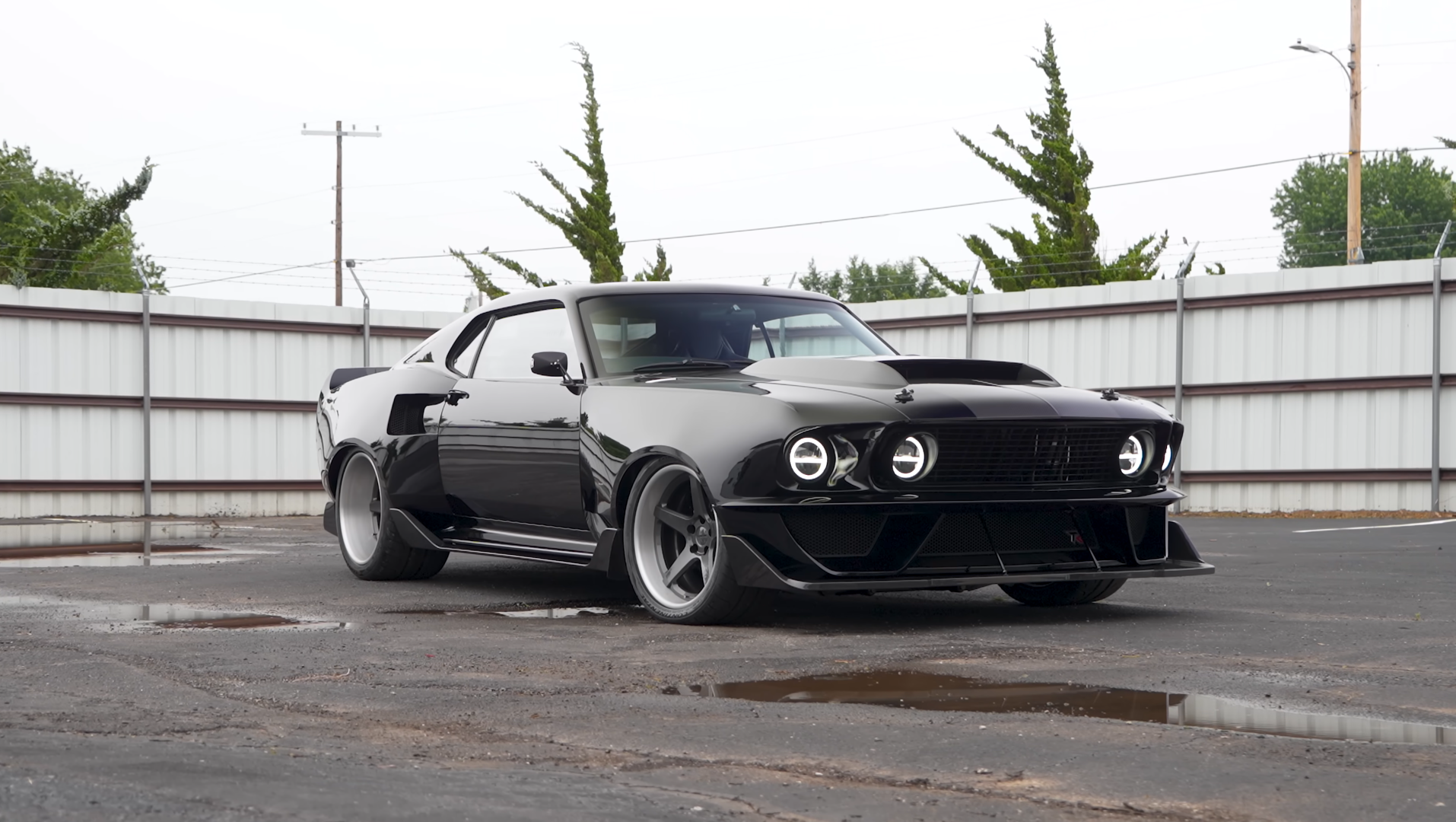
At the center of the visit was the company’s flagship creation, the Scorched Mustang—a groundbreaking all-carbon-fiber widebody 1969 Ford Mustang restomod that represents the first vehicle of its kind. Limited to just 20 examples, the Scorched is designed as an ultra-exclusive, road-focused performance machine with pricing beginning around $429,000 and extending higher depending on customization and drivetrain choices.
Building a Modern Muscle Car Brand
Jared Morris explained that the partnership behind Trick Rides evolved after more than a decade of working alongside Jason Engel. What began as a single vehicle concept quickly expanded into a broader vision focused on producing repeatable, high-end carbon-fiber vehicles rather than one-off custom builds.
Beyond the Scorched Mustang, the company is developing several additional platforms, including carbon-fiber versions of the 1969 Camaro, 1968 Charger, Ford F-100 pickup, and a Shelby-licensed 1965–1966 Mustang Fastback. Their objective is to establish a scalable manufacturing process while preserving the quality and exclusivity typically associated with bespoke custom cars.
Unlike many builders who outsource major portions of production, Trick Rides performs virtually every stage of development in-house, including fabrication, metalwork, paint, assembly, interior integration, and final vehicle engineering. This vertically integrated model allows the company to maintain strict quality control while targeting production volumes of approximately 20 to 30 vehicles annually.
Carbon Fiber as the Foundation
One of the defining characteristics of the Scorched Mustang is its extensive use of carbon fiber. Every exterior panel—including the doors, fenders, hood, bumpers, roof, quarters, and aerodynamic elements—is constructed entirely from carbon composite material.
The company partnered with Brothers Composites to develop the bodywork, which incorporates meticulous craftsmanship and advanced composite engineering. According to Morris, numerous body panels were redesigned repeatedly before reaching production standards, with particular attention paid to weave alignment, panel fitment, and structural integrity.
What separates the Scorched from many restomod projects is its development methodology. Rather than beginning with a modified steel body, the entire vehicle was designed digitally using CAD software. Every surface, flare, aerodynamic element, and proportion was created in a virtual environment before molds were produced.
As a result, the Scorched became one of the first fully realized classic-car restomods developed entirely from digital design files, eliminating the traditional process of sculpting physical prototypes before mold creation.
Widebody Design and Aerodynamics
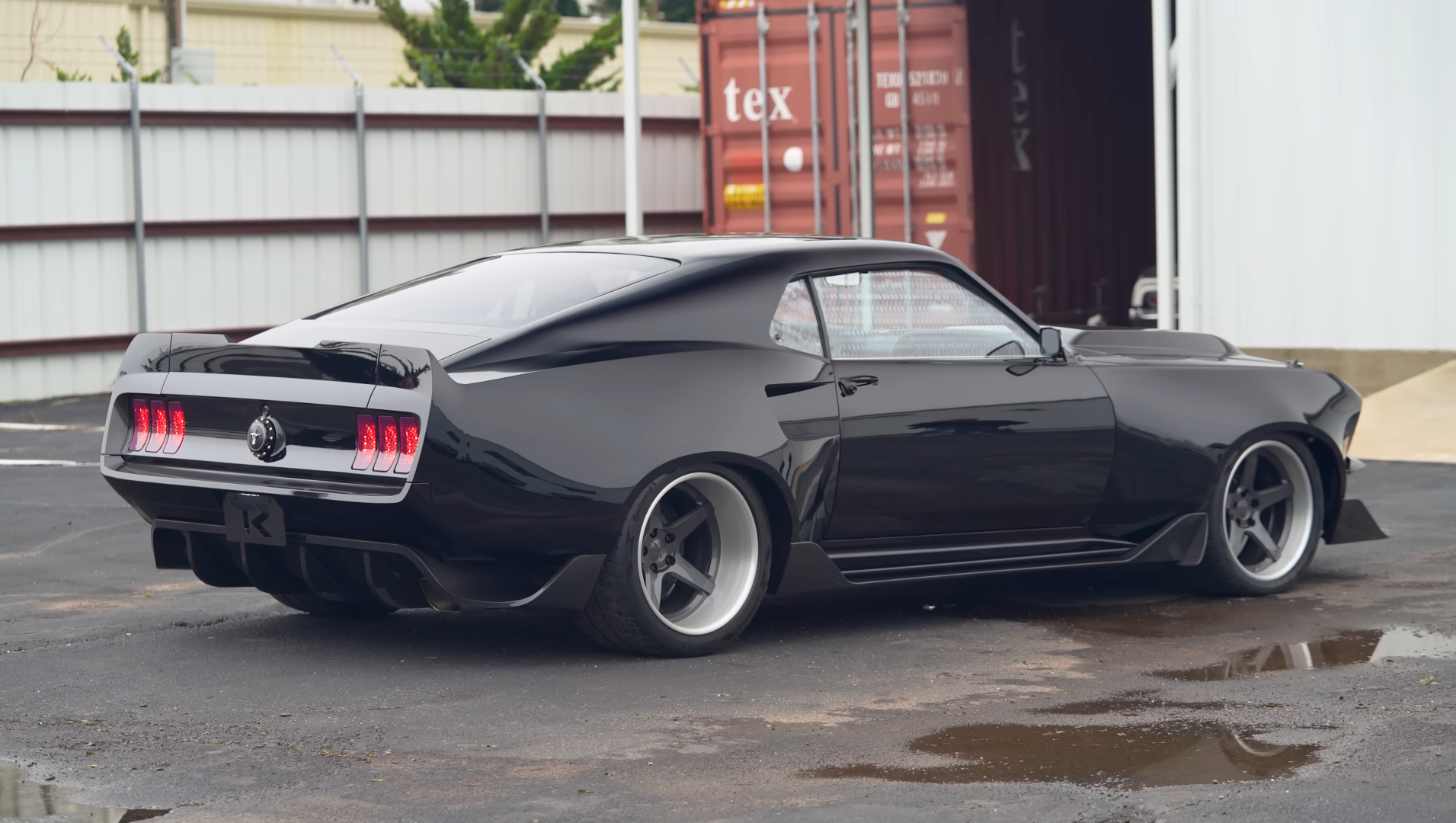
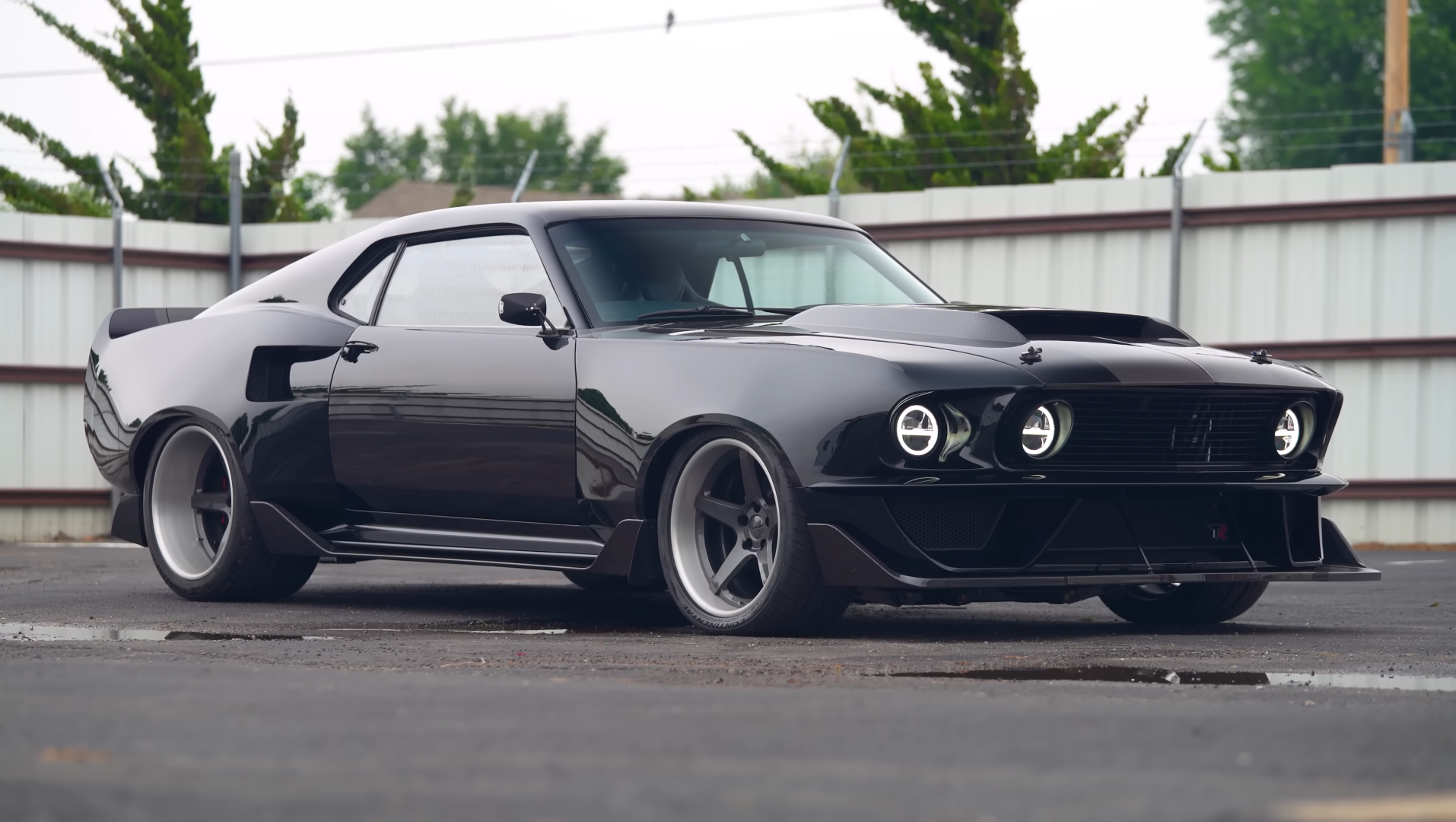
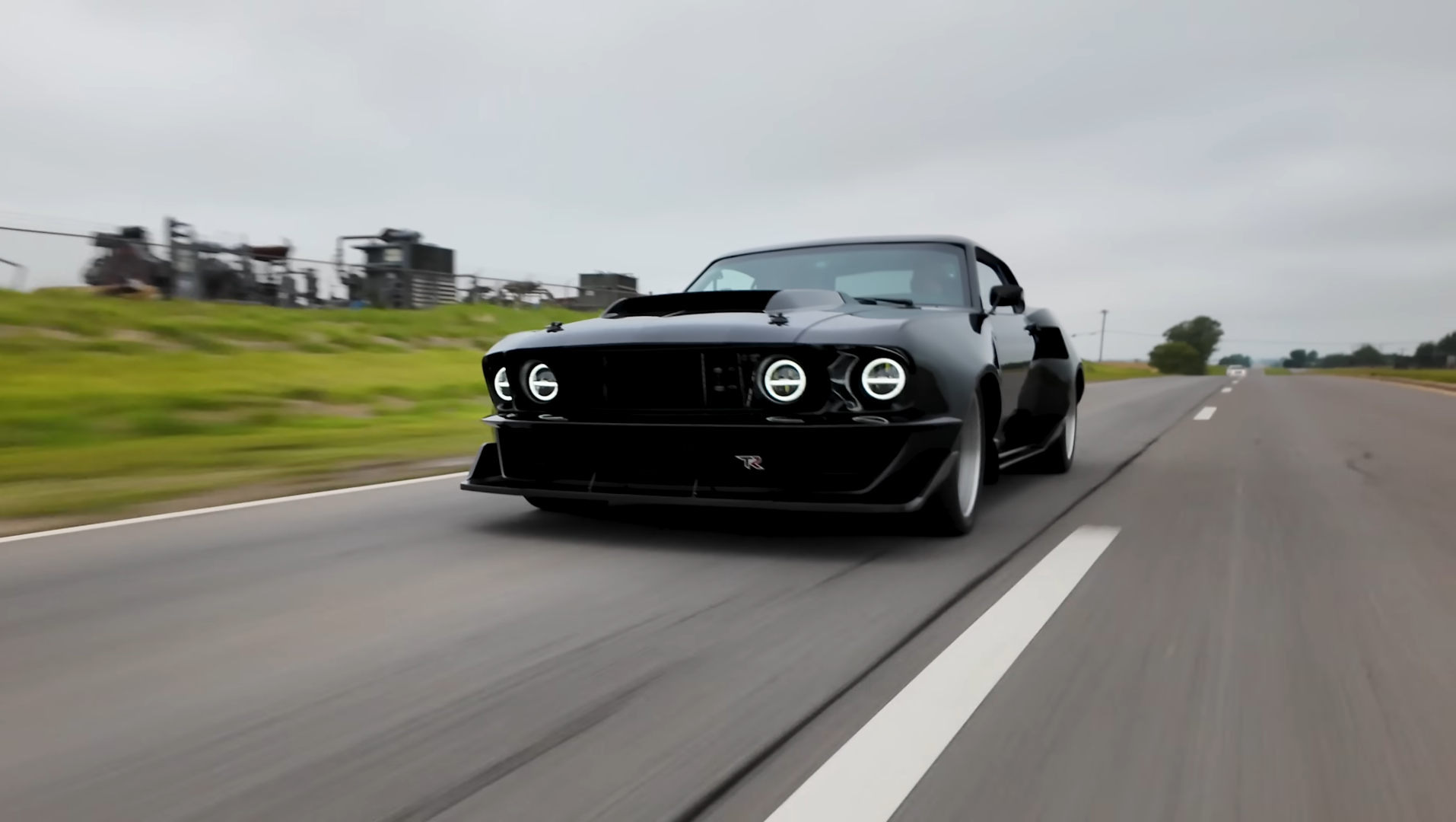
Visually, the Mustang’s appearance is both aggressive and purposeful. The body is widened by approximately three inches per side, giving the vehicle a significantly broader stance while preserving the proportions of the original 1969 Mustang.
The design team intentionally retained factory-width doors to create an hourglass profile, emphasizing the dramatic front and rear fender flares. Aerodynamic components including the front splitter, rocker extensions, and rear diffuser are integrated into the body rather than serving as cosmetic additions.
According to Morris, aerodynamic simulations performed during development confirmed that these elements contribute functional airflow management rather than simply enhancing visual appeal.
The rear diffuser alone represents an extraordinary manufacturing challenge, requiring fourteen separate molds before being assembled into a single carbon-fiber component.
Powertrain: A Big-Block Statement
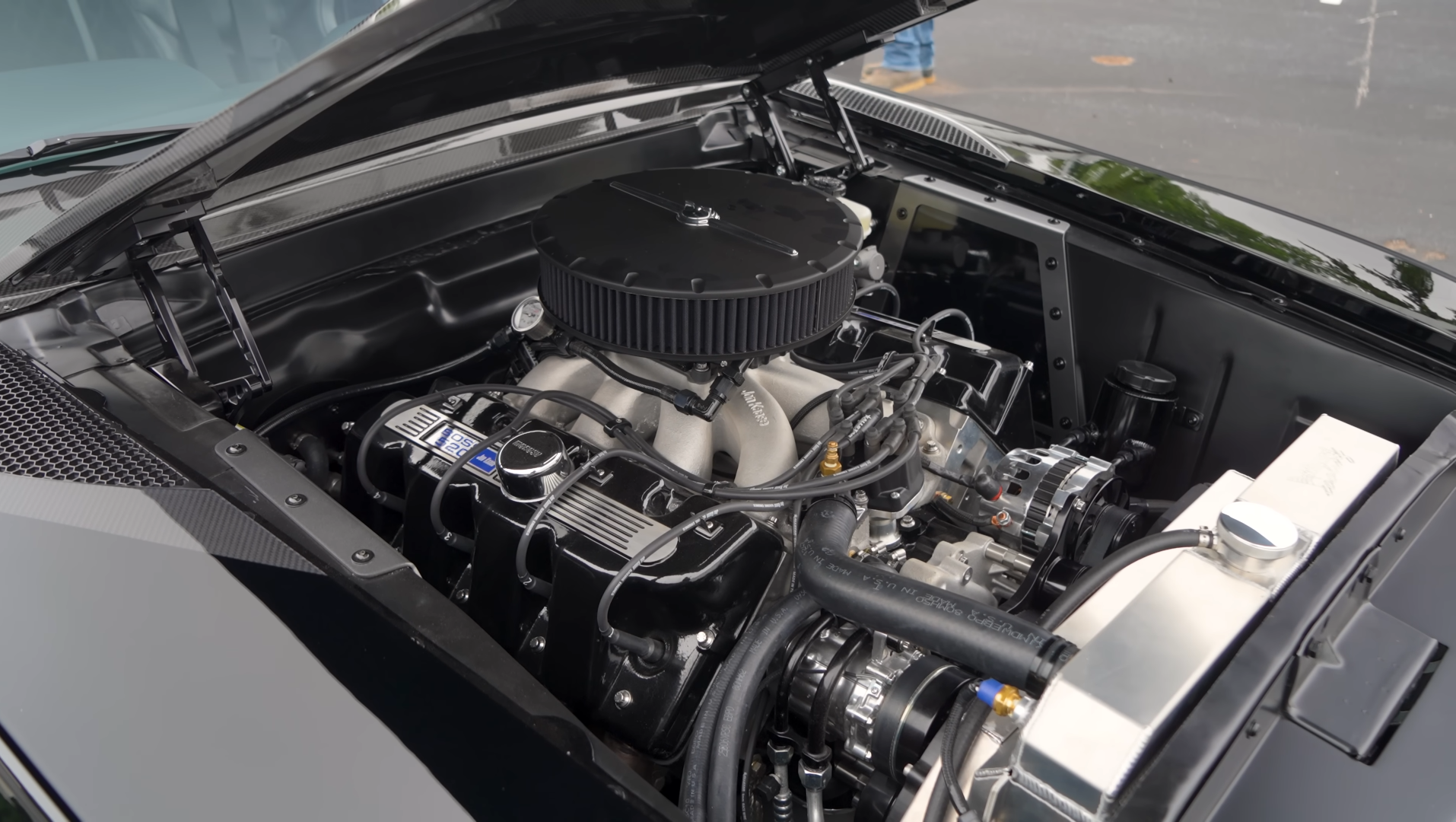
Rather than following the increasingly common path of installing a modern Coyote V8 or LS-based engine, Trick Rides chose a naturally aspirated big-block powerplant that reinforces the Mustang’s traditional muscle-car identity.
The featured vehicle is powered by a 520-cubic-inch V8 from Jon Kaase Racing Engines, producing approximately 730 horsepower and 680 lb-ft of torque on pump gasoline without forced induction.
Packaging such a large engine within the carbon-fiber chassis required extensive engineering. Custom stainless-steel headers featuring 2.25-inch primary tubes were specifically developed for the application. Their intricate routing around the engine mounts demanded a unique installation process involving multiple technicians simultaneously positioning the engine and exhaust components.
Power is delivered through a Tremec T-56 Magnum six-speed manual transmission paired with a McLeod twin-disc clutch and a Roadster Shop-built Ford 9-inch rear axle equipped with 3.70 gearing.
Chassis and Performance Engineering
The vehicle rides on a fully engineered chassis supplied by Roadster Shop, a company widely respected within the restomod industry for its suspension systems and turnkey chassis solutions.
The setup incorporates hydroboost-assisted braking and six-piston Baer brake systems at all four corners. Engine management duties are handled through a Holley Terminator fuel injection system, pre-configured and calibrated by Jon Kaase Racing Engines before installation.
Wheel fitment presented another engineering challenge due to the vehicle’s extensive body modifications. The Scorched rides on forged wheels from Forgeline Motorsports measuring 18×9.5 inches up front and 18×12 inches in the rear, wrapped in 295-section front tires and massive 335-section rear rubber.
The decision to retain 18-inch wheels was intentional, preserving the classic muscle-car aesthetic while still accommodating modern performance hardware.
Interior Philosophy: Modern Function, Classic Identity
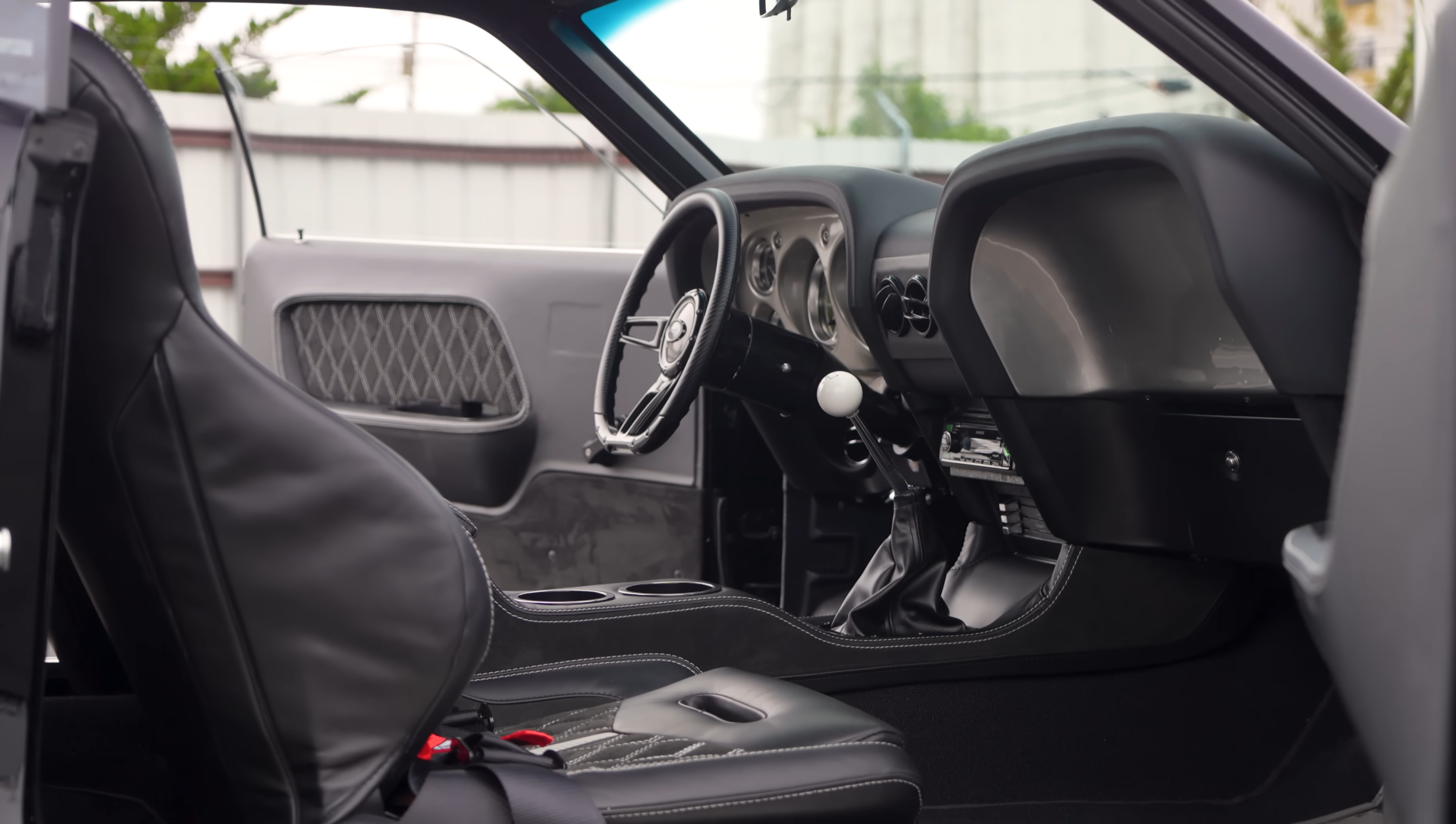
Inside, Trick Rides sought to strike a balance between contemporary comfort and vintage authenticity. The cabin incorporates numerous components from TMI Products, including custom seats, door panels, center console, carpeting, and headliner.
Rather than creating a completely bespoke interior, the company strategically integrates factory-inspired Mustang elements such as the dashboard structure and trim pieces. This approach reduces development costs while maintaining a recognizable connection to the original vehicle.
Additional features include AutoMeter Carbon Edition instrumentation, a Billet Specialties steering wheel, and a climate-control system from Vintage Air.
The result is a cockpit that feels purpose-built and premium without sacrificing the nostalgic atmosphere that defines the classic Mustang experience.
Driving Experience and Market Position
On the road, the Scorched Mustang delivers a combination rarely achieved in the restomod segment. Despite producing more than 700 horsepower, the vehicle remains approachable and comfortable, exhibiting refined chassis dynamics, excellent tracking stability, and impressive ride quality.
The naturally aspirated big-block engine defines the driving character, producing immense low-end torque and a distinctive exhaust note that remains civilized during cruising yet becomes dramatic under acceleration. Combined with the T-56 manual transmission and modern suspension geometry, the car successfully merges old-school muscle-car emotion with contemporary drivability.
Priced around $450,000 in the specification tested, the Scorched Mustang occupies a niche between traditional restomods and seven-figure bespoke builds. By combining carbon-fiber construction, modern engineering, limited production, and extensive customization options, Trick Rides has positioned the vehicle as a highly exclusive alternative for collectors seeking a modernized interpretation of the iconic 1969 Mustang without compromising usability or performance.
Source: Autotopia LA