
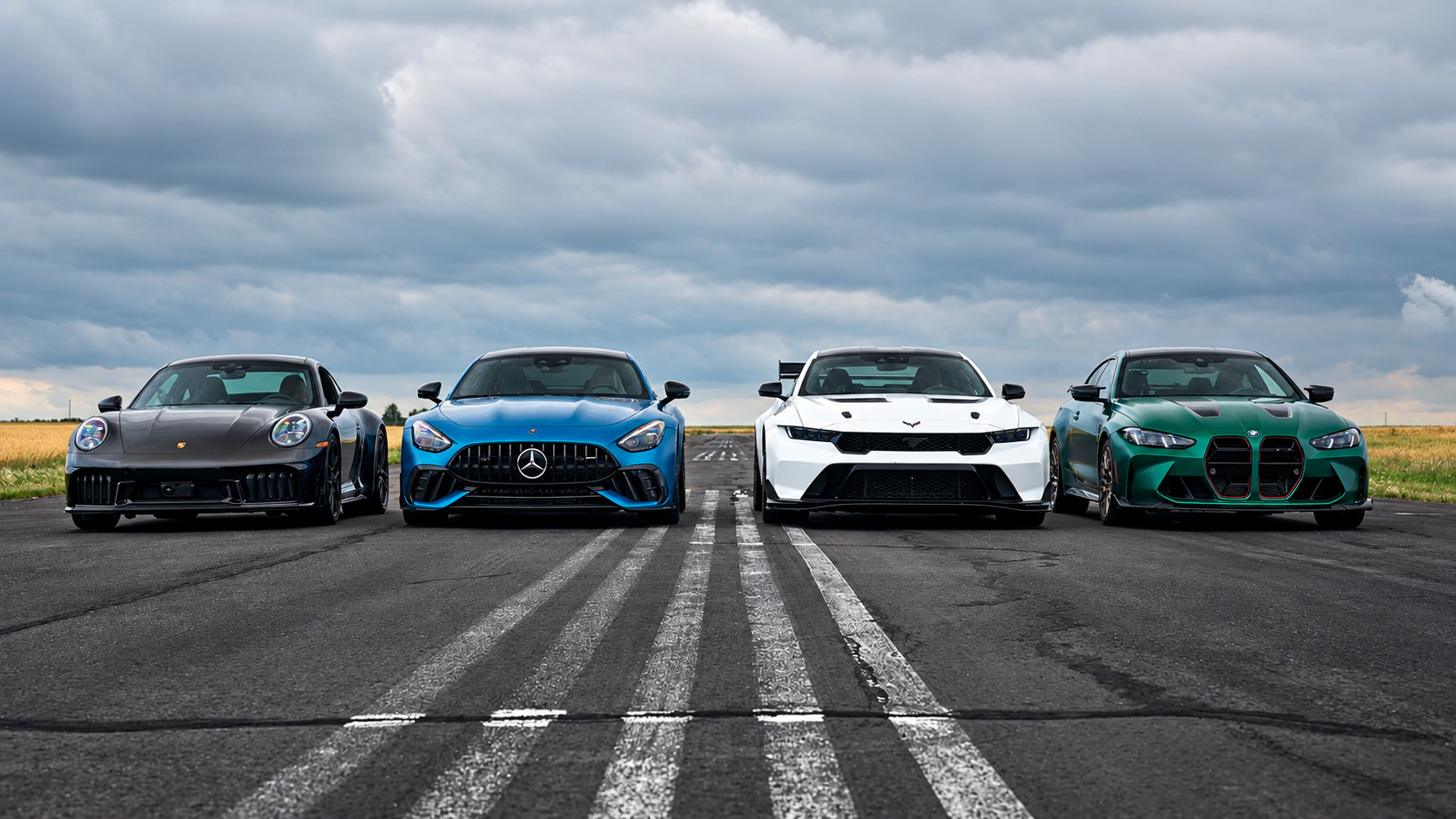
Lap times build reputations on a circuit, where braking zones, cornering grip, and aerodynamic efficiency determine the outcome. But remove the corners entirely and put four very different performance philosophies onto a private runway, and the equation changes dramatically.
Mercedes-Benz Downtown Calgary assembled an unusually diverse field for a series of half-mile drag and roll races: the Mercedes-AMG GT 63 PRO, BMW M4 CS, Porsche 911 Carrera 4 GTS T-Hybrid, and Ford Mustang GTD, before the competition escalated with a tuned Porsche 911 Turbo S and a Ford GT.
The Mustang GTD: 815 HP and a Racing-Derived Chassis
The GTD is fundamentally different from a conventional Mustang. Its supercharged V8 produces a claimed 815 hp and 664 lb-ft of torque, while curb weight sits around 4,000 pounds. That combination gives it an enormous power-to-weight advantage over much of the initial field. More importantly, Ford did not simply increase engine output and call it a day.
The Mustang GTD uses a rear-mounted transaxle, helping redistribute mass toward the rear, while its sophisticated inboard pushrod suspension is visible through the rear glass. The layout is far closer to a purpose-built track machine than the traditional front-engine muscle-car formula suggests.
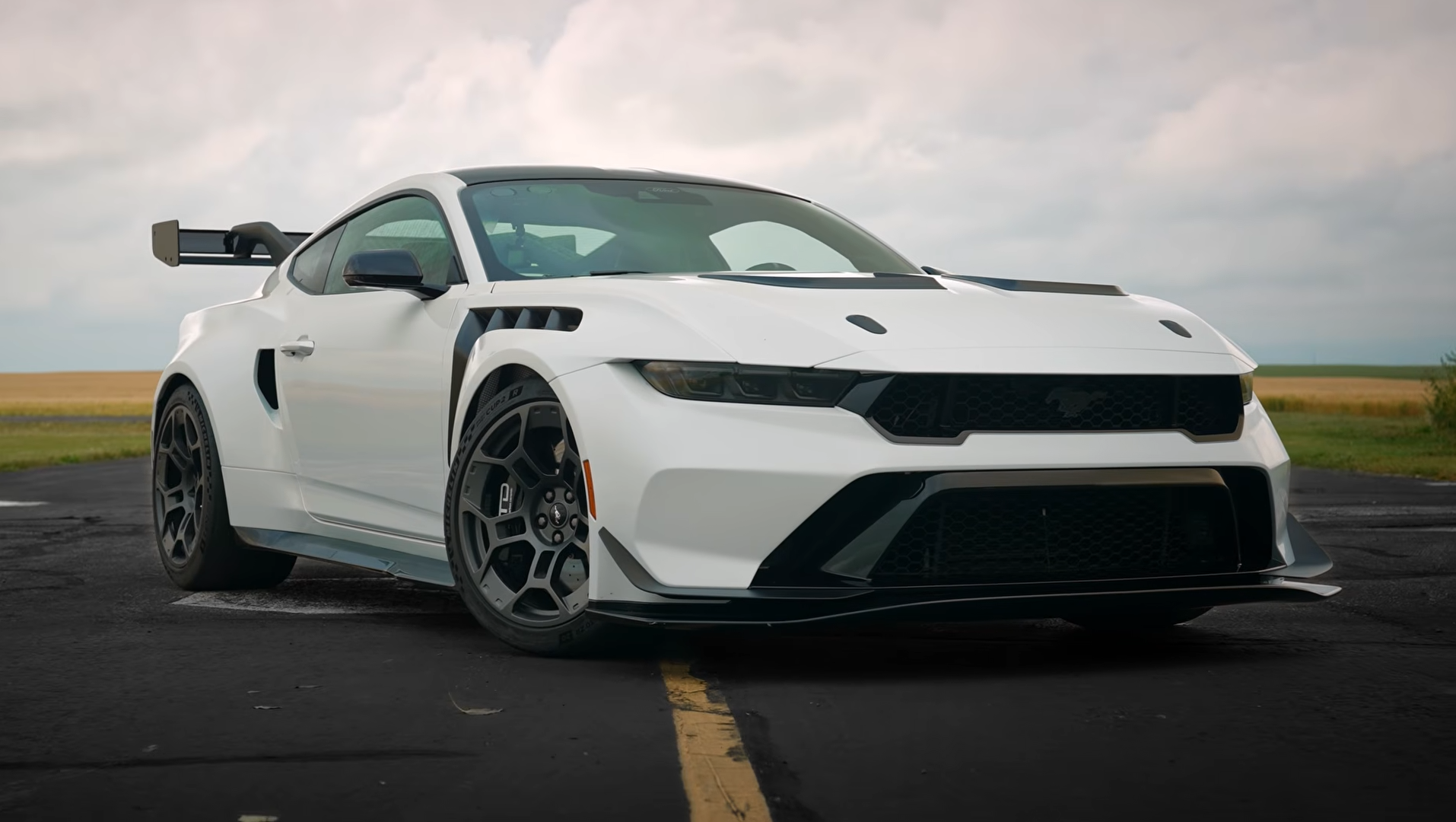
There was, however, one immediate problem on the runway: traction. During the early drag runs, the GTD struggled to fully deploy its 815 hp. Wheelspin through first and second gear forced the driver to carefully manage the throttle, allowing lighter all-wheel-drive rivals to capitalize on their superior launches.
That became the GTD’s defining challenge. Its engine was never the question. Getting all that power onto the pavement was.
AMG GT 63 PRO Brings All-Wheel-Drive Muscle
The Mercedes-AMG GT 63 PRO entered the contest with a 4.0-liter twin-turbocharged V8 producing 603 hp and 627 lb-ft of torque. At roughly 4,300 pounds, it was the heaviest car in the original lineup. Yet weight mattered less when its 4MATIC+ all-wheel-drive system could exploit the available grip.
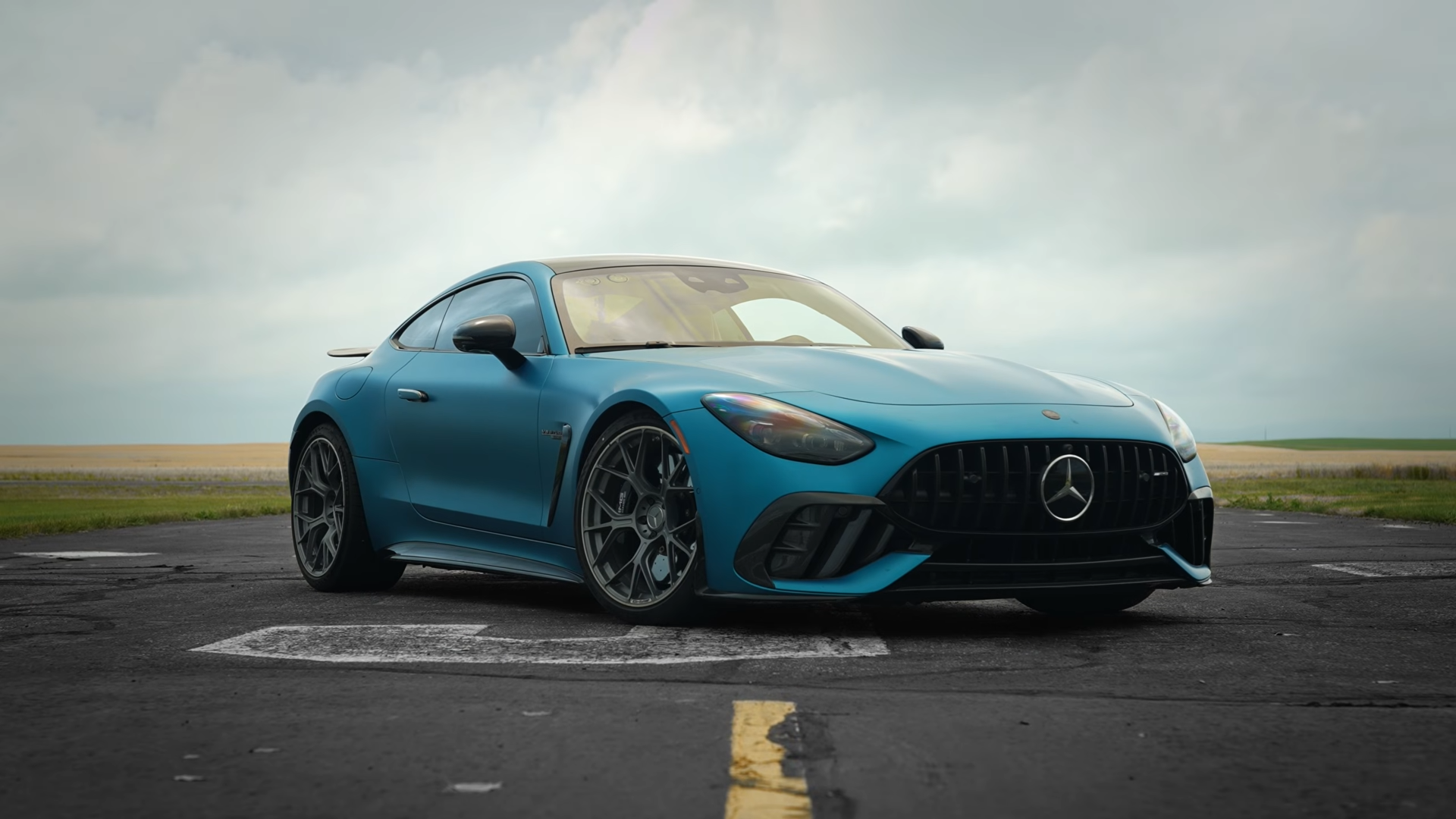
AMG also engineered the GT 63 PRO specifically for sustained performance, including additional cooling measures around the drivetrain and aerodynamic changes underneath the car. In a half-mile race, where acceleration continues well beyond the initial launch, that ability to maintain performance becomes just as important as peak output.
BMW M4 CS: Less Weight, Serious Traction
The BMW M4 CS approached the contest differently. Its turbocharged 3.0-liter inline-six develops a stated 543 hp and 479 lb-ft, while extensive carbon-fiber construction keeps weight below 4,000 pounds. Its xDrive all-wheel-drive system again provides the crucial advantage at launch.
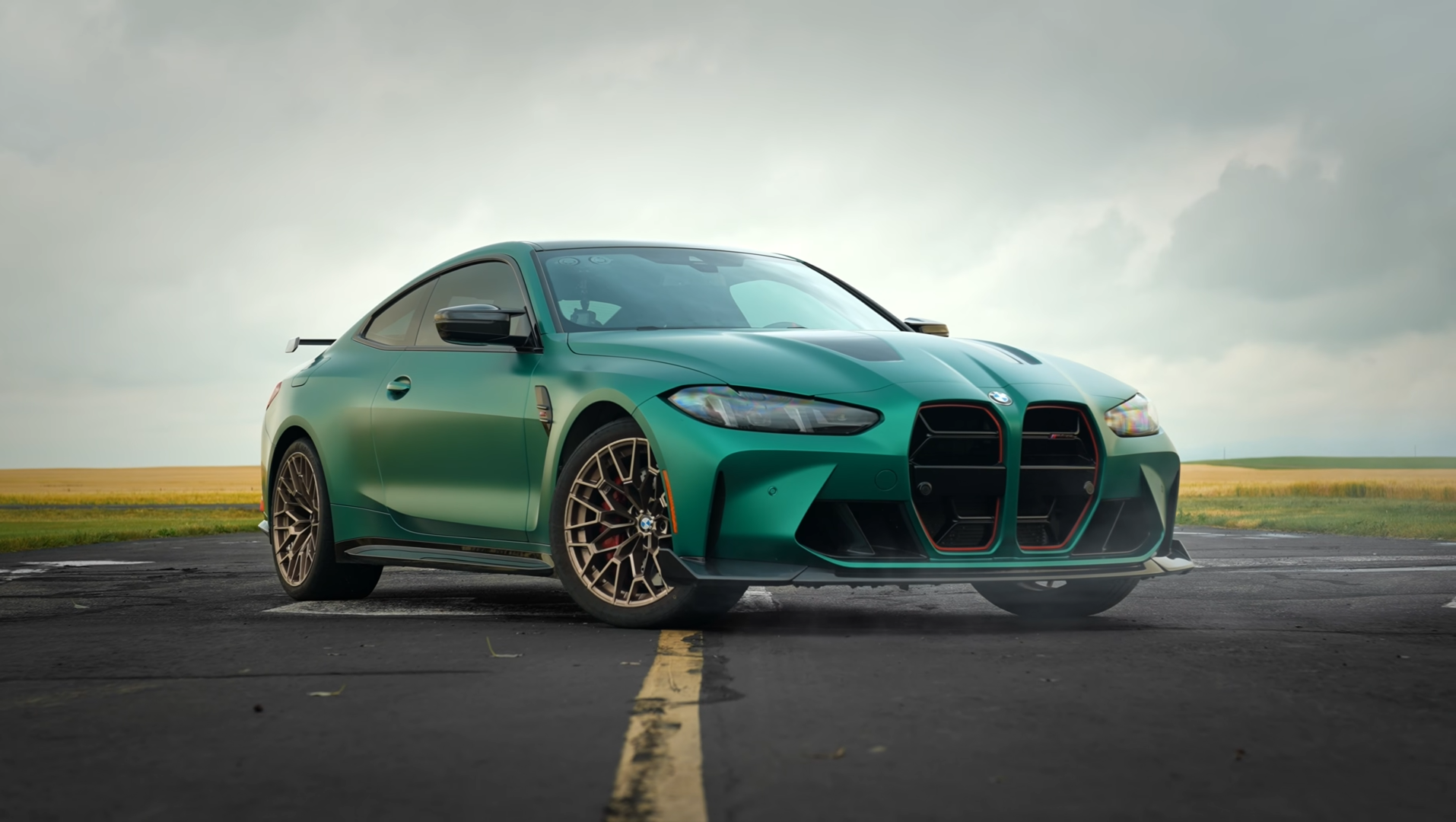
The BMW proved particularly difficult to dismiss because it combined relatively low weight with aggressive traction and rapid shifts. Against cars with substantially greater output, the M4 CS demonstrated how effectively chassis balance and drivetrain configuration can compensate for a power deficit.
Porsche 911 GTS T-Hybrid: Technology Against Muscle
The Porsche 911 Carrera 4 GTS T-Hybrid brought another interpretation of modern performance. Its turbocharged flat-six works with an electrified turbocharging system and hybrid assistance to produce approximately 532 hp and 449 lb-ft of torque. At just over 3,600 pounds, it was the lightest car in the original group.
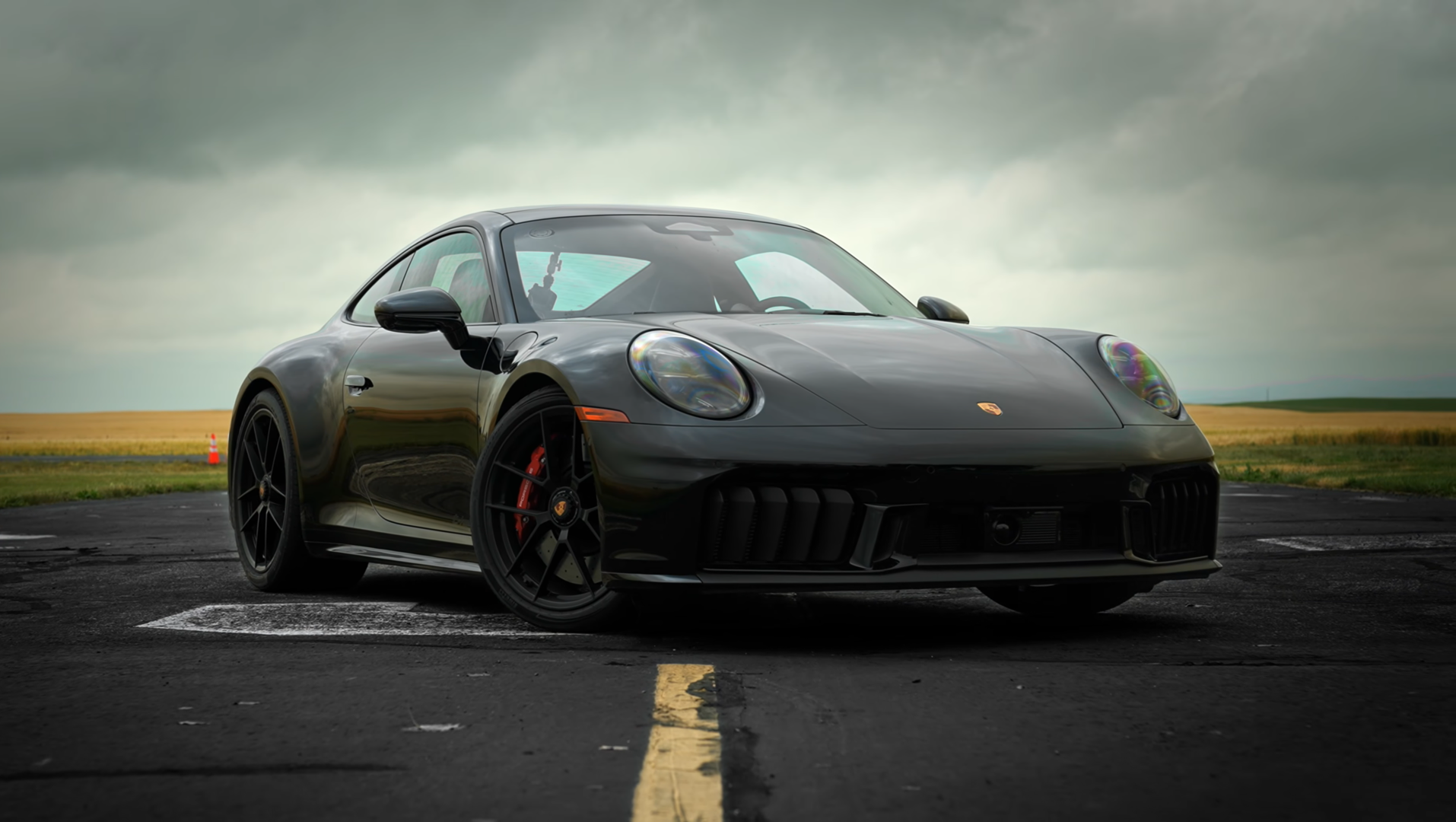
The hybrid system’s most important contribution was not simply additional power. Electric assistance helps build torque almost immediately, reducing the traditional delay associated with turbocharged engines. Combined with all-wheel drive and Porsche’s lightning-fast PDK transmission, that gave the 911 an exceptionally effective launch.
The result was a car capable of punching significantly above its power rating.
The Wild Cards Arrive
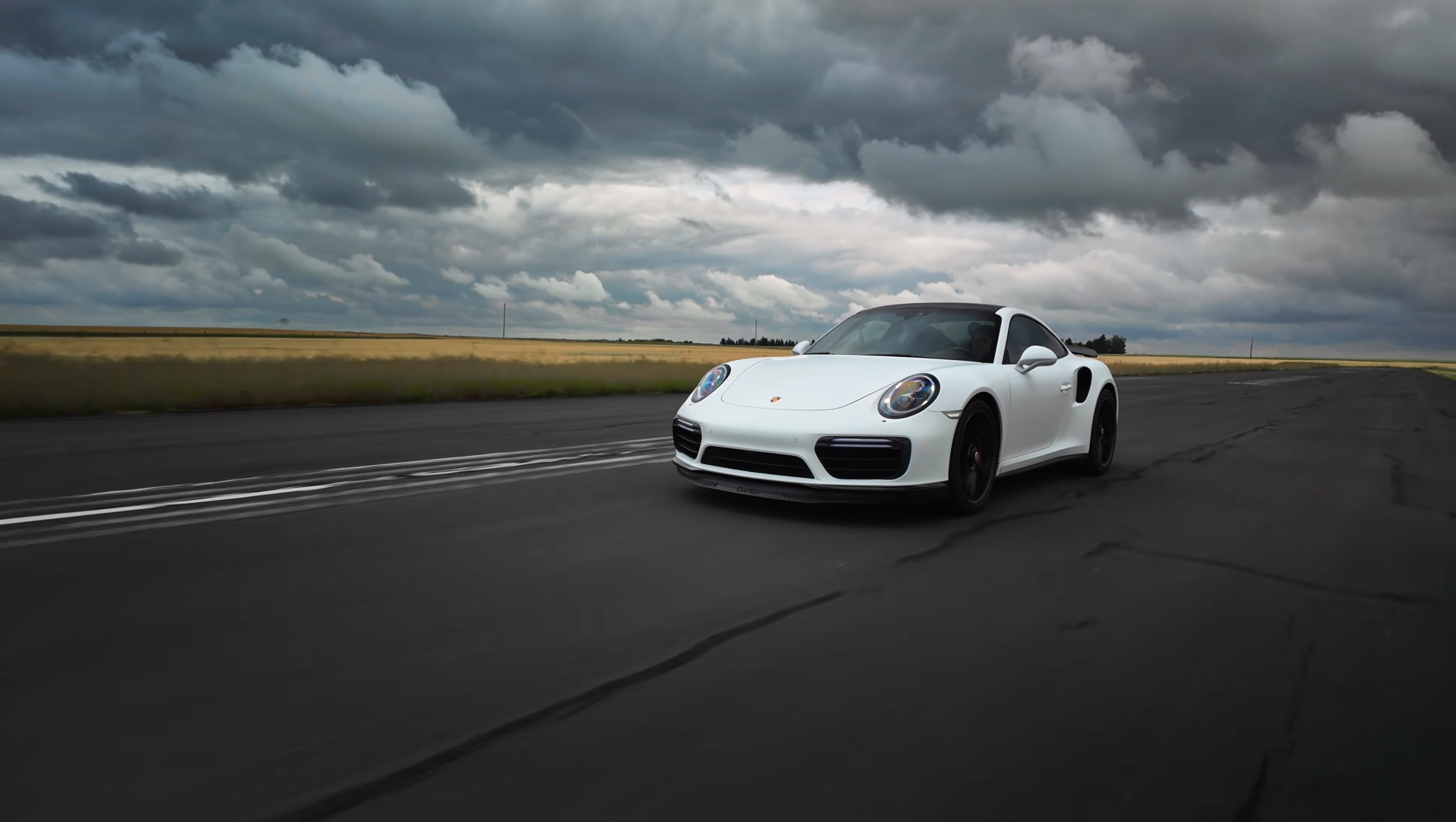
Then the competition escalated. A 2017 Porsche 911 Turbo S, modified with a GIAC tune, Wagner intercoolers and a Kline exhaust, joined the field. Its twin-turbo flat-six produced approximately 720 hp and 650 lb-ft, while its roughly 3,500-pound weight and all-wheel drive made it a formidable half-mile weapon. Its claimed 0–62-mph time of approximately 2.6 seconds explains why.
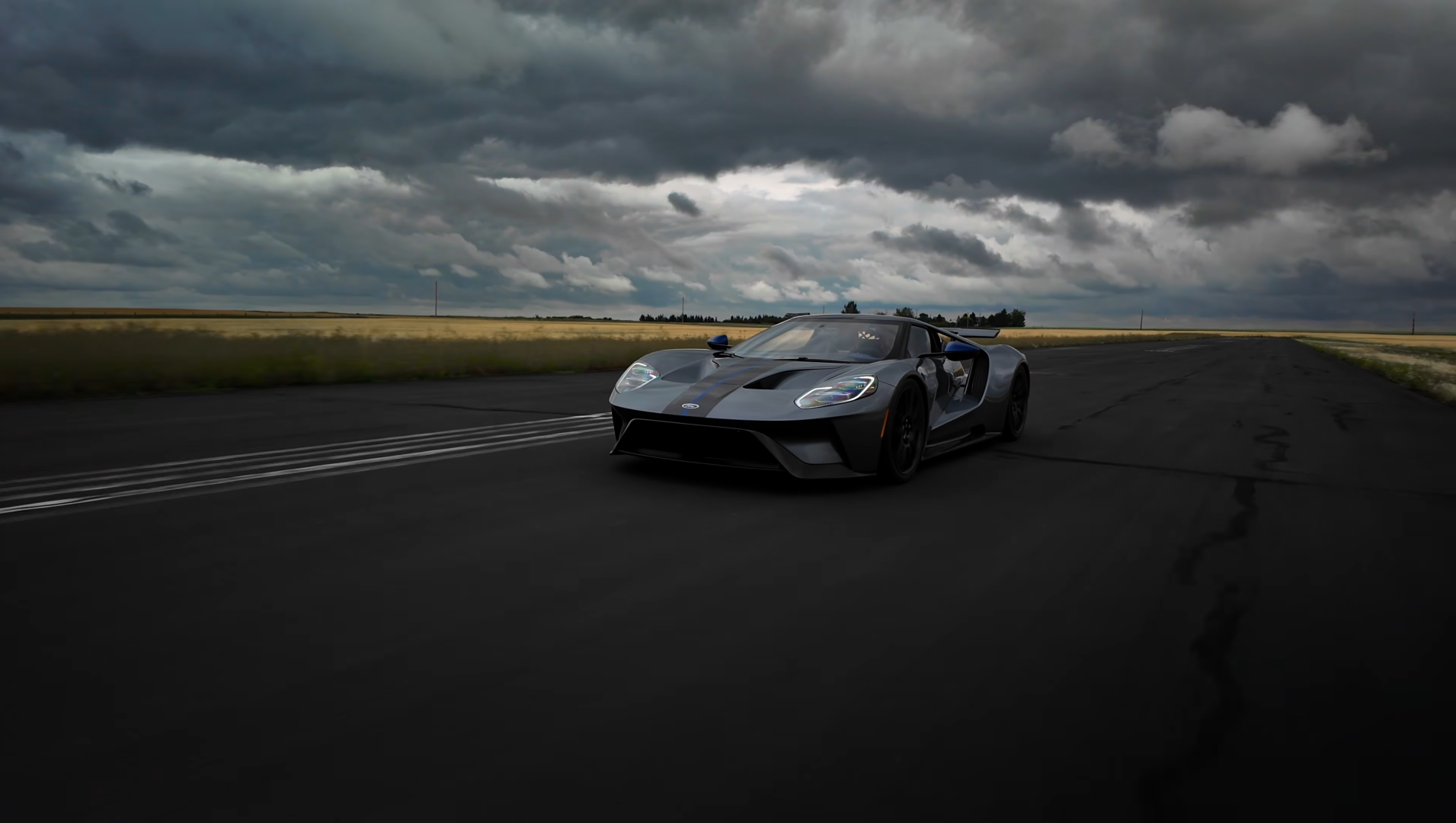
The final challenger was the 2022 Ford GT, powered by a mid-mounted 3.5-liter twin-turbocharged EcoBoost V6 producing 660 hp and 550 lb-ft. At just over 3,300 pounds, it was the lightest machine in the expanded field, although its rear-wheel-drive layout made putting that power down more difficult than for the AWD contenders.
What the Half-Mile Revealed
The most revealing aspect of the event was the contrast between power and traction.
The Mustang GTD possessed the biggest engine-output figure of the original lineup by a substantial margin, but its early runs showed that horsepower means little when the rear tires cannot convert it into forward motion. The 911 GTS, M4 CS and AMG demonstrated the value of all-wheel drive, while the tuned Turbo S showed just how devastating Porsche’s formula can become when additional power is added.
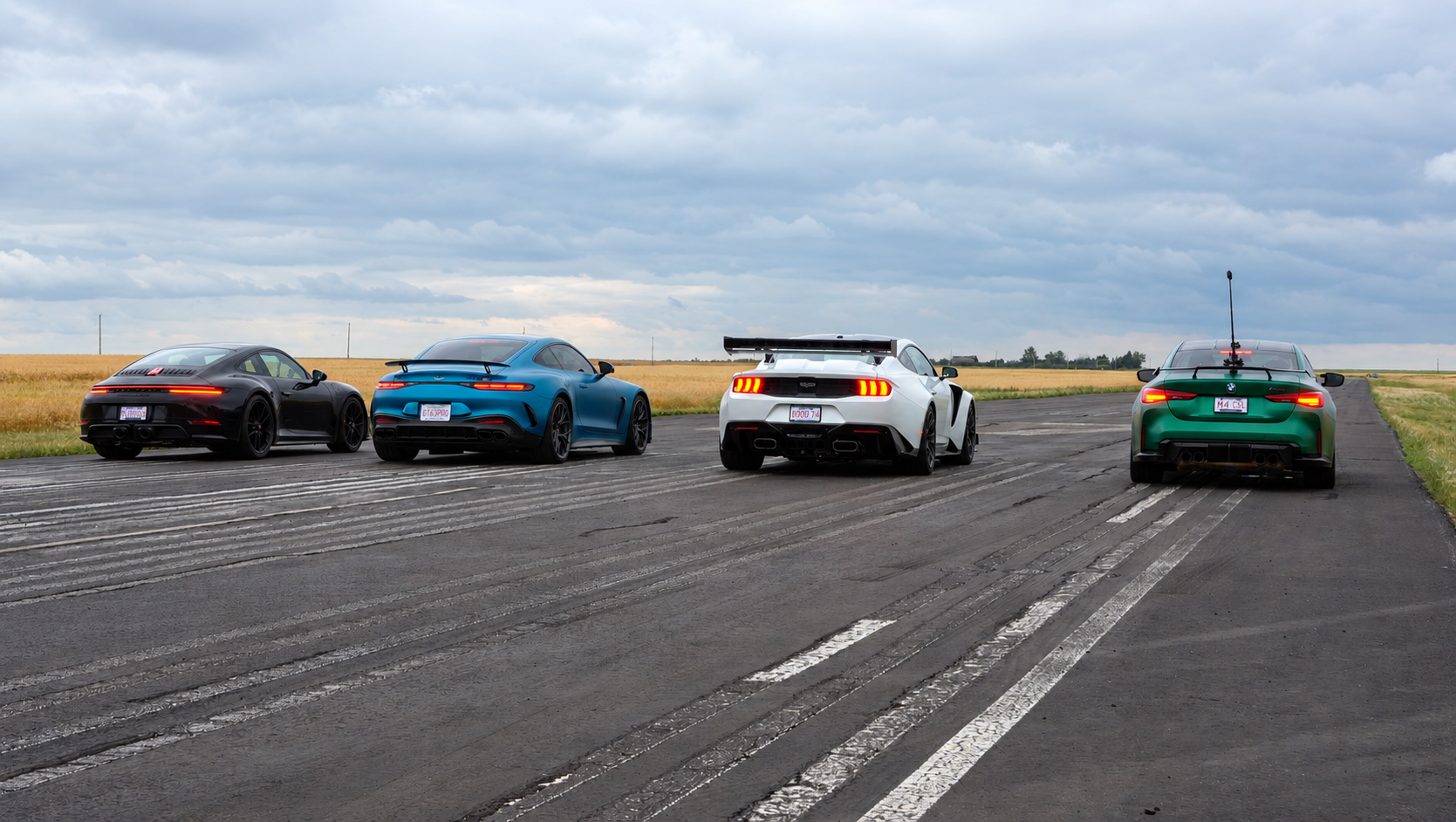
Yet the GTD remained the car that demanded the most attention. Its performance is not built around a single specification. The supercharged V8, rear transaxle, sophisticated suspension and extensive aerodynamic development represent Ford’s attempt to transform the Mustang into something capable of competing with genuine exotic machinery.
The half-mile runway therefore became more than a drag strip. It was a test of whether America’s most ambitious Mustang could turn 815 hp and race-derived engineering into usable speed. And when the corners disappeared, the GTD finally had the space to show exactly how serious Ford’s transformation really was.
Source: Mercedes-Benz Downtown Calgary