
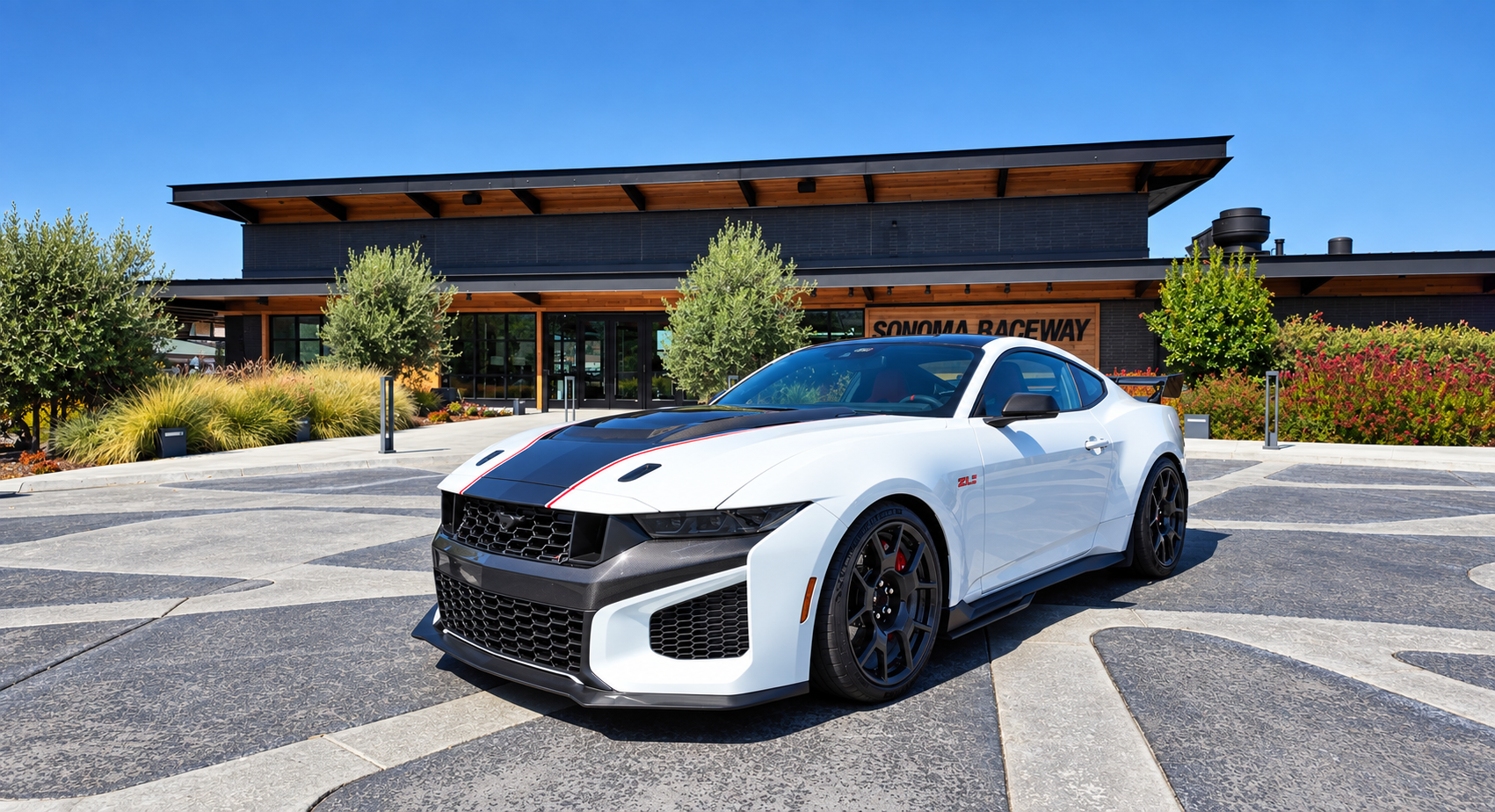
The Ford Mustang Dark Horse SC is far more than a standard Dark Horse fitted with a supercharger. The Fast Lane Car’s evaluation of the high-performance Mustang on winding roads outside Napa, California, and on the drag strip reveals a machine engineered around aggressive handling, enormous power, and track-focused feedback. The result is a Mustang that occupies a very different place in the lineup from its standard counterpart.
Built for Aggressive Driving
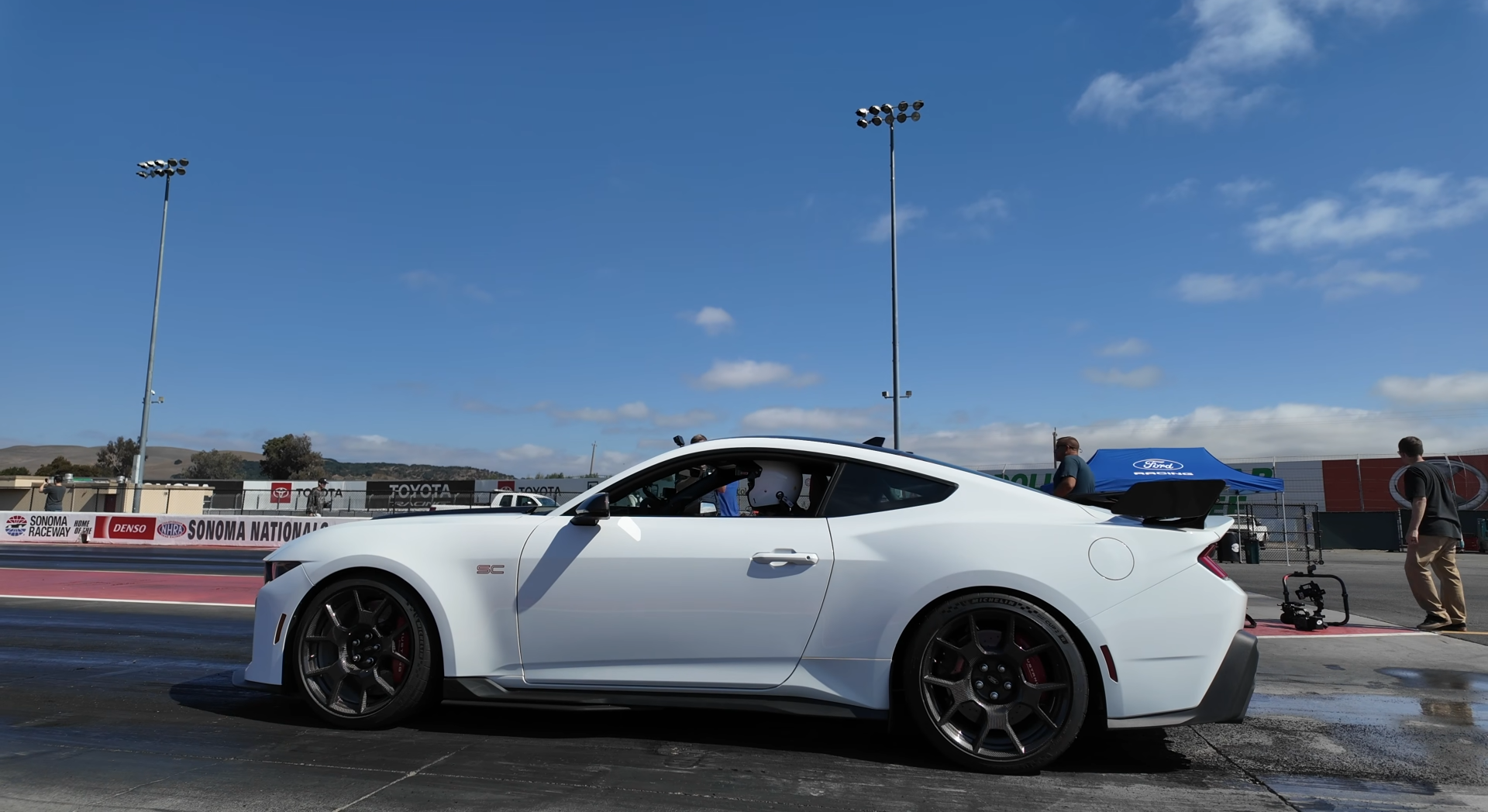
At the heart of the Dark Horse SC is a supercharged 5.2-liter V8 producing 795 horsepower and 660 lb-ft of torque. Power is delivered through a seven-speed dual-clutch transmission, with no manual option. But the engine is only one component of the transformation. The car is a full inch wider than a standard Dark Horse and incorporates revised suspension tuning, a GTD-derived steering rack, wider bodywork, extensive aerodynamic hardware, and available carbon-fiber wheels.
The track-focused configuration pushes the concept even further. A large rear wing can generate more than 600 pounds of downforce at the car’s 180-mph top speed, while the available track package adds hardware such as carbon-ceramic brakes and specialized aerodynamic and chassis components. Ford’s development work was conducted alongside the Mustang GTD and GT3 programs, emphasizing that the Dark Horse SC was conceived as a comprehensive performance package rather than simply a more powerful Mustang.
A Different Kind of Street Car
On the winding roads around Napa, the Dark Horse SC demonstrated why its chassis development matters. Its steering provides unusually detailed feedback, communicating what the front tires are doing and helping the driver place the wider-than-standard Mustang accurately in the lane. The substantial 305-section front and 315-section rear tires provide considerable mechanical grip, while the stiff suspension keeps the body controlled through demanding corners.
That precision comes with compromises. The aggressive alignment can cause the car to follow road ruts, while the stiff suspension transmits pavement texture directly through the seats and pedals. Road debris is also readily audible as the wide tires throw dirt and gravel into the wheel wells. On a wet, twisting public road, these characteristics demand greater attention from the driver rather than the relaxed behavior expected from a conventional grand tourer.
Track Pack Versus Standard Configuration
The difference between the regular Dark Horse SC and the track-oriented version becomes particularly important for potential owners. The standard configuration retains substantial performance while offering noticeably greater compliance on public roads. The track package, by contrast, sharpens the car’s responses and adds equipment intended to maximize circuit performance.
The distinction is most apparent in the steering and chassis behavior. The track-focused car feels more immediate and “darty,” constantly communicating the road surface and demanding greater driver attention. Its aggressive alignment and specialized hardware improve precision, but they also make the car considerably less relaxed during ordinary road driving. By comparison, the standard Dark Horse SC settles down more effectively when cruising through traffic and is easier to live with on the street.
Supercharged Acceleration
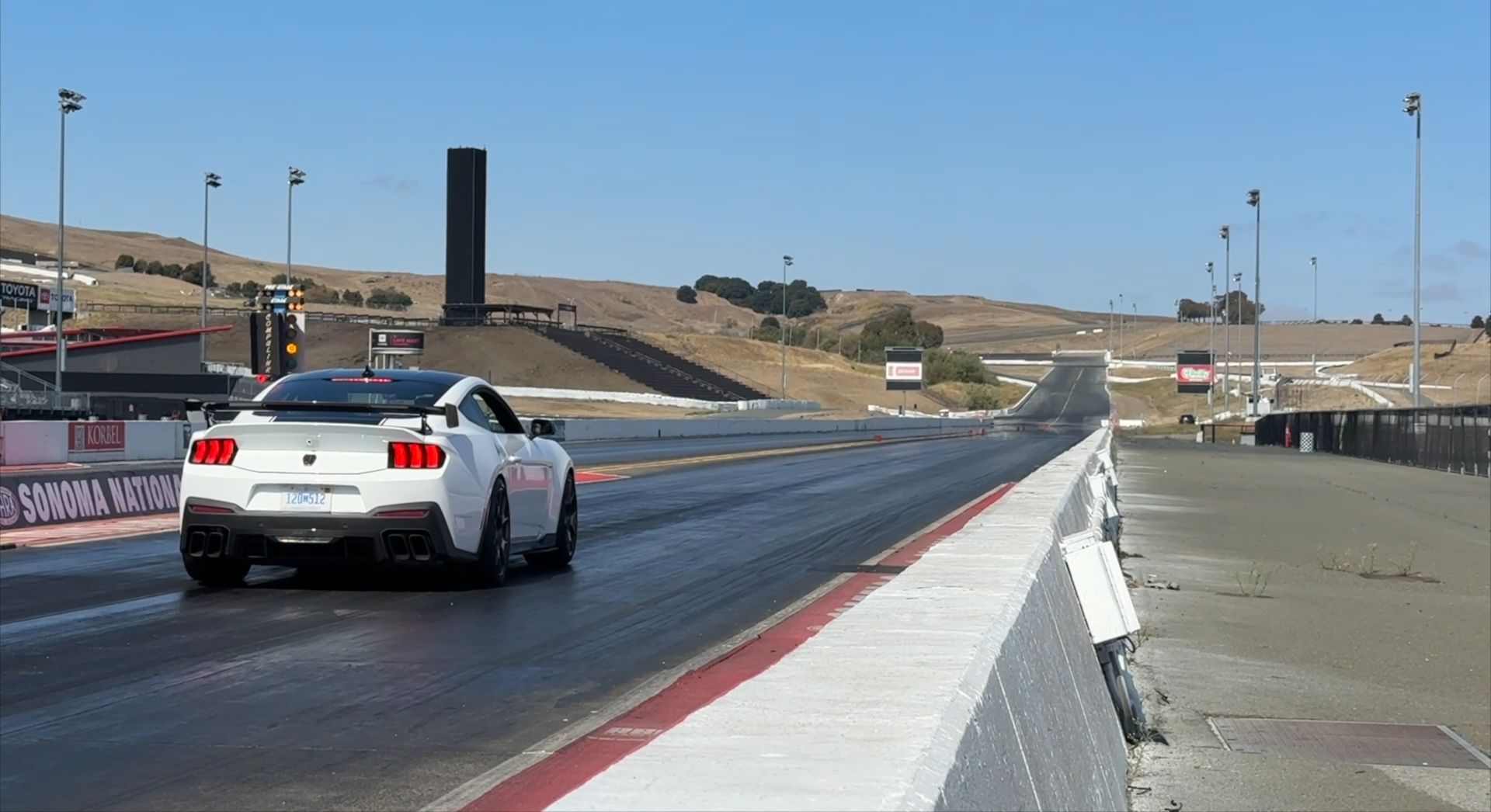
The Dark Horse SC’s straight-line performance is equally dramatic. With 795 hp, 660 lb-ft of torque, and 315-section rear Michelin Pilot Sport Cup 2 RS tires, the Mustang has the power and traction necessary to make full use of its engine. During the quarter-mile testing, the car recorded a 10.74-second pass, while a development engineer reportedly achieved a 10.66-second run under the same event conditions.
The character of the acceleration is notable because the Dark Horse SC is not configured primarily as a drag-racing muscle car. Its chassis and aerodynamic package are intended to make the Mustang exceptionally capable through corners, yet the supercharged V8 provides relentless acceleration across the rev range. The engine combines substantial low-end torque with a redline above 7,000 rpm, giving the driver strong power availability throughout the operating range.
The Price of Performance
The engineering transformation also carries a substantial financial premium. The Dark Horse SC starts at roughly $16,000 more than the non-supercharged Dark Horse, while the tested car’s extensive options pushed its price to approximately $175,000. The track package alone was quoted at $36,500, illustrating how quickly the cost can escalate when the Mustang is equipped for maximum circuit performance.
That pricing makes the distinction between the two configurations particularly relevant. A buyer who primarily drives on public roads may find the standard Dark Horse SC’s greater compliance more useful, while someone seeking maximum track capability may place greater value on the additional chassis, braking, aerodynamic, and wheel upgrades.
More Than a Supercharged Dark Horse
The Dark Horse SC demonstrates how extensively Ford has reworked the Mustang platform for high-performance driving. Its supercharged V8 delivers extraordinary straight-line performance, but the wider body, GTD-derived steering, revised suspension, massive tires, aerodynamic package, cooling upgrades, and track-focused options collectively define the car.
The result is a Mustang that behaves less like a conventional high-powered grand tourer and more like a road-legal performance machine. The standard Dark Horse SC provides a more usable balance between aggression and everyday driving, while the track package pushes the same fundamental platform toward maximum precision and circuit capability. For potential owners, that distinction may ultimately matter as much as the headline horsepower figure.
Source: The Fast Lane Car