

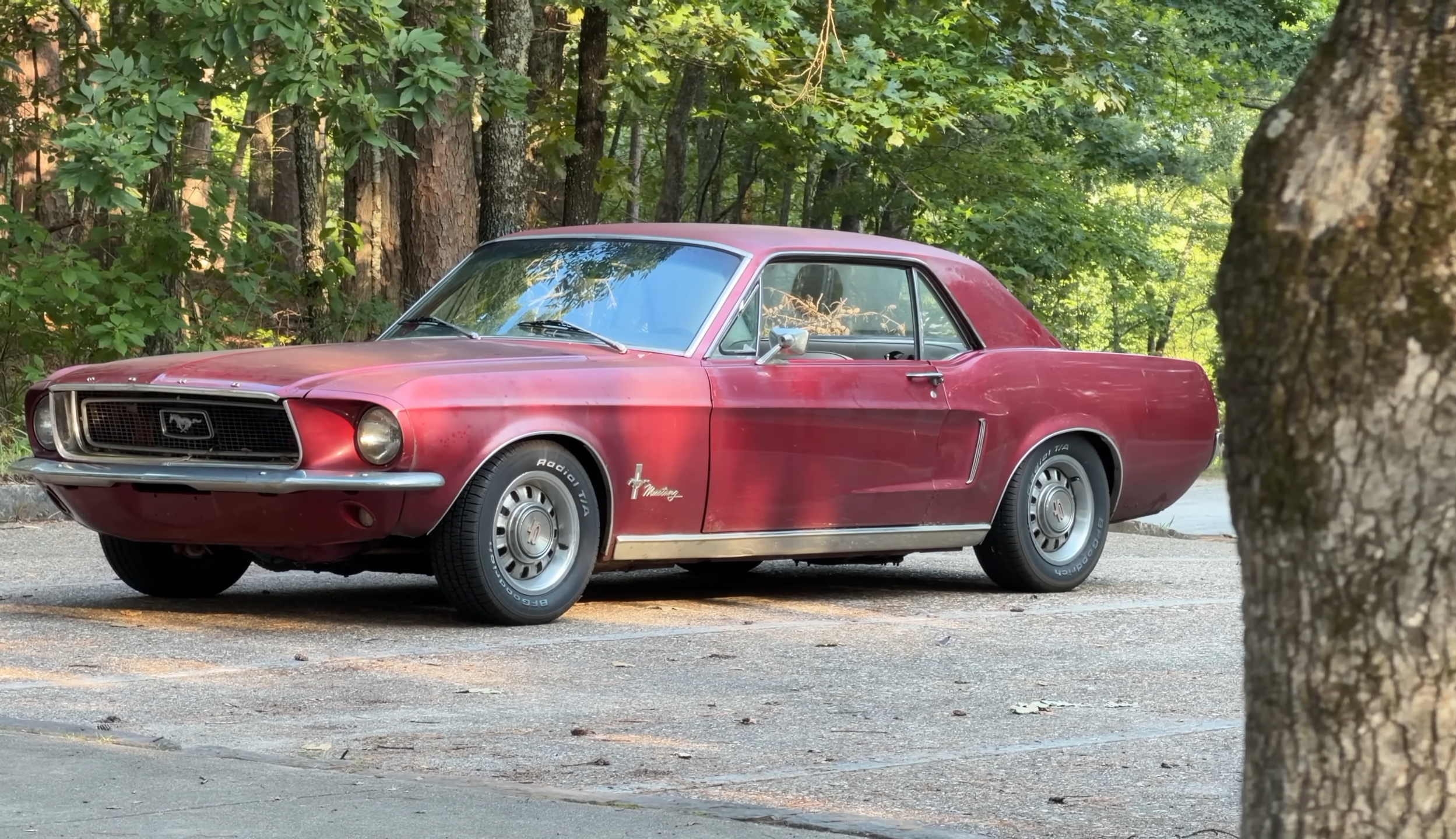
Few automotive adventures begin with as much uncertainty as attempting to drive a 1968 Ford Mustang across the United States without knowing its mechanical condition. For Redline Ranch, the challenge was even greater: the classic Ford had spent approximately five years sitting idle in Florida, had never been driven by its new owner, and needed to survive more than 3,000 miles of unfamiliar roads before reaching its new home in New Mexico.
The journey was also personal. Chloe, a member of the Redline Ranch team, had wanted the Mustang for more than a decade, and the car had remained in her family since the 1990s. Acquiring it presented an opportunity to rescue a family classic and turn its return to the road into a cross-country adventure. Neither the car’s exact engine specification nor its ability to run reliably was confirmed before the trip began.
Bringing a Neglected Mustang Back to Life
After arriving in Florida, the team discovered a surprisingly complete car. Beneath the hood was a 302-cubic-inch small-block V8, paired with a three-speed manual transmission. The engine bay showed signs of age and minor fluid leaks, but the oil level was initially satisfactory, and the cooling system still contained coolant.
The interior, however, reflected years of exposure to Florida’s humid climate. Mold and mildew covered parts of the headliner, seats, and other surfaces, while rainwater had left the floorboards wet. The battery was dead, and the brake pedal initially offered little resistance.
The first attempts to start the engine revealed another obstacle: the starter struggled to engage the flywheel. A replacement battery eventually restored cranking, but the team still needed to address the stale fuel that had remained in the tank during the car’s extended inactivity.
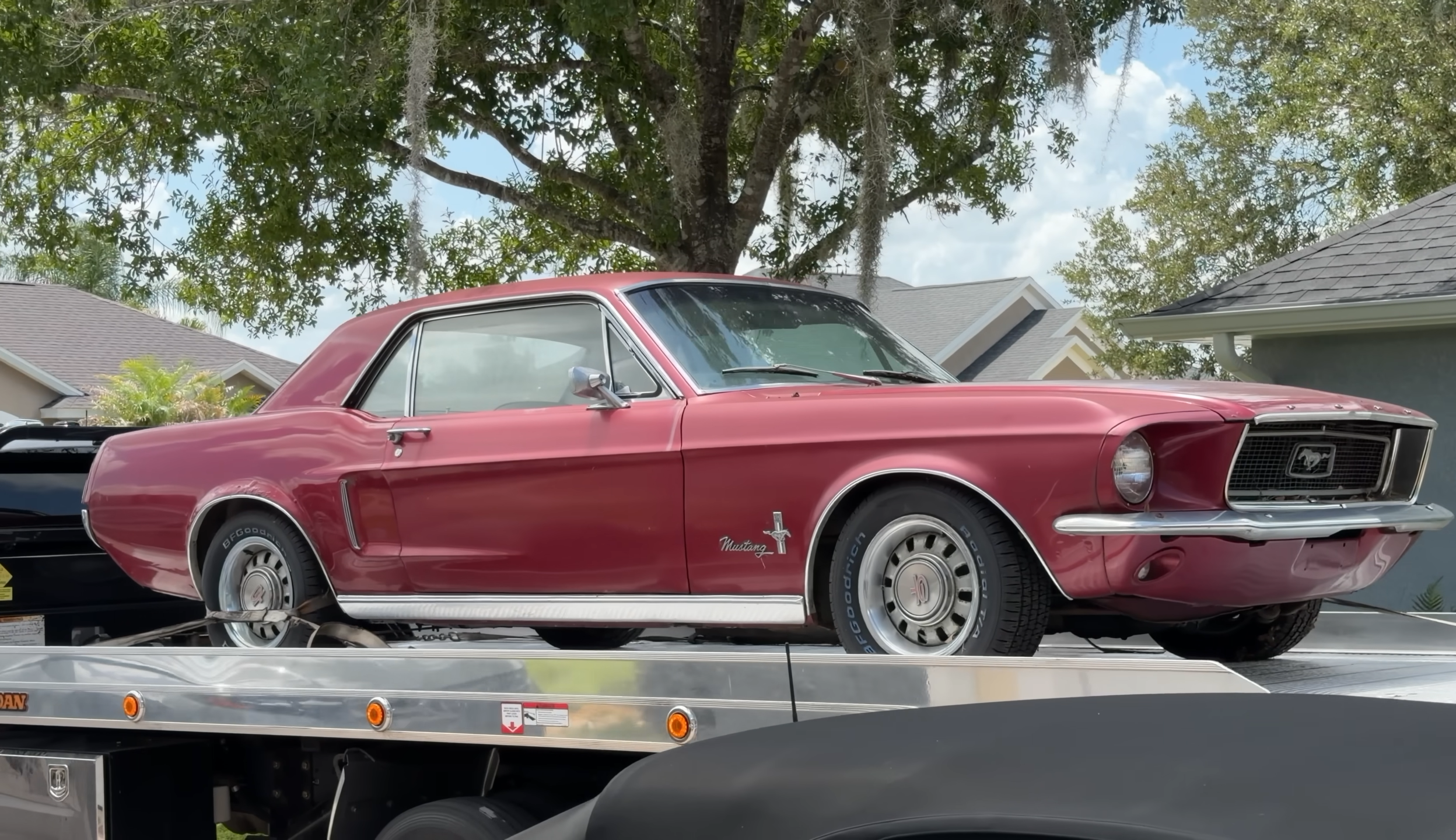
Unable to work freely in the original neighborhood, the team moved the Mustang to a more suitable location. They drained the old gasoline, added fresh fuel, replaced a contaminated fuel filter, and checked the essential fluids. After several attempts, the V8 finally fired.
The first test drive revealed a car that could move under its own power, although the brakes lacked confidence-inspiring feel. With limited time and no comprehensive mechanical inspection, the team faced an important decision: prepare the Mustang for a demanding journey or abandon the ambitious plan.
They chose the road trip.
More Than 3,000 Miles on Back Roads
Redline Ranch deliberately avoided interstate highways for much of the journey, preferring secondary roads that offered a closer look at America’s small towns, rural landscapes, and changing scenery. The route began with a detour south to Key West before turning north and west toward New Mexico.
The Mustang initially performed better than expected. It covered hundreds of miles through Florida, reaching Georgia without major mechanical trouble. However, its age soon began to show.
A persistent squeaking noise from the front driver’s-side wheel prompted an unscheduled repair in a NAPA Auto Parts parking lot. The team removed the wheel hub, inspected the bearings, cleaned away old grease, and repacked the bearings with high-temperature grease. The work temporarily interrupted the journey as thunderstorms approached, but the noise subsequently disappeared.
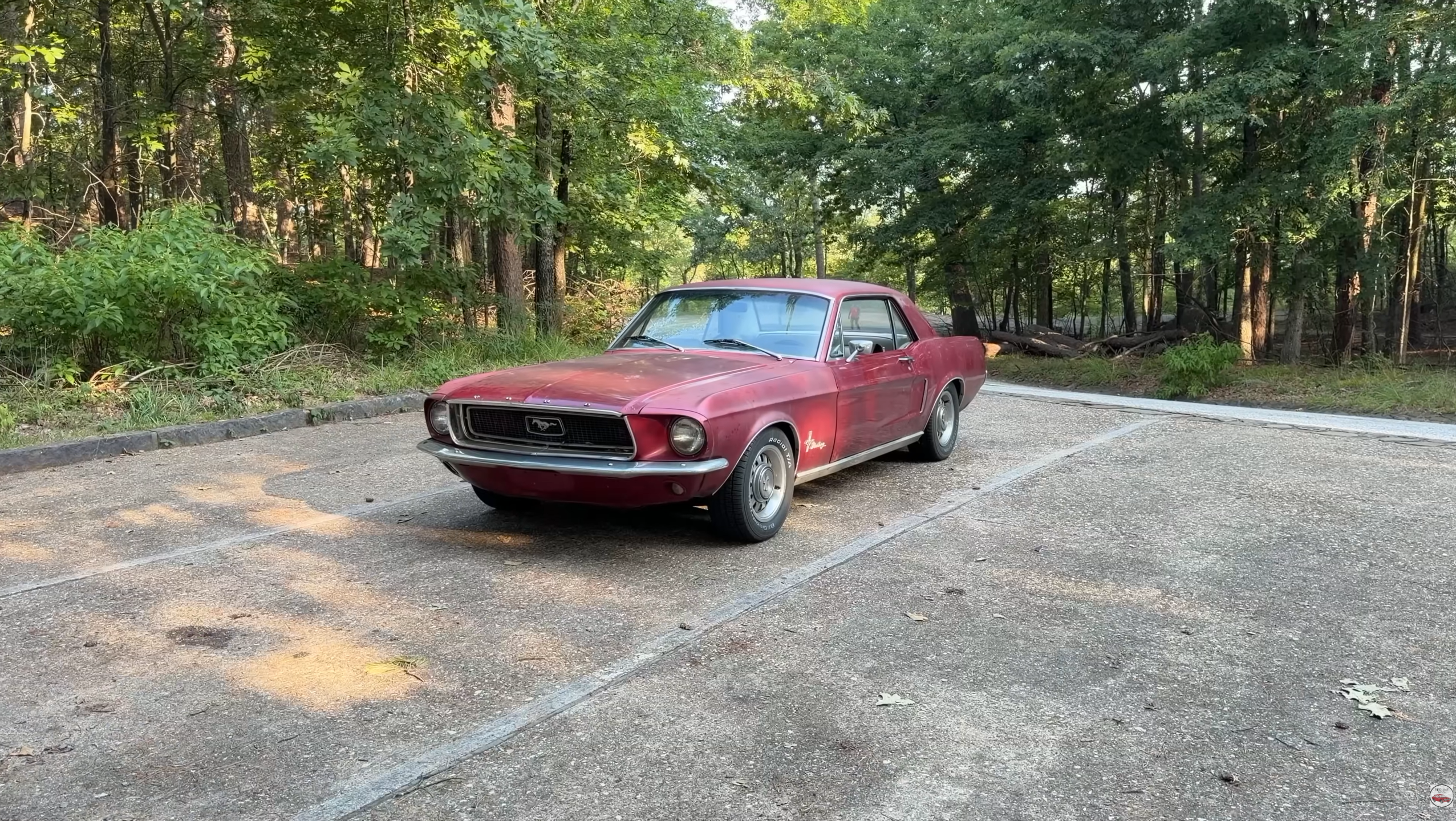
Electrical trouble followed. The engine suddenly stopped running, and testing revealed a loss of ignition spark. The team investigated the ignition coil and its electrical connections before getting the engine running again. They also discovered that an incorrect understanding of Ford’s cylinder numbering had led to confusion when arranging the distributor wires.
Once underway, the Mustang continued through Georgia, Alabama, Mississippi, and Arkansas. The team crossed the Mississippi River, visited Hot Springs National Park, and eventually reached Oklahoma before turning north toward Kansas.
Along the way, they restored the operation of the tachometer by reconnecting a loose wire. The repair provided a useful reminder that older vehicles often reward straightforward diagnosis rather than complicated electronic troubleshooting.
Heat, Fuel Problems, and the Final Push
The most persistent challenge was temperature management. Driving through the southern United States in summer meant dealing with outside temperatures approaching 95 degrees Fahrenheit, high humidity, and an aging cooling system without the convenience of modern climate control.
The Mustang’s temperature gauge began creeping upward during hot conditions, particularly after the engine had been working hard. The team stopped to allow the engine to cool and topped up the coolant as necessary. Additional concerns included an erratic speedometer, suspected speedometer-cable problems, and occasional hesitation that may have been related to fuel delivery and heat.
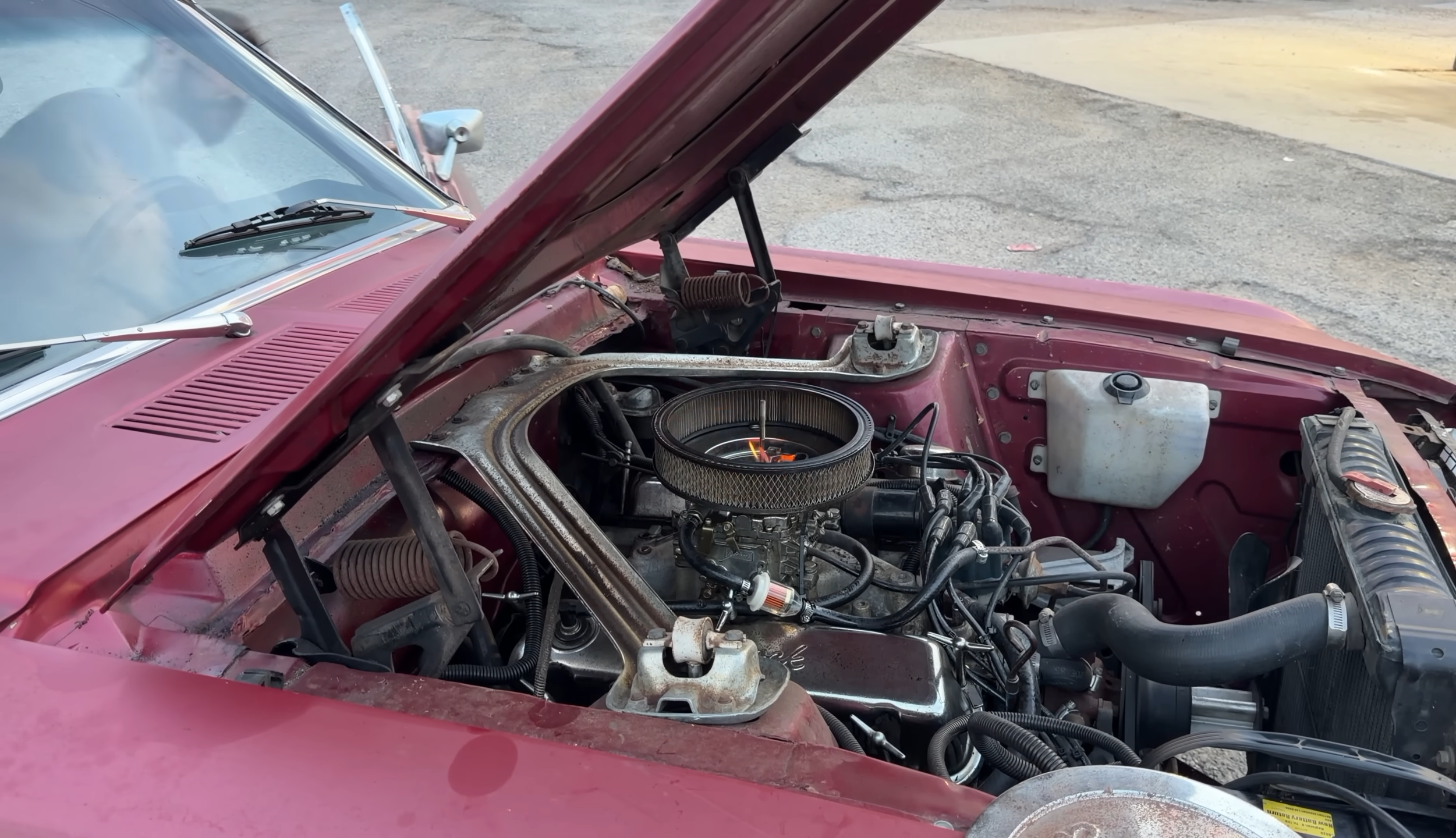
Fuel economy varied considerably, with reported figures ranging from approximately 12 to more than 18 miles per gallon. The team also replaced a dirty fuel filter late in the journey after the engine began struggling at higher speeds.
By the time the Mustang reached Kansas, it had covered more than 2,000 miles. Colorado and the climb toward Raton Pass brought the journey closer to home, but the increasing elevation also presented a challenge for the carbureted engine. Changes in air density can affect the air-fuel mixture, making carburetor calibration particularly relevant when driving from sea level to elevations approaching 8,000 feet.
Then, with New Mexico within reach, the accelerator linkage came apart near Trinidad, Colorado. The team improvised a repair and continued.
The final miles proved unexpectedly difficult. The engine repeatedly stalled near home, with fuel starvation and vapor lock suspected. After further troubleshooting, the team installed an auxiliary electric fuel pump using a temporary roadside wiring arrangement. The repair restored fuel delivery sufficiently for the Mustang to complete the journey under its own power.
A Successful Journey, but More Work Remains
Redline Ranch ultimately brought the 1968 Mustang home after more than 3,000 miles, over 50 hours of driving, and six days on the road. The trip crossed nine states and included everything from routine fuel stops to roadside mechanical repairs.
The car’s survival was impressive, but the journey did not mean it was mechanically restored. The team identified several priorities for subsequent work, including a comprehensive brake service, carburetor tuning for New Mexico’s higher elevation, attention to the fuel system, and a thorough cleaning of the exterior and mildew-affected interior.
The Mustang’s four-wheel drum brakes, in particular, warranted a proper inspection before further long-distance driving. Repacking wheel bearings and improving pedal feel were useful temporary measures, not substitutes for a complete assessment of the braking system after years of inactivity.
The trip also demonstrated the strengths and weaknesses of a classic carbureted V8. Its relatively straightforward mechanical design allowed the team to diagnose and address several problems with basic tools and commonly available parts. However, age-related wear, heat sensitivity, electrical faults, and deteriorating fuel-system components made reliability difficult to guarantee.
For Redline Ranch, the adventure became more than a test of an old Ford’s endurance. It was the recovery of a long-desired family car and an introduction to a generation of automotive engineering that demands a different relationship between driver and machine.
The Mustang completed the journey, but its next chapter will involve the less dramatic and arguably more important work of turning a road-trip survivor into a dependable classic.
Source: Redline Ranch