

For a car with one of the most recognizable names in American automotive history, few models have attracted as much criticism from enthusiasts as the second-generation Ford Mustang II. Introduced for the 1974 model year, it replaced the increasingly large and powerful Mustangs of the early 1970s with a smaller, lighter, and more economical design. Its arrival marked a dramatic change in the identity of Ford’s celebrated pony car.
The Mustang II is frequently criticized for its modest performance, compact-car underpinnings, and departure from the V8-powered muscle-car tradition established by earlier Mustangs. Yet its reputation is more complicated than its detractors suggest. The car arrived during an energy crisis, won MotorTrend’s 1974 Car of the Year award, and sold nearly 386,000 units in its first model year.
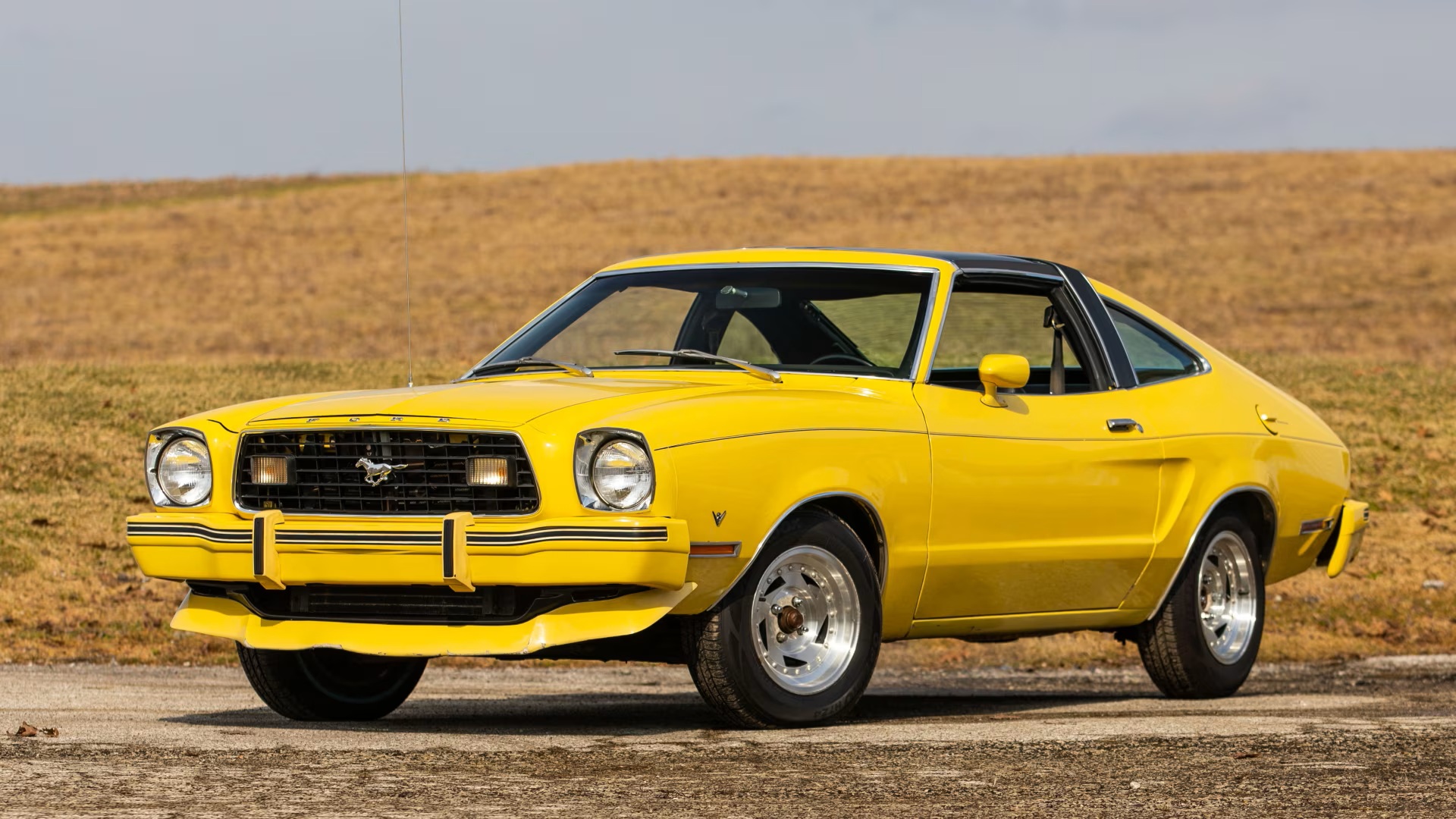
Understanding why the Mustang II remains so divisive requires looking beyond its specifications. It is a story about changing consumer priorities, tightening automotive regulations, and the difficult balance between preserving a performance-car identity and adapting to a rapidly changing market.
Why the Mustang II Became the Most Disliked Mustang
The Mustang II’s reputation stems primarily from its departure from the formula that made the original Mustang successful. When Ford introduced the first-generation model in 1964, it combined sporty styling, a relatively affordable price, and a wide range of engines. Buyers could choose economical six-cylinder versions or increasingly powerful V8 models, allowing the Mustang to appeal to a broad audience.
By the early 1970s, however, the Mustang had grown substantially in size and weight. The 1971–1973 models were larger than their predecessors, while rising fuel prices, insurance costs, and emissions requirements made high-performance vehicles increasingly difficult to sell and engineer.
Ford responded by changing direction. Rather than continue building a larger pony car, the company developed the Mustang II around compact dimensions and improved efficiency. The resulting vehicle was much closer in size to the original 1965 Mustang than the increasingly bulky cars that preceded it.
For buyers seeking a practical, economical coupe, this approach made sense. For enthusiasts who associated the Mustang with V8 power, aggressive acceleration, and American muscle, it represented a substantial retreat.
The 1974 Mustang II: A Mustang Without a V8
The 1974 Mustang II made one of the most controversial decisions in Mustang history: Ford eliminated the V8 engine entirely for the first time in the nameplate’s history.
The launch lineup consisted of two engines:
-
2.3-liter Lima inline-four: The base engine produced approximately 85 horsepower in its original configuration.
-
2.8-liter Cologne V6: The optional engine offered more displacement and additional torque, but it still fell far short of the performance delivered by the V8 Mustangs of the late 1960s.
The four-cylinder engine was designed with economy in mind, while the V6 provided a more flexible option for everyday driving. Neither delivered the sound, acceleration, or high-performance character that enthusiasts expected from a Mustang bearing badges such as Mach 1.
The 1974 model also abandoned the convertible body style, further distancing itself from the Mustang’s earlier image. Buyers could choose between a notchback coupe and a hatchback, but neither offered the visual or mechanical drama associated with the most celebrated first-generation models.
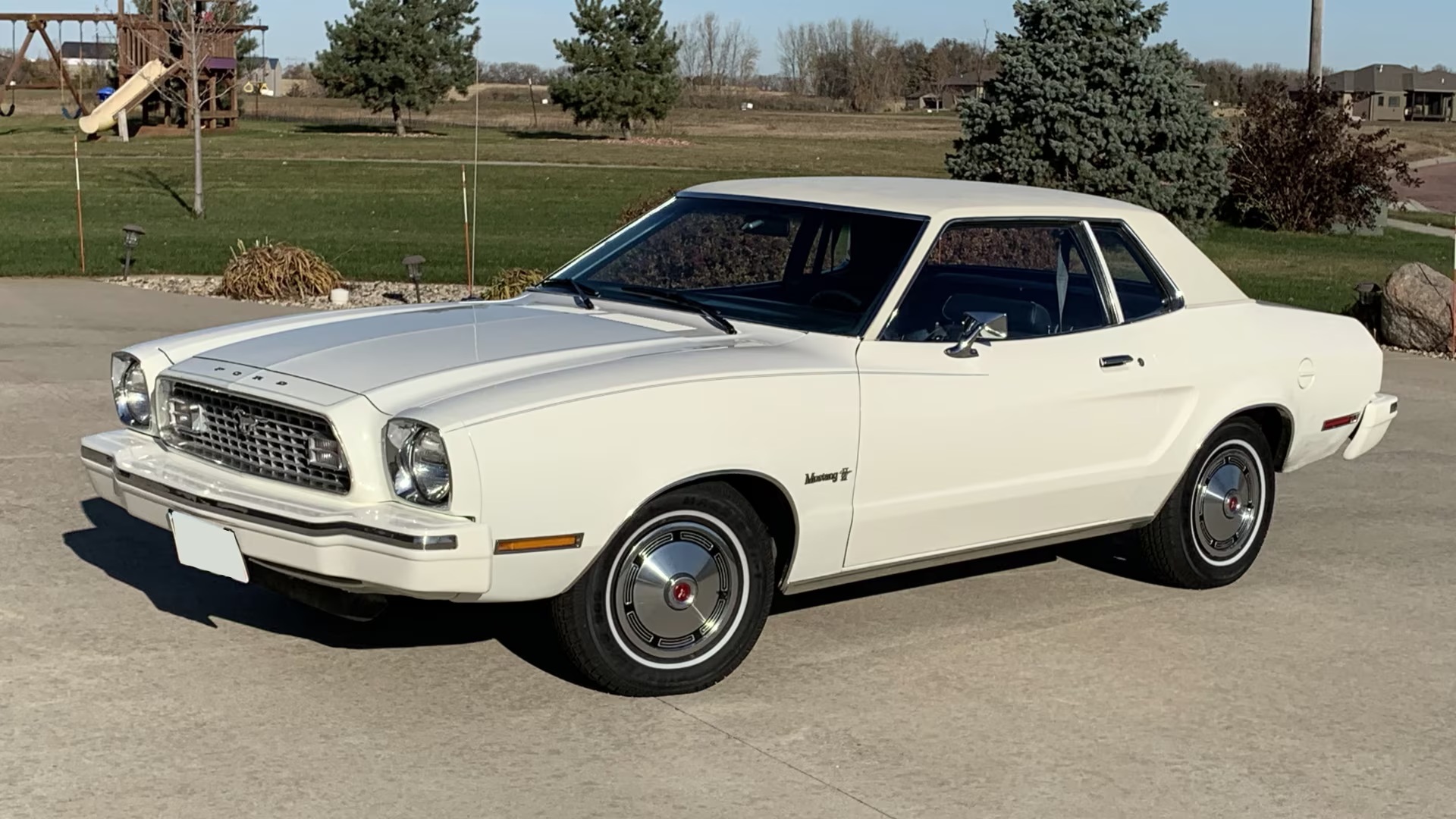
The absence of a V8 was particularly significant because Ford had spent the preceding decade building the Mustang’s reputation around increasingly powerful engines. Models such as the Boss 302, Boss 429, and Mach 1 had helped establish the nameplate as a serious performance platform.
Against that background, the 1974 Mustang II looked less like an evolution of the original concept and more like a complete change of priorities.
The Pinto Connection and Its Impact on the Mustang’s Reputation
Another major source of criticism is the Mustang II’s relationship with the Ford Pinto. The Mustang II used architecture derived from Ford’s smaller Pinto, a subcompact economy car introduced for the 1971 model year.
For enthusiasts, that connection became shorthand for everything they disliked about the second-generation Mustang. The idea that an iconic pony car shared its foundations with an inexpensive economy vehicle made the Mustang II an easy target for jokes and criticism.
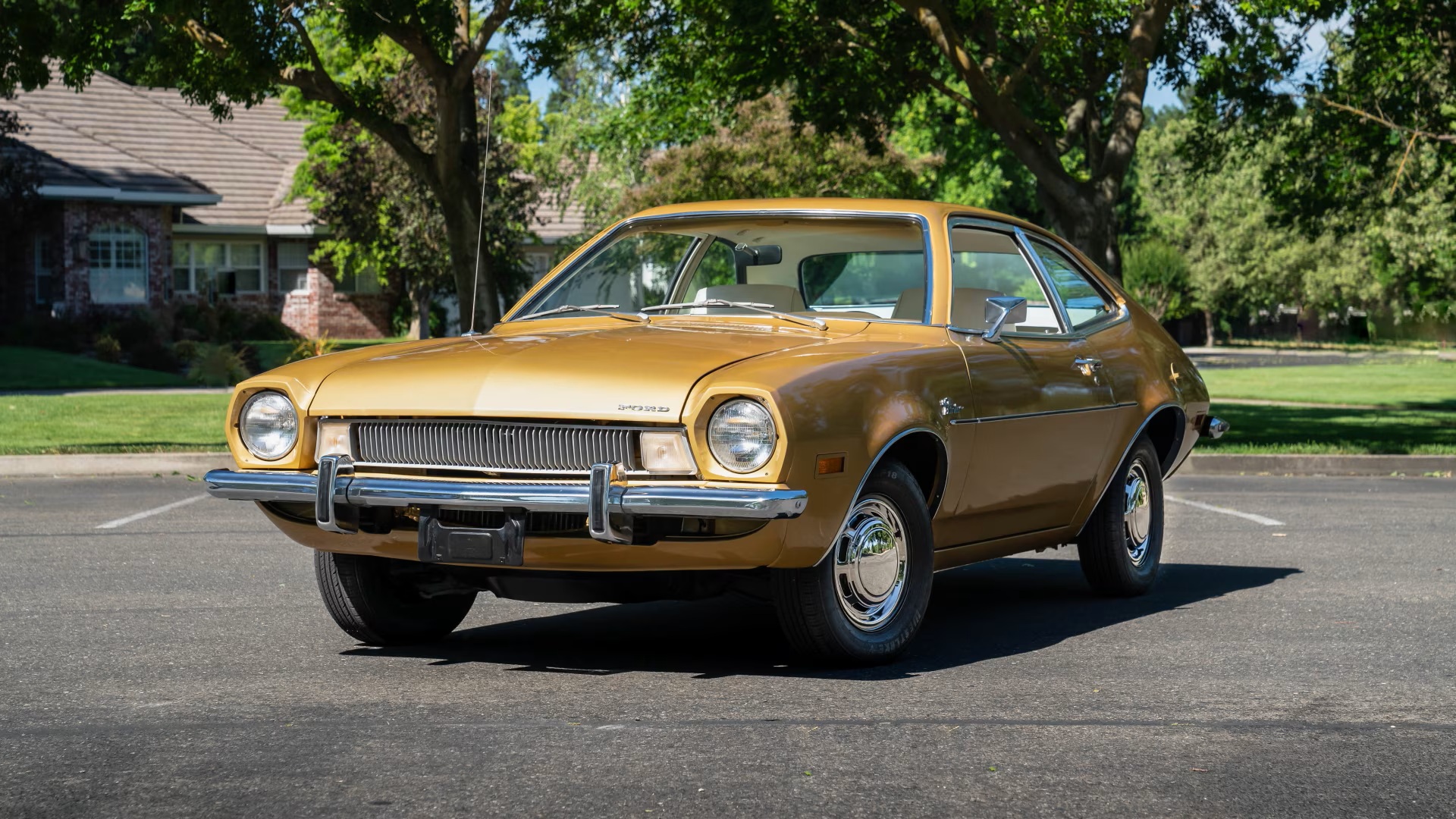
However, describing it as nothing more than a rebadged Pinto oversimplifies the engineering. Ford developed the Mustang II with a revised chassis configuration, a different body, Mustang-specific styling, and its own suspension and handling characteristics. The car also introduced rack-and-pinion steering to the Mustang lineup.
The Pinto connection nevertheless damaged its standing among enthusiasts. Even as Ford improved the Mustang II throughout its production run, the association reinforced the perception that the company had sacrificed performance and prestige to reduce costs.
The 1973 Oil Crisis Changed Everything
The Mustang II’s development cannot be understood without considering the economic conditions of the early 1970s.
The 1973 oil crisis caused fuel prices to rise sharply and gasoline shortages to emerge across the United States. Large, thirsty automobiles became more expensive to operate, and consumers increasingly considered smaller, more efficient vehicles.
At the same time, American automakers faced tightening emissions requirements and mounting pressure to improve fuel economy. Insurance costs also weighed on the performance-car market.
Ford anticipated these changes and positioned the Mustang II accordingly. Its shorter dimensions, lower weight, and smaller engines made it more appropriate for the new economic environment than the increasingly large Mustangs of 1971–1973.
The strategy worked. Ford sold approximately 385,993 Mustang IIs for the 1974 model year, making it one of the most successful launch years in Mustang history. The car subsequently received MotorTrend’s 1974 Car of the Year award.
That commercial success exposes the central contradiction surrounding the Mustang II: it disappointed many traditional performance enthusiasts while meeting the needs of a much broader group of buyers.
Ford Brought Back the V8 for 1975
Ford recognized that the Mustang still needed a performance-oriented option. For 1975, the company modified the Mustang II’s engine compartment to accommodate the 302-cubic-inch (4.9-liter) Windsor V8.
The returning V8 produced modest power by historical Mustang standards, with output varying by configuration and rating method. Contemporary published figures commonly put it around 129–140 horsepower. Emissions controls and the changing measurement standards of the period contributed to the gap between its output and that of earlier V8 engines.
Although the V8 restored an important part of the Mustang’s identity, it did not return the car to its late-1960s performance peak. The Mustang II remained a product of the emissions-constrained 1970s, when manufacturers had to balance power, fuel consumption, and regulatory compliance.
Ford also introduced appearance packages that attempted to restore some of the Mustang’s visual aggression.
The Cobra II, introduced for 1976, featured racing stripes, spoilers, hood detailing, and distinctive graphics. The King Cobra, offered for 1978, took the concept further with a prominent snake decal, a front air dam, and bold exterior graphics.
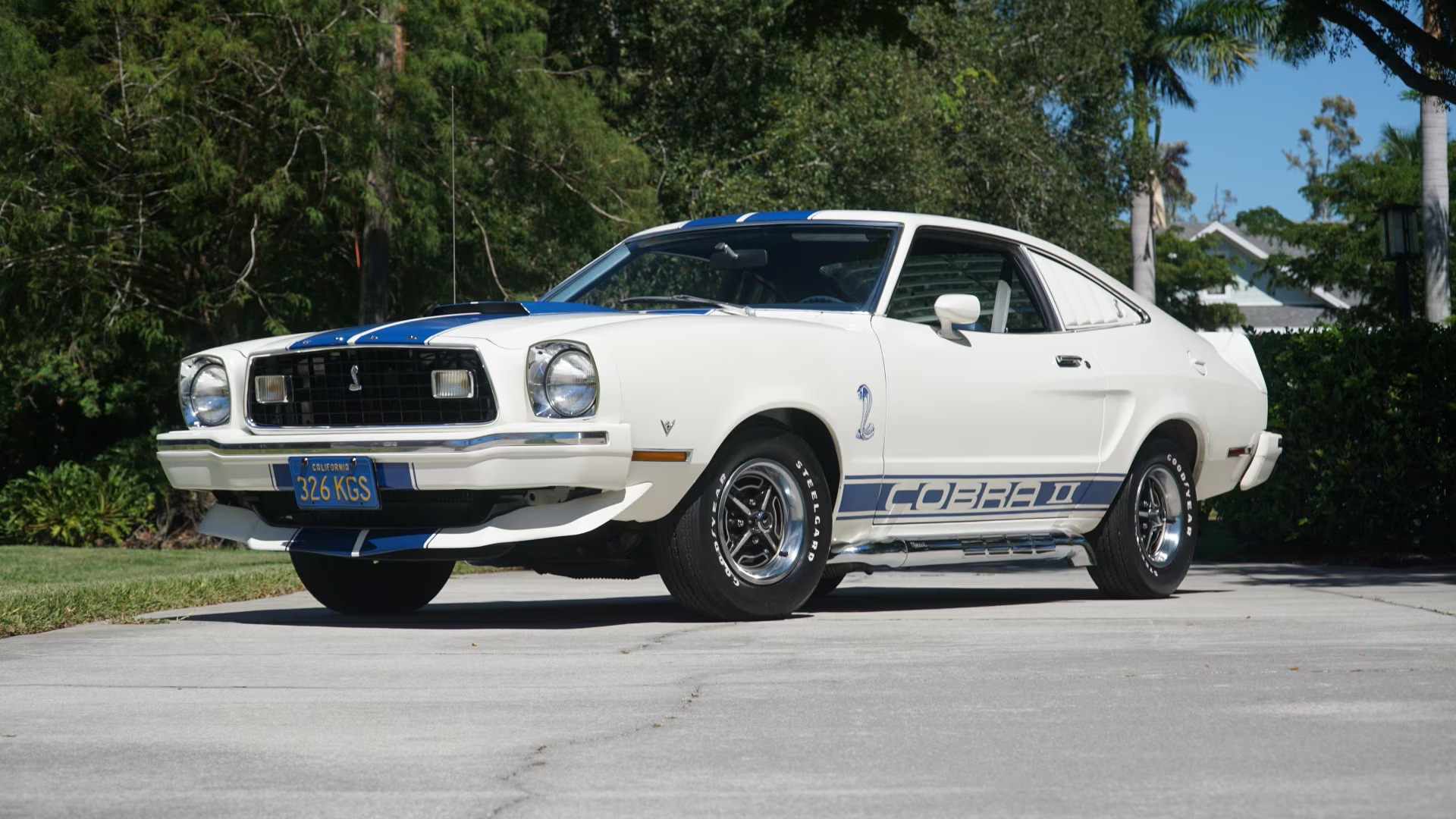
These models gave the Mustang II a more recognizable performance-car appearance, although their styling often promised more performance than the underlying mechanical package delivered.
Was the Mustang II Actually a Failure?
Its importance becomes clearer when considering what followed. For 1979, Ford introduced the third-generation Mustang, built on the Fox platform. The new car offered a broader range of powertrains, including V8 options, and established the foundation for the performance-focused Mustang GT and later high-performance variants.
The Mustang II had served as a bridge between two very different automotive eras. It kept the nameplate commercially viable until Ford could deliver a new generation with more room for performance development.
That does not mean the criticism is entirely misplaced. The Mustang II’s power output was modest, its styling divided enthusiasts, and its mechanical character differed substantially from the cars that established the Mustang’s muscle-car reputation. But judging it exclusively against the Boss Mustangs of the late 1960s ignores the radically different conditions under which it was developed.