
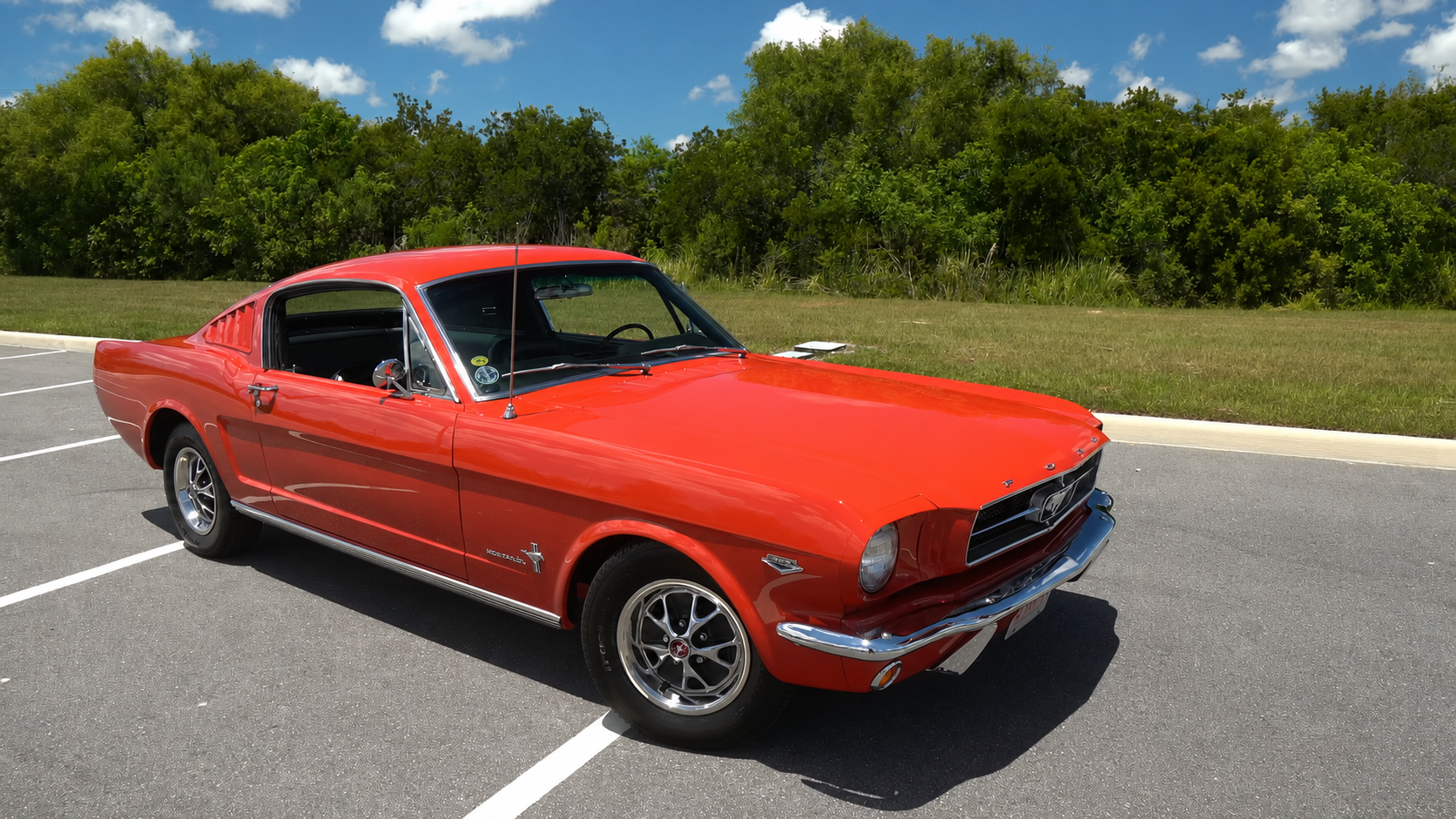
Few American performance cars carry the historical significance of the 1965 Ford Mustang K-Code Fastback. Joe Raiti takes an in-depth look at one of the most desirable first-generation Mustangs ever produced, explaining why the Hi-Po V8 model remains one of the most sought-after collector cars nearly six decades after its debut. Finished in iconic Rangoon Red and restored to concours standards, this example showcases Ford’s original vision for an affordable yet genuinely exciting performance machine.
The Birth of the Pony Car Legend
The Mustang made its public debut at the 1964 New York World’s Fair, introducing an entirely new segment of affordable performance vehicles aimed at younger buyers. Under the leadership of Lee Iacocca, Ford created a stylish sports coupe that immediately became a sales phenomenon.
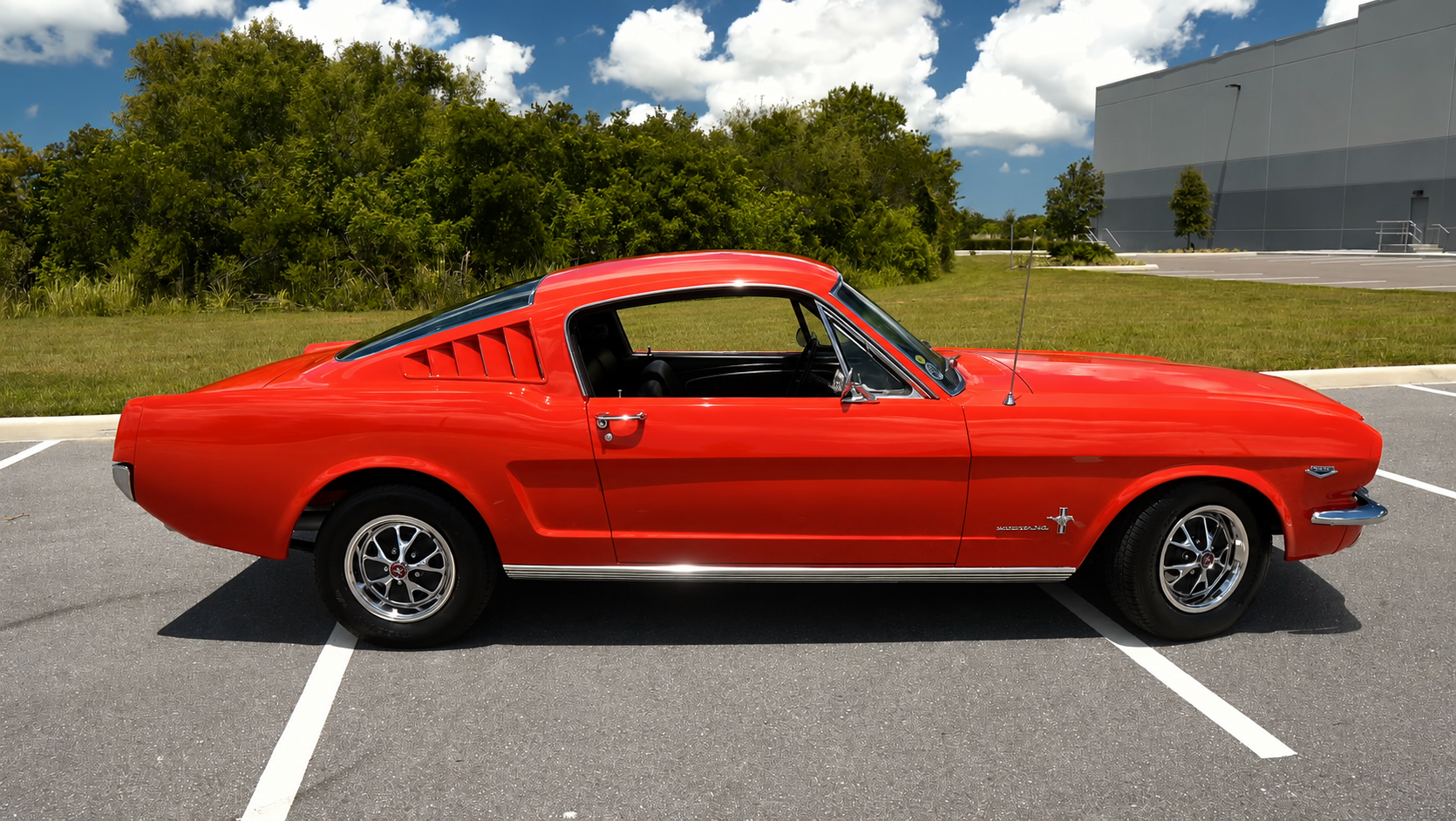
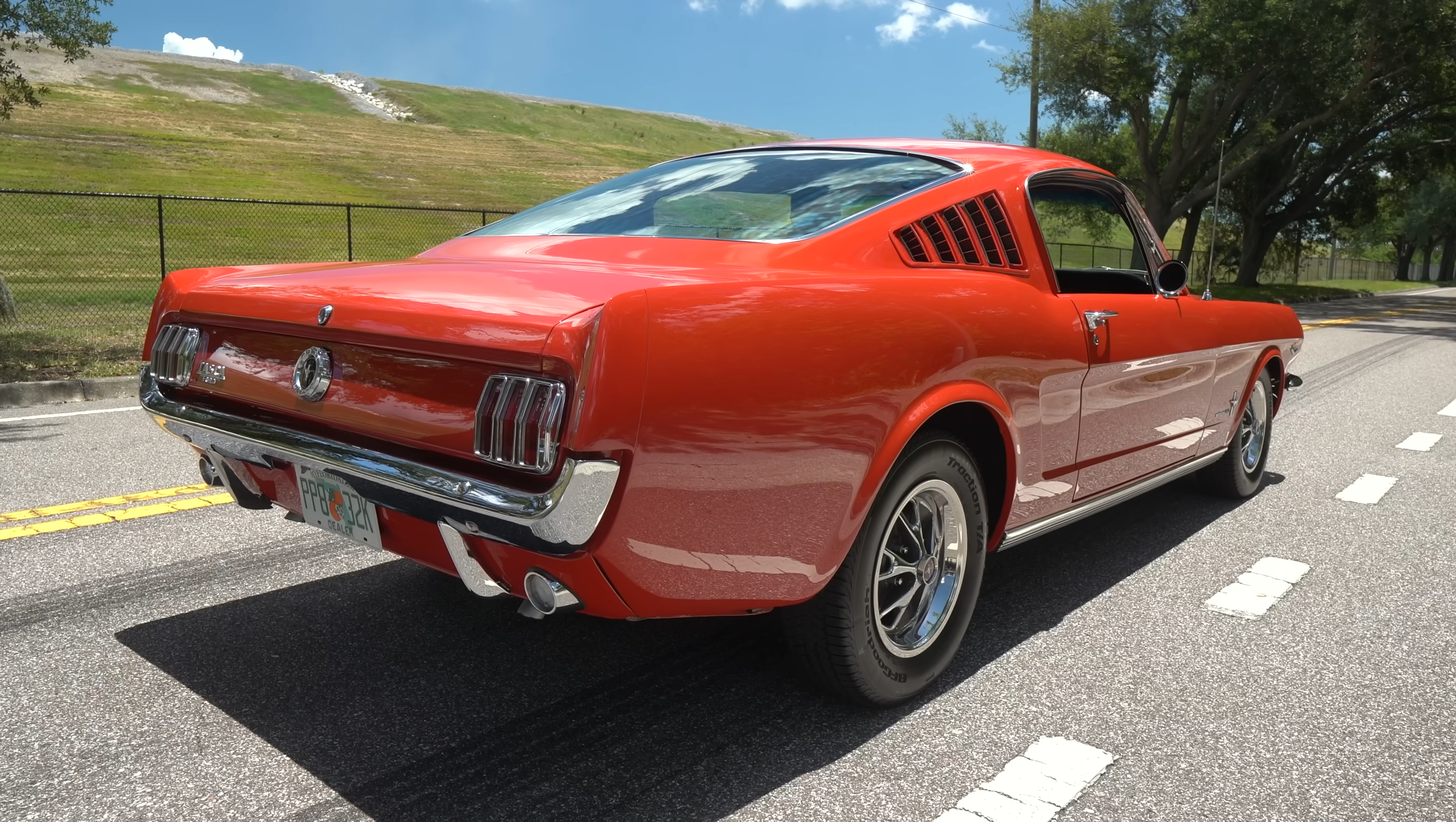
Customers could choose between coupe, convertible, and fastback body styles. Ironically, the fastback proved to be the least popular when new, yet it has since become the most valuable and recognizable variant due to its sleek proportions and close ties to Carroll Shelby’s legendary GT350 program.
Why the K-Code Matters
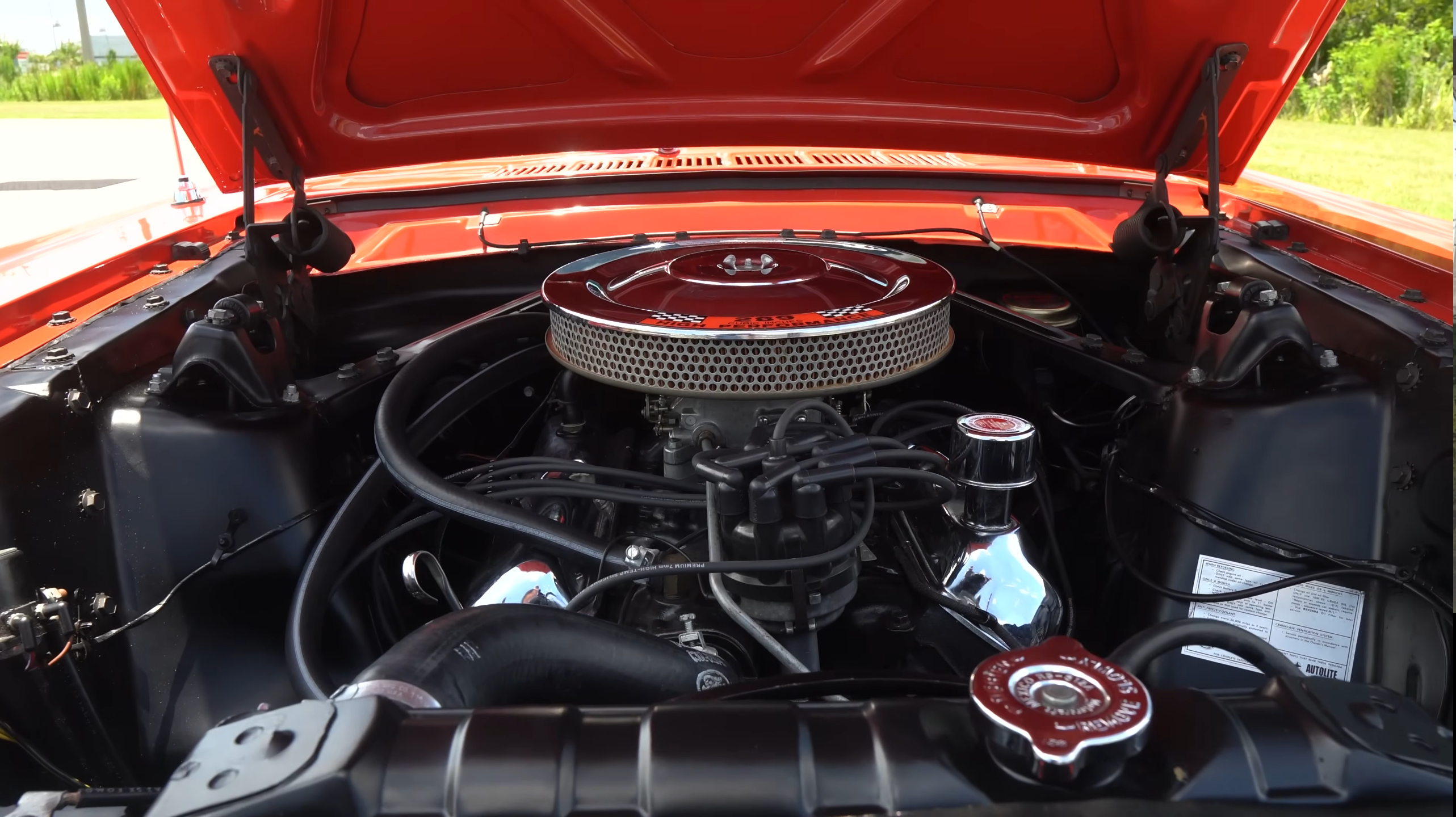
The centerpiece of this Mustang is its coveted K-Code designation, identified by the “K” in the VIN. This option equipped the car with Ford’s High Performance 289-cubic-inch V8, producing 271 horsepower and 312 lb-ft of torque.
Unlike standard Mustangs, the K-Code received numerous mechanical upgrades, including a four-speed Toploader manual transmission, an Autolite four-barrel carburetor, reinforced chassis bracing, revised suspension components, and a heavy-duty Ford 9-inch rear axle. These enhancements transformed the Mustang into a far more capable sports car while laying the groundwork for the Shelby GT350.
Exterior Design: A Timeless Classic
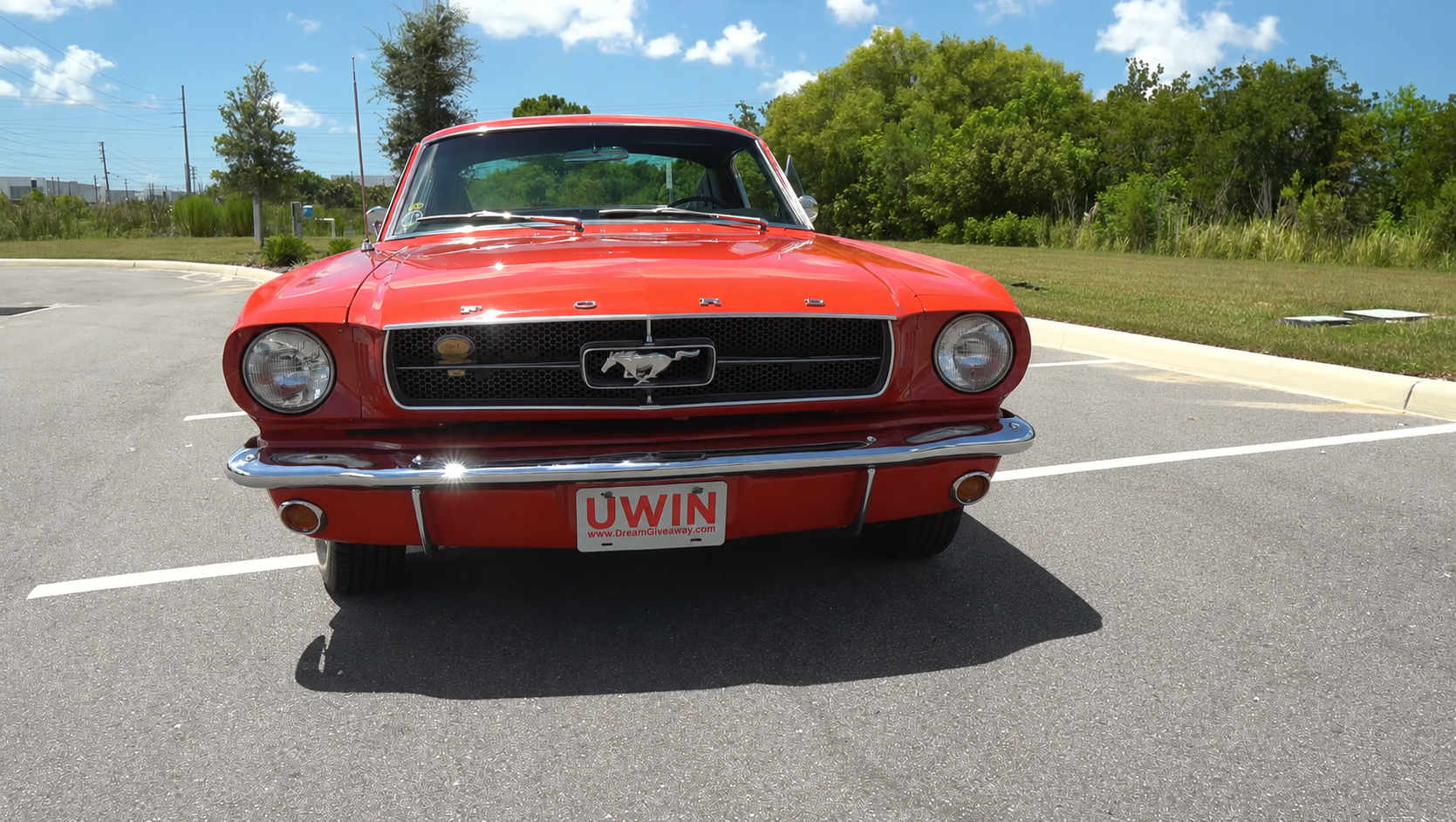
The 1965 Mustang remains one of the cleanest automotive designs of the muscle car era. Joe Raiti praises its restrained use of chrome, uncluttered front fascia, signature Mustang grille emblem, and flowing fastback roofline that continues to define Mustang styling today.
Distinctive Hi-Po badging on the front fenders immediately identifies this rare performance variant, while factory-style 14-inch wheels paired with modern BFGoodrich radial tires maintain its authentic appearance without compromising drivability.
Under the Hood
Opening the hood reveals an engine bay devoted almost entirely to the legendary small-block V8. Without power steering or factory air conditioning, the engine remains the unquestioned centerpiece.
The lightweight Mustang weighs just under 2,800 pounds, allowing the Hi-Po V8 to deliver impressive performance figures for its era. Capable of accelerating from 0 to 60 mph in approximately five seconds and completing the quarter mile in around 13.8 seconds, the K-Code stood among America’s quickest production cars during the mid-1960s.
Interior and Driver Experience
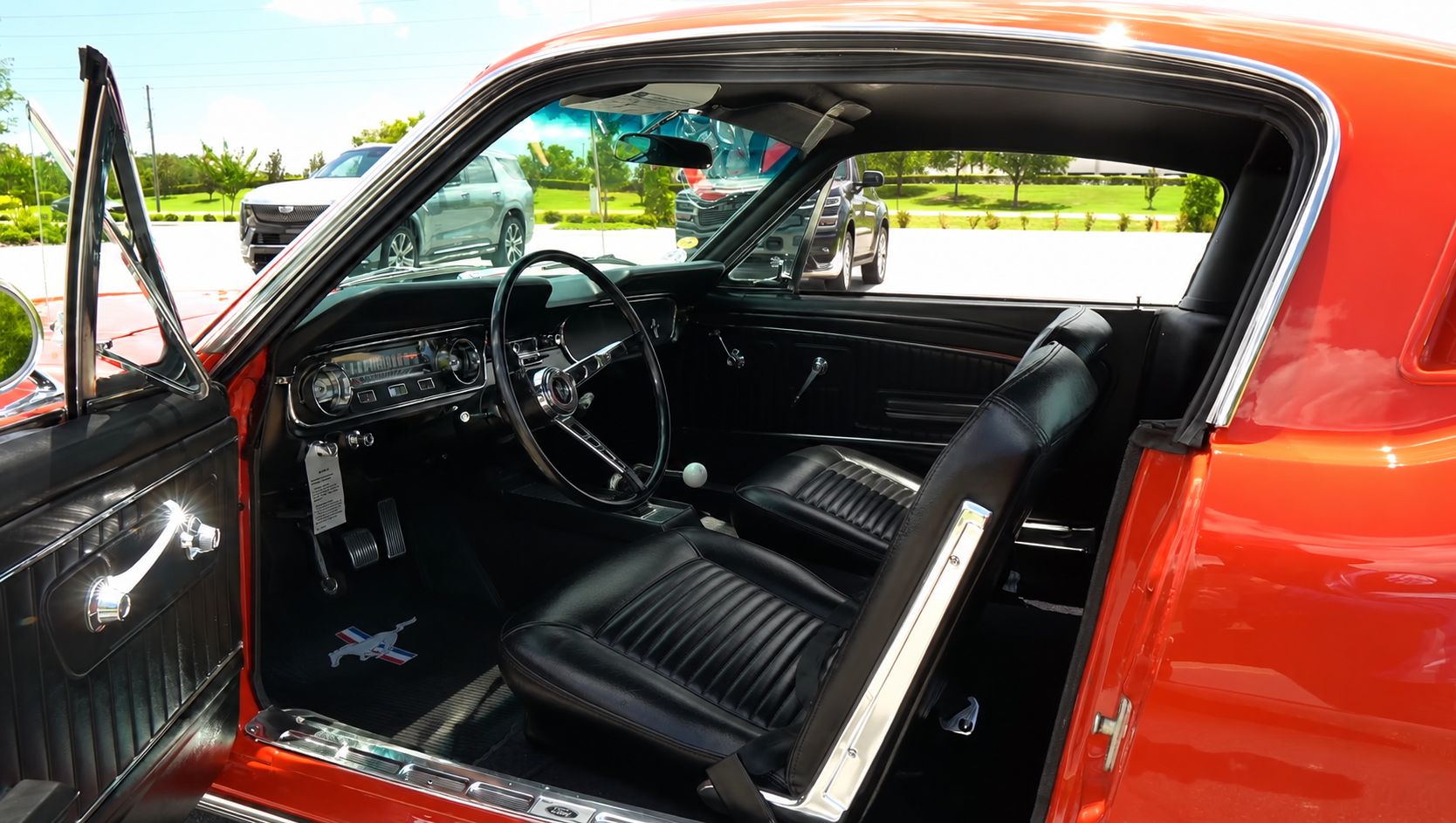
The cabin embraces simplicity and functionality. Low-back bucket seats, a dual-cowl dashboard, manual controls, an AM radio, and the exposed four-speed shifter create an authentic driving environment focused entirely on the driver.
Unlike GT-equipped models, this K-Code retains a basic instrument cluster without a tachometer, encouraging drivers to shift by engine sound and instinct rather than relying on instrumentation.
Driving Impressions
Behind the wheel, the K-Code delivers an engaging analog driving experience. Manual steering requires noticeable effort at low speeds but becomes remarkably precise once underway. The close-ratio Toploader transmission shifts confidently, while the high-revving 289 V8 rewards spirited driving with a distinctive exhaust note.
Although equipped with front disc brakes and rear drum brakes typical of the period, the Mustang offers balanced handling, responsive chassis dynamics, and an unmistakable sense of mechanical connection rarely found in modern performance cars.
Collector Value and Legacy
Joe Raiti emphasizes that the K-Code represents far more than a simple engine option. It served as the blueprint for Carroll Shelby’s GT350 and remains one of the rarest factory Mustangs ever produced.
With concours-quality restorations regularly commanding premium prices and collector demand continuing to grow, the K-Code Fastback has become both a highly desirable investment and one of the purest expressions of Ford’s original pony car philosophy.
Source: Raiti’s Rides