

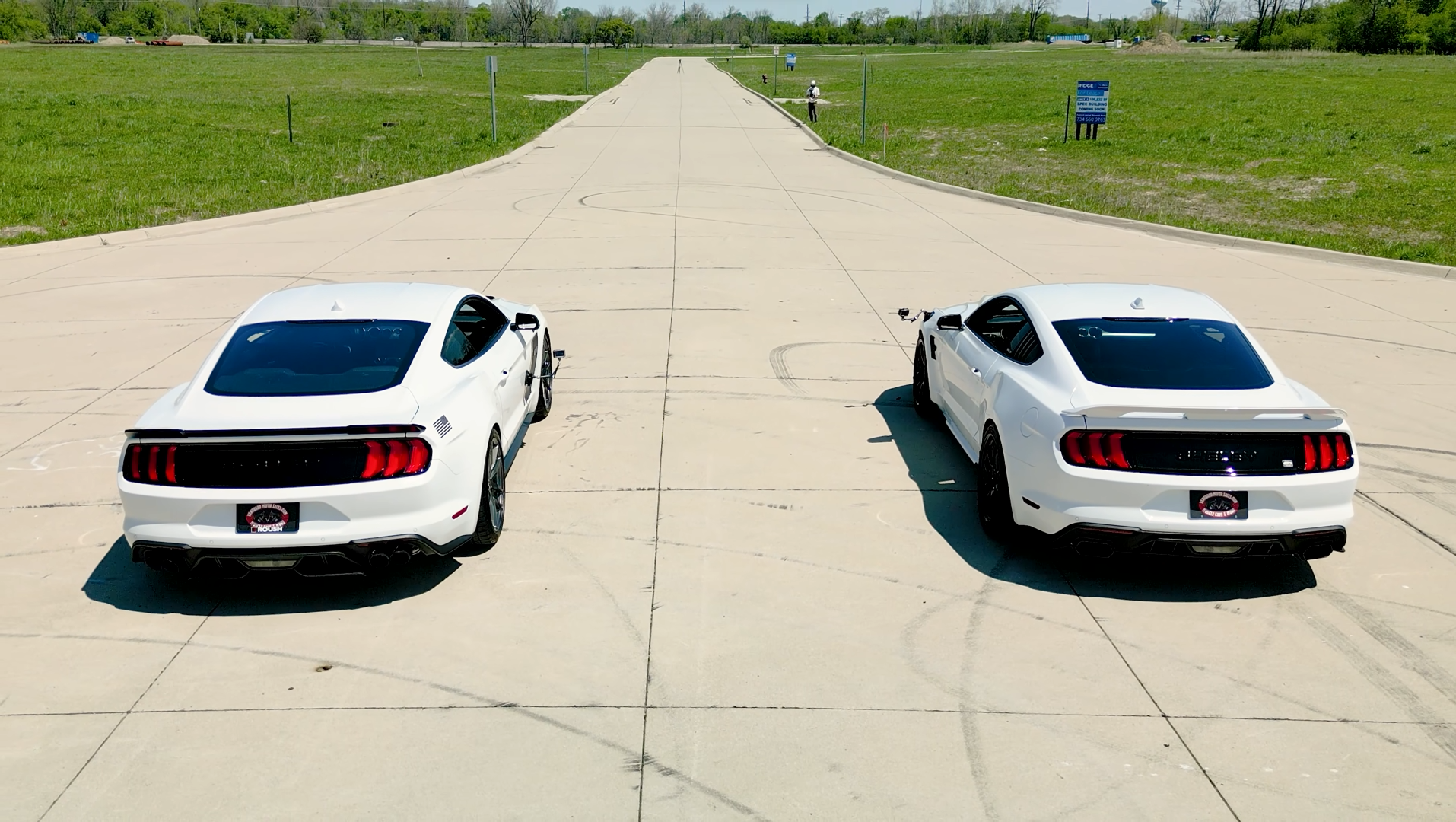
Ford is building Mustangs for road courses these days. The 795-hp Dark Horse SC is the loudest proof, but even a stock GT has more grip and power than most owners will ever use on the street.
So plenty of owners do the obvious thing and sign up for a track day. It’s a blast. It’s also where a lot of people hit a wall, usually around their third or fourth event, when the lap times stop dropping and they can’t figure out why.
The way I see it, a track day sells you track time and a good school sells you the skills to use it, which is why one doesn’t replace the other and why knowing the difference can save you a pile of money in brake pads, tires, and maybe a fender.
Track day vs. driving school:
A track day (you’ll also see them called HPDE, for High Performance Driver Education) is mostly about seat time in your own car. You get a handful of sessions, often 20 to 30 minutes each, sharing the track with a mix of other cars. Beginners usually get an instructor riding along, and some of those instructors are excellent. But the day is built around lapping, not teaching.
A school flips that. The day is built around drills, and the track time is there to practice them. You’ll work on one skill at a time on a skid pad or an autocross course before you put it all together on the full circuit, and the instructors are watching for specific mistakes, not just keeping you out of the weeds.
There’s a money angle too. At a track day you’re burning through your own brakes, tires and fluids, and if something goes wrong it’s your Mustang in the gravel. At most schools, you drive their cars.
What you actually learn:
The good schools all teach the same core, because the physics don’t change. Most of it comes down to weight transfer. Braking, turning and throttle all shove weight around the car, and a heavy, powerful car like a Mustang GT punishes you for doing two of them clumsily at once. You’ll learn where to brake and how to come off the pedal gently instead of dumping all that weight onto the rear. You’ll get nagged about your eyes, because the car goes where you look, and staring at the wall you’re worried about works exactly as badly at 100 mph as you’d guess. Then comes the line (turn-in, apex, exit) and what understeer and oversteer feel like half a second before they turn into a spin.
Some of the classroom stuff will feel basic if you’ve done a few track days. Sit through it anyway.
When Hagerty sent a writer through the two-day high performance course at Radford Racing School in Chandler, Arizona, the big lesson was that performance driving is mostly weight management, and about 80% of the course was spent behind the wheel. Ask every school for that second number.
Radford’s track driving courses run from a single day up to a three- or four-day racing school that ends with an SCCA racing license. The main track has some history Mustang fans will appreciate, too. It’s a 15-turn, 1.6-mile circuit designed by Bob Bondurant, the former Shelby team driver, back when the school still carried his name.
You’ll also notice the school cars are Dodges, since Radford is the official driving school of Dodge//SRT. Honestly, I count that in its favor. Somebody else’s brakes and tires take the beating, and you bring the skills home to your own car.
The drag strip is a different school:
Some Mustang guys (and gals) care more about the quarter mile than any road course, and fair enough. Just don’t assume road course skills carry over. Drag racing is its own discipline: staging, reaction time, launch technique and shifting at exactly the right moment. Get the launch wrong in a high-horsepower car and you’ve lost the race in the first 60 feet.
It also comes with paperwork once you get quick. NHRA requires a competition license for cars running quicker than 10 seconds in the quarter, and plenty of modified Mustangs now run that quick. Better to understand the license before the tech inspector asks for it.
Some schools teach this properly. Radford’s drag racing school takes students from the basics up to an NHRA 9-second license course, taught in Challenger SRT Demons and Demon 170s, with access to the NHRA-sanctioned quarter-mile strip at neighboring Wild Horse Pass. Yes, it’s a Dodge again. Think of it as reconnaissance.
How to pick a school:
OK, so you’re shopping. Before handing over a credit card, I’d ask:
- How much of the day is behind the wheel? You want most of it.
- How many students per instructor? One Radford student’s review put it at 3 to 1, with about five hours of driving a day on the three-day GT course, which is a decent benchmark to hold anybody else to.
- Whose car? For a first school, take theirs and save your own brakes for later.
- Do you leave with a license? A certificate looks nice on the fridge, but an SCCA or NHRA license means you can actually go racing.
- Is there a next step? You want a ladder from a one-day course up to full racing, because once you’re hooked you won’t want to start over somewhere else. And you’ll get hooked.