

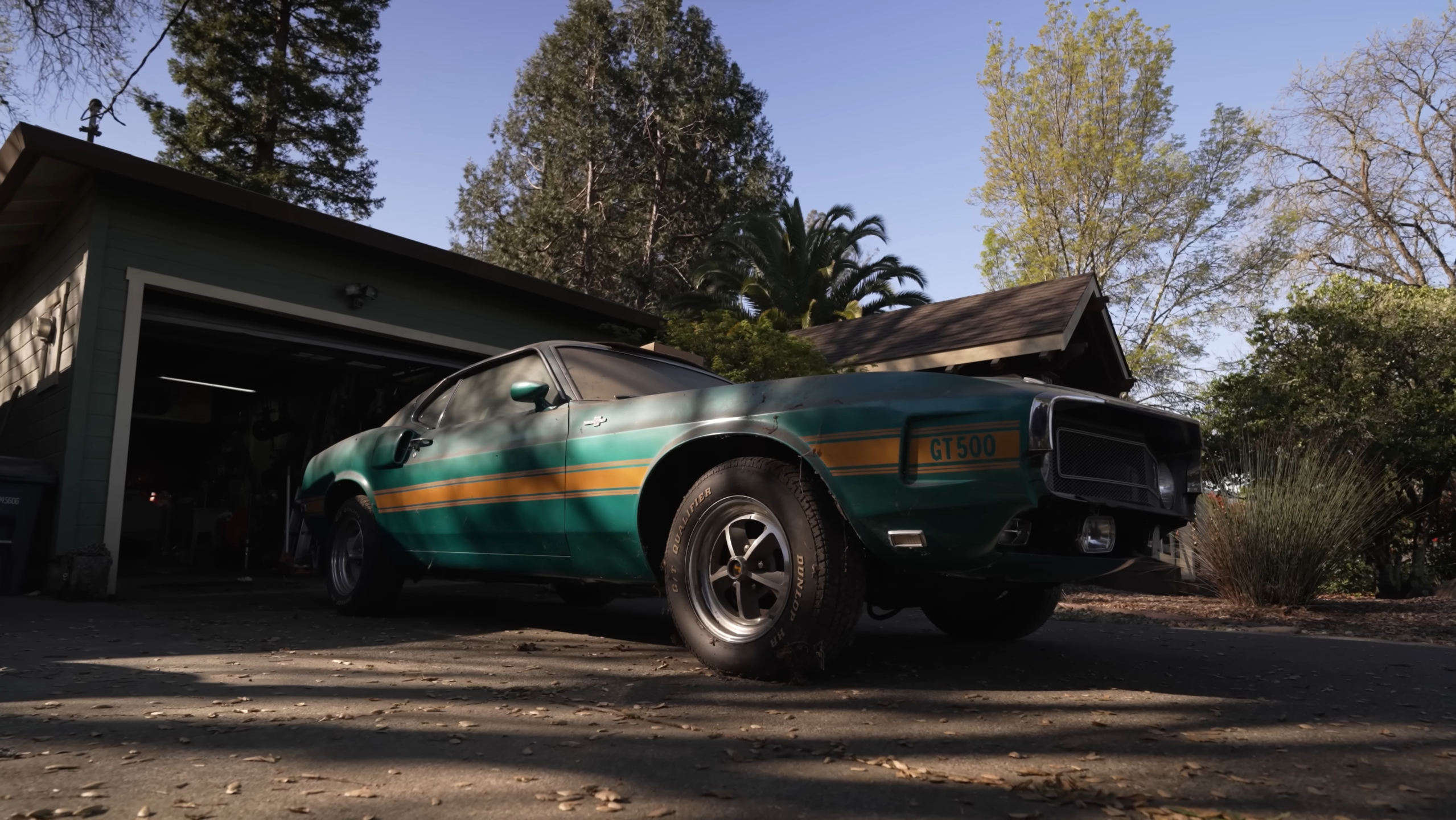
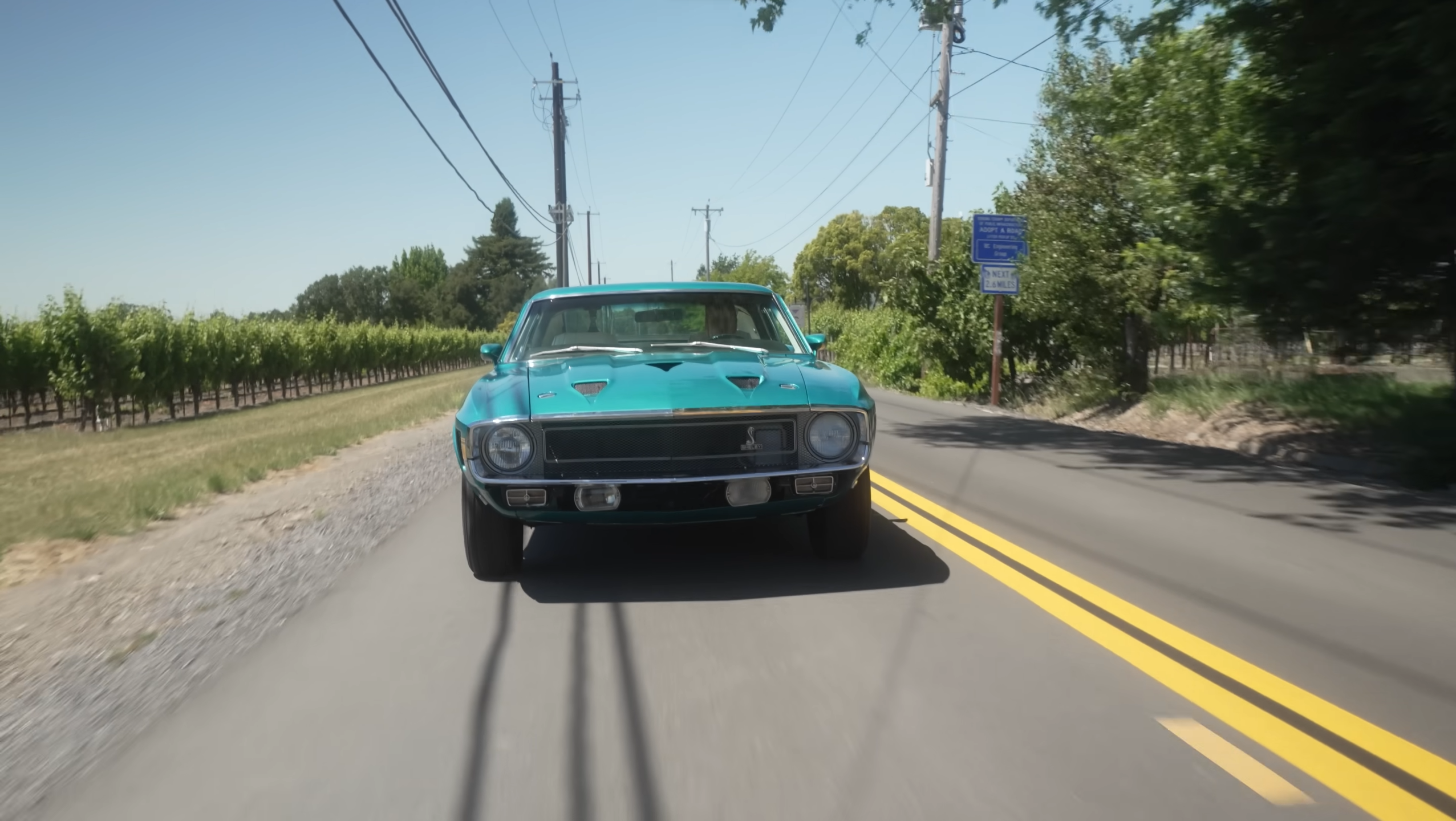
Some classic cars are restored because they’re valuable. Others are restored because they’re historically significant. Then there are cars like this exceptionally rare 1969 Shelby GT500, where sentimental value and automotive history intersect. In Hagerty‘s latest Driveway Finds episode, the team undertakes the careful revival of a Grabber Aqua (often referred to by enthusiasts as Gulfstream Aqua) GT500 that has remained dormant in a garage for more than 30 years, documenting every step of the painstaking process required to return the legendary muscle car to the road.
A Rare Shelby Worth Saving
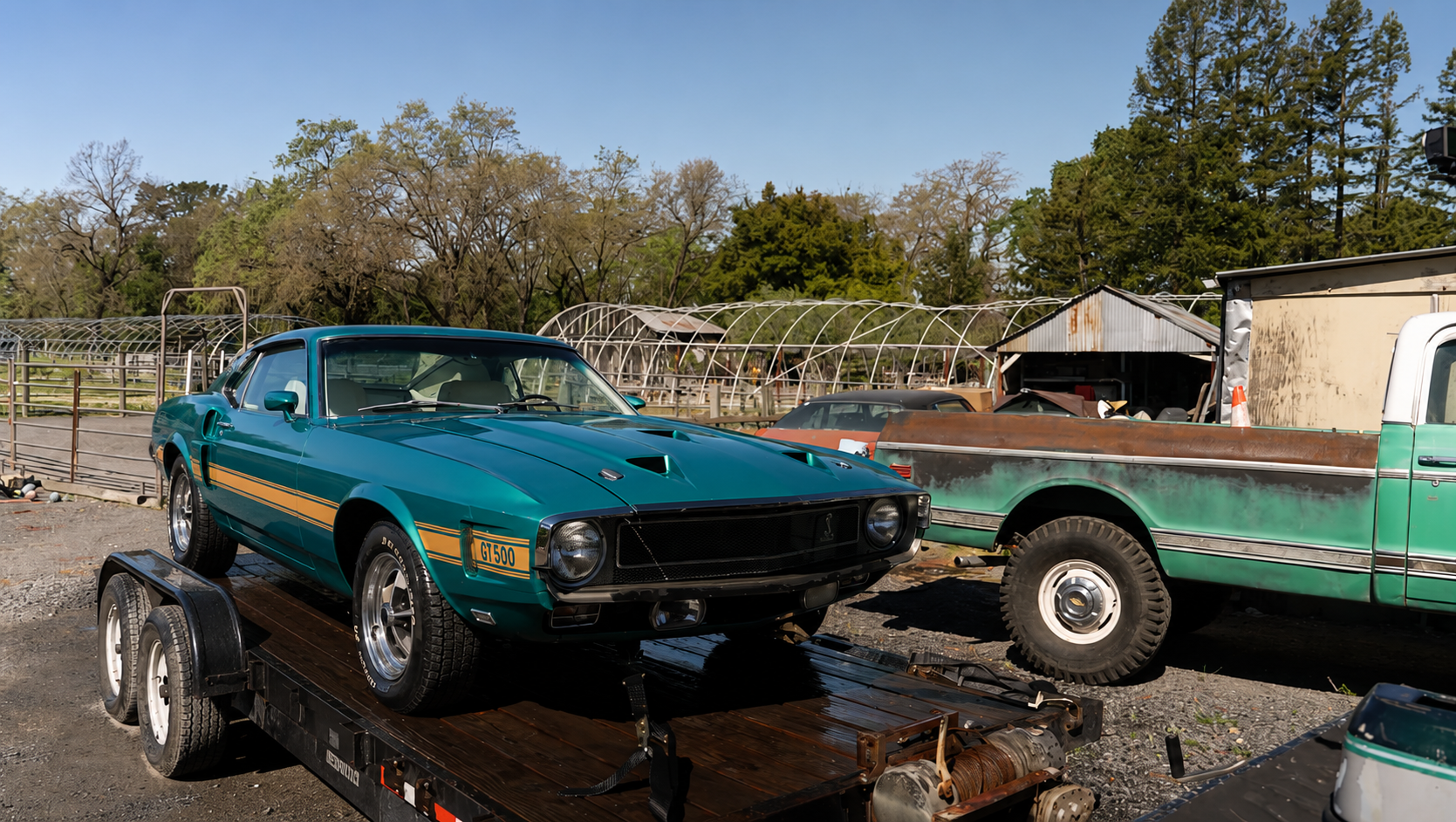
The project centers on one of just 1,402 Shelby GT500s produced for the 1969 model year, with only 43 finished in the distinctive Aqua paint that makes this example especially collectible. Owned by Mike since the early 1980s, the Mustang had an unusual history before entering his care, including an alleged theft, abandonment in the Nevada desert, and a trunk fire that damaged the rear of the car.
Although Mike eventually sourced a date-correct 428 Cobra Jet V8 to replace the incorrect 390 engine that came with the vehicle, persistent electrical gremlins ultimately sidelined the Shelby. As household projects and everyday life took priority, the GT500 remained untouched for over three decades, quietly aging in storage while awaiting a second chance.
Preserving Rather Than Restoring
Unlike many television restoration projects that focus on cosmetic perfection, Hagerty’s approach prioritizes preservation. Every decision is made with the car’s originality in mind, avoiding unnecessary modifications while carefully protecting rare factory components.
The fiberglass Shelby hood, now worth thousands of dollars on its own, is removed with extreme caution before work begins. Instead of pressure washing the engine bay or aggressively cleaning the vehicle, the team uses gentle methods to preserve original finishes and prevent moisture from damaging delicate components.
This philosophy extends throughout the project, where maintaining historical authenticity takes precedence over creating a concours-perfect show car.
Bringing the 428 Cobra Jet Back to Life
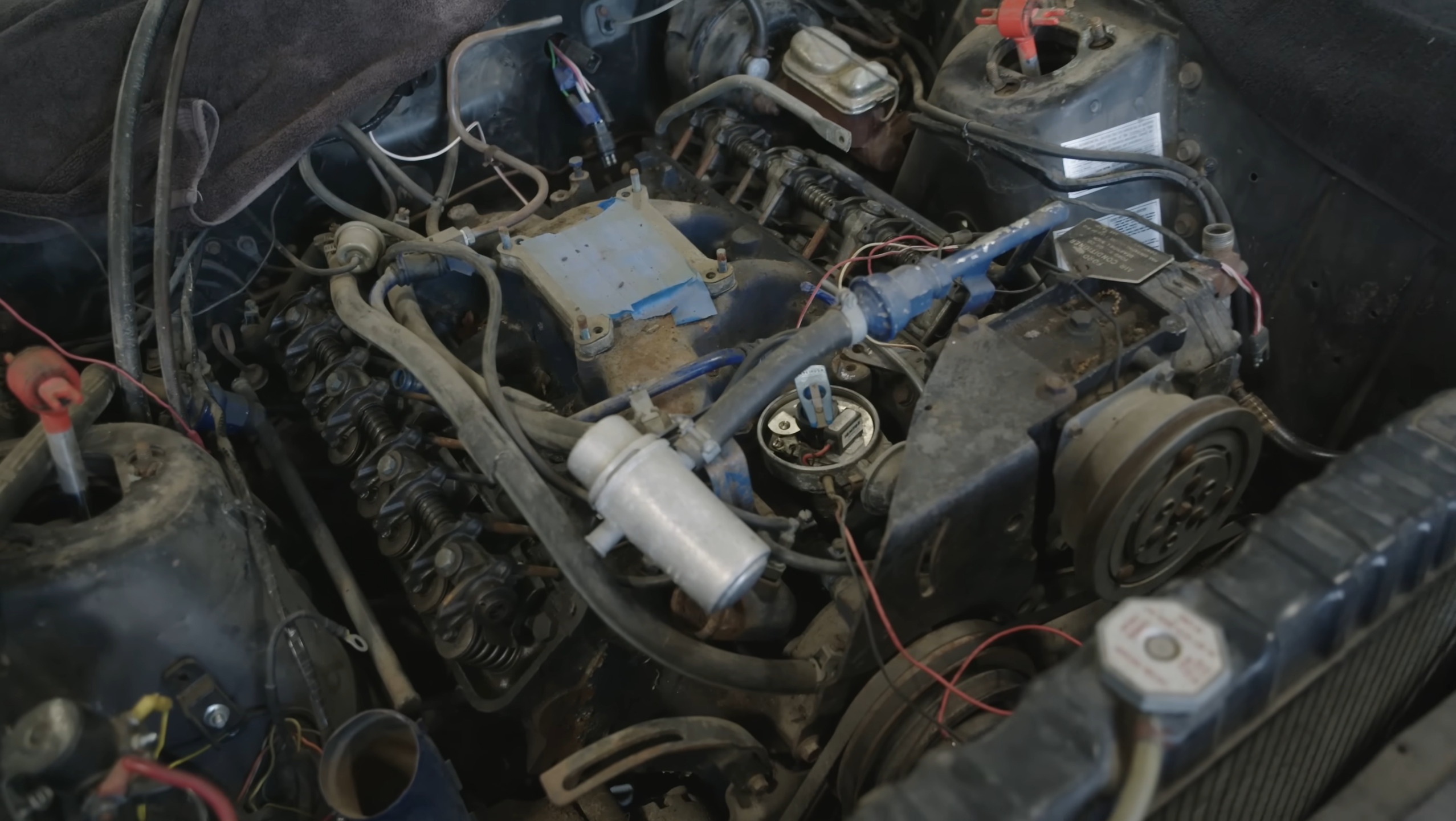
The greatest unknown lies beneath the hood. Although the replacement 428 Cobra Jet had been rebuilt years earlier, it had also spent decades sitting with its valve covers, carburetor, and spark plugs removed. Fortunately, Mike had coated the cylinders with Marvel Mystery Oil before storage, significantly improving the engine’s chances of survival.
Before attempting a start, the Hagerty team carefully rotates the crankshaft by hand to confirm the engine isn’t seized. After draining fluids and inspecting for contamination, they install fresh oil and use a modified distributor shaft to prime the lubrication system, ensuring oil reaches every rocker arm before the engine is ever cranked.
Once adequate oil pressure is confirmed, the ignition system is reassembled, new spark plugs are painstakingly installed within Ford’s notoriously cramped shock-tower engine bay, and fuel is supplied to the Holley carburetor. The moment of truth arrives when the 428 fires almost immediately.
Heavy clouds of smoke initially fill the workshop—not from engine damage, but from the Marvel Mystery Oil burning away after decades of protecting the cylinder walls. More importantly, the engine exhibits excellent oil pressure, no concerning knocks, and smooth mechanical operation, providing convincing proof that the long-dormant big-block remains fundamentally healthy.
Solving Decades-Old Mechanical Issues
Getting the engine to run is only the beginning. As testing progresses, the team systematically addresses the very issues that originally forced the Shelby into retirement. The aging wiring harness requires careful research using factory diagrams to ensure every circuit is correctly restored without compromising originality.
Cooling system troubleshooting reveals trapped air and thermostat-related concerns, leading to a careful bleed procedure that restores proper coolant circulation. The braking system receives fresh wheel cylinders and new hydraulic components after decades of inactivity, while transmission fluid, ignition timing, carburetor adjustments, and fuel delivery are all refined during repeated test drives.
One unexpected challenge emerges after the Shelby begins stalling from heat-related ignition problems. Investigation points toward a deteriorated original ignition coil that weakens as temperatures rise. Replacing the coil dramatically improves reliability and transforms the GT500’s drivability, proving that even seemingly minor components can become major obstacles after decades in storage.
Restoring the Interior Without Erasing History
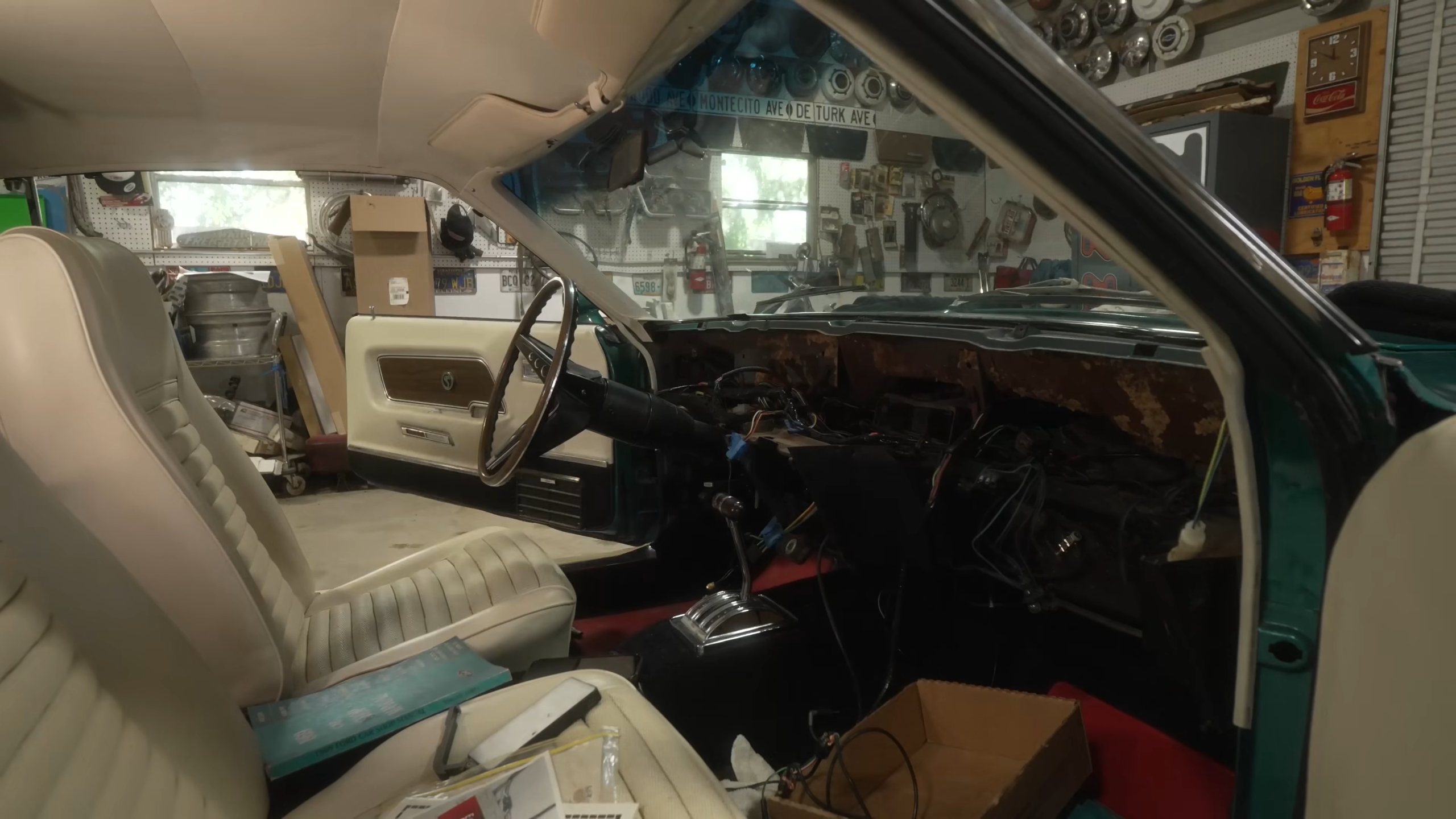
While much attention focuses on the engine, a significant portion of the restoration occurs inside the cabin. The dashboard had previously been disassembled, leaving the Hagerty team to carefully reconstruct the interior using factory manuals and extensive research. The restored gauge cluster, complete with the optional 8,000-rpm tachometer, is reinstalled alongside the dashboard, center console, clock, and numerous electrical components.
Although largely invisible once completed, this painstaking wiring work ensures every instrument and accessory functions as intended while preserving the Shelby’s authentic appearance.
Cleaning, Not Over-Restoring
Cosmetically, the GT500 proves remarkably well preserved. Rather than requiring extensive body restoration, the Shelby primarily needs decades of accumulated dust removed, light paint correction, and careful detailing throughout the engine bay and exterior trim. Original chrome pieces respond well to polishing, while Shelby-specific body components—including the rear bumper and distinctive trunk lettering—are carefully reinstalled.
The result is a car that looks authentically aged rather than artificially restored, retaining the character accumulated over nearly six decades.
An Emotional Reunion
After weeks of mechanical repairs, electrical restoration, detailing, and testing, Hagerty surprises Mike by returning the completed GT500 rather than simply interviewing him as expected.
Seeing the Shelby running for the first time since 1997 is an emotional moment. Mike, who had previously met Carroll Shelby and even obtained the legend’s autograph on the car’s glovebox during a charity event, is visibly overwhelmed as he slips behind the wheel once again.
The first drive confirms the success of the project. The 428 Cobra Jet delivers smooth power, the brakes perform confidently, and the once-forgotten Shelby once again cruises the road under its own power.
Final Thoughts
Hagerty’s resurrection of this rare 1969 Shelby GT500 demonstrates that successful preservation often depends more on patience than replacing parts. By methodically evaluating every system, respecting the car’s originality, and resisting the temptation to over-restore, the team transforms a dormant collector car into a fully functioning piece of American muscle-car history.
More importantly, the project reminds enthusiasts that classic cars are ultimately meant to be driven. After more than 30 years hidden away in a garage, this exceptionally rare Aqua GT500 has returned where it belongs—back on the open road, reunited with the owner who refused to give up on it.
Source: Hagerty