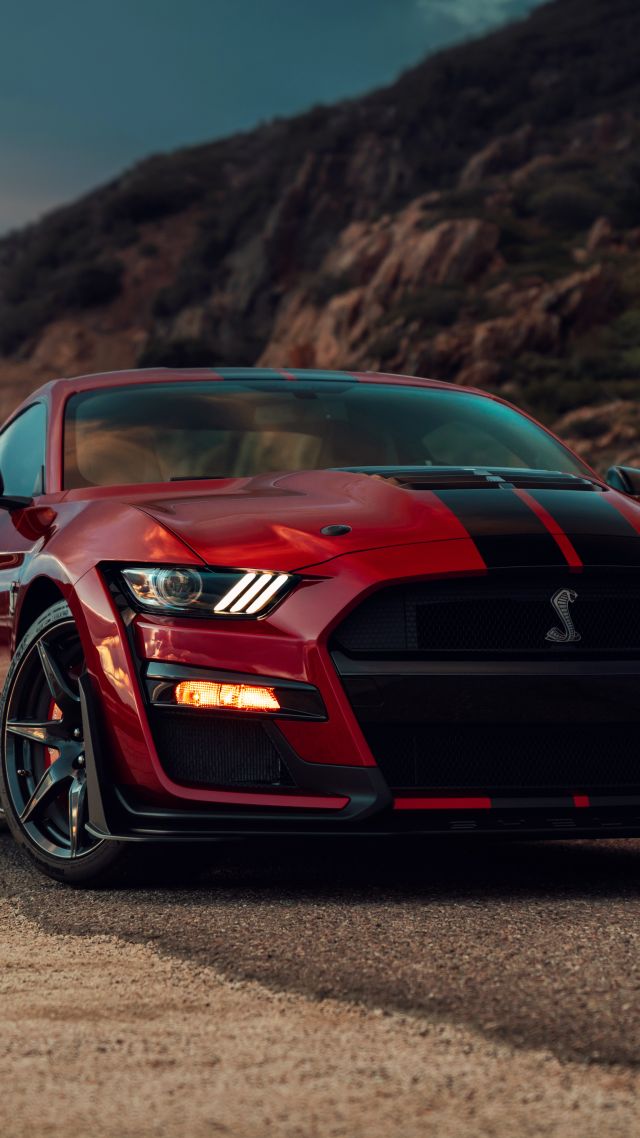


The rivalry between the Dodge Challenger, Chevrolet Camaro, and Ford Mustang has long defined American muscle cars. Each model represents a different approach to power, handling, and design, but all share a deep connection to performance and tradition. This latest comparison brings the final versions of these V8, rear-wheel-drive icons together for one last test before major changes reshape the lineup.
The focus centers on the new Mustang Dark Horse, a version built for track driving with upgraded components and sharper handling. Its competition—the Challenger Scat Pack and Camaro LT1—bring their own strengths in raw power and driving feel. Together, they reveal how each brand interprets modern muscle while staying true to its roots.
Key Takeaways
- The three muscle cars showcase distinct strengths in power and handling.
- The Dark Horse introduces advanced tuning and performance upgrades.
- Each model reflects a unique vision of modern American performance.
Overview of the Challenger, Mustang, and Camaro
Each car represents the final generation of classic, naturally aspirated V8 muscle with manual gearboxes and rear-wheel drive. They share a focus on power and driver control but deliver it in distinct ways.
Key Specs
| Model | Configuration | Horsepower | Drive | Transmission |
|---|---|---|---|---|
| Dodge Challenger Scat Pack Widebody | 6.4L V8 | 485 hp | RWD | 6-speed manual |
| Ford Mustang Dark Horse | 5.0L V8 | 500 hp | RWD | 6-speed manual |
| Chevrolet Camaro LT1 | 6.2L V8 | 455 hp | RWD | 6-speed manual |
The Camaro LT1 focuses on light weight and low aerodynamic drag, giving it an edge in straight-line balance and agility. Its raw feel and direct steering keep it engaging for drivers who value simplicity and precision.
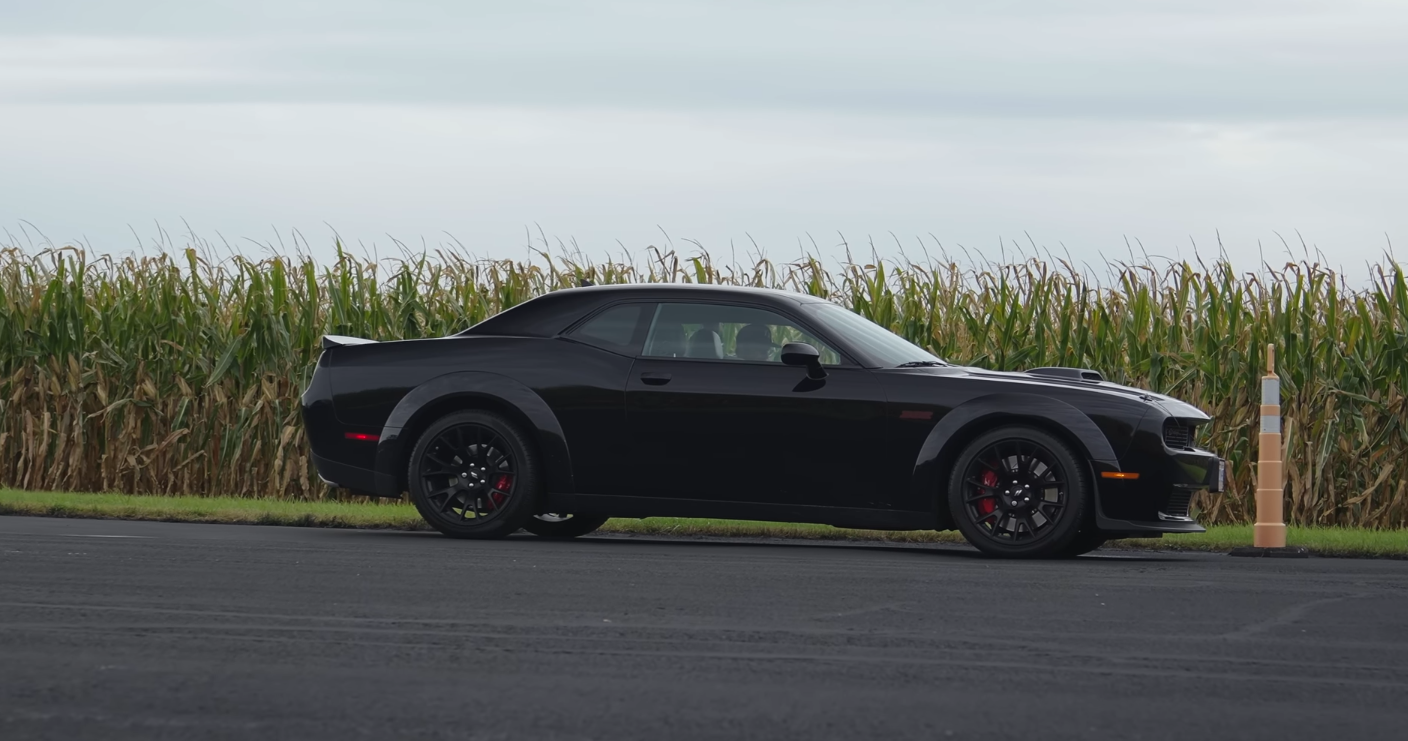
The Challenger Scat Pack Widebody emphasizes brute force and presence. Its wide stance and large tires provide strong grip, while its quarter-mile performance remains a highlight. It’s heavier than its rivals but compensates with torque and stability.
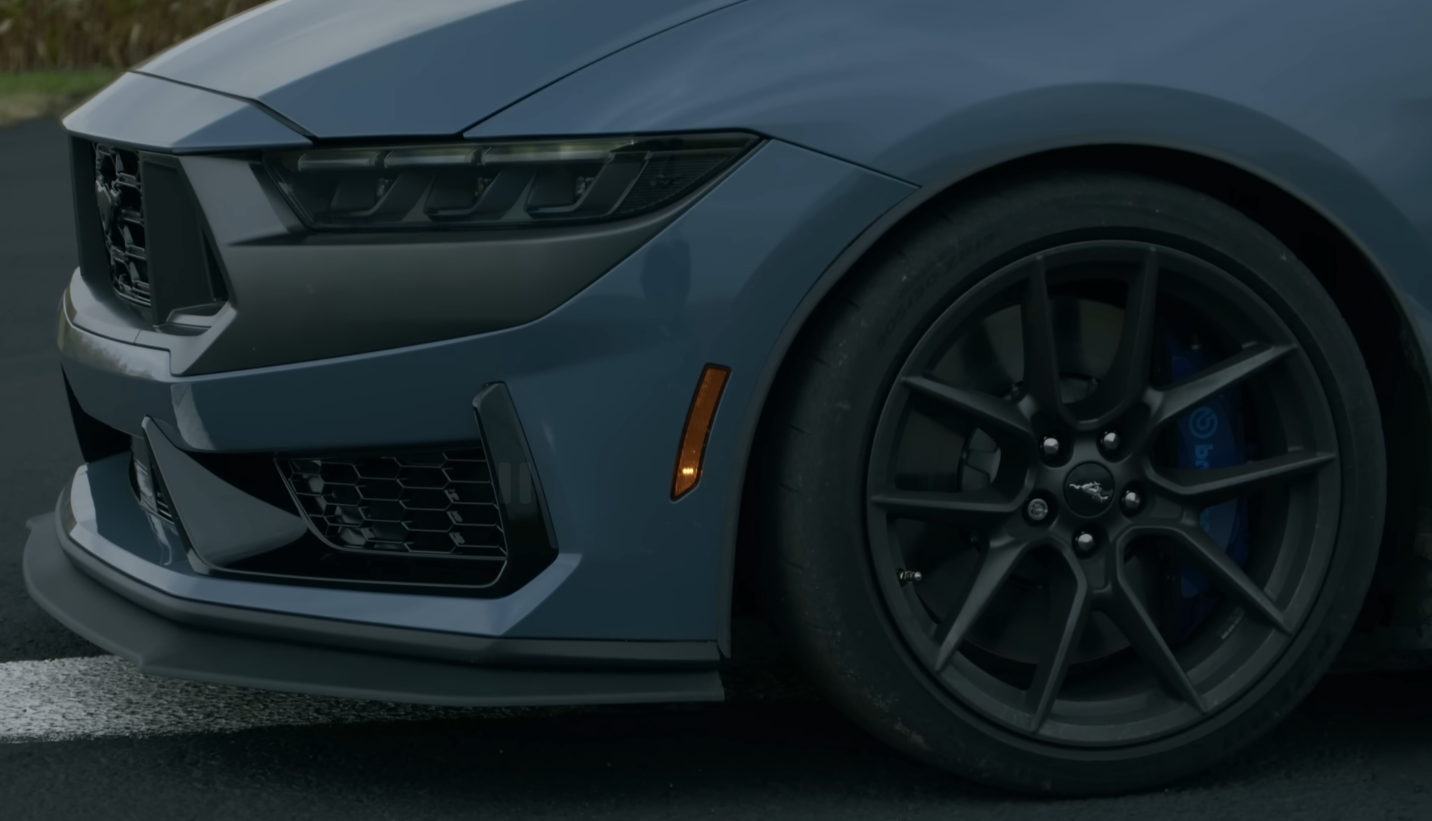
The Mustang Dark Horse takes the GT platform further with upgraded internals, specialized cooling, and adaptive suspension. It uses track-focused tires, stronger brakes, and refined chassis tuning to improve grip and handling. The interior adds blue stitching, unique trim, and a short-throw manual shifter that enhances driver feedback.
Together, these cars close an era of traditional American muscle—each one distinct in how it delivers speed, sound, and control.
Performance Specifications and Key Features
Powertrain and Gearbox
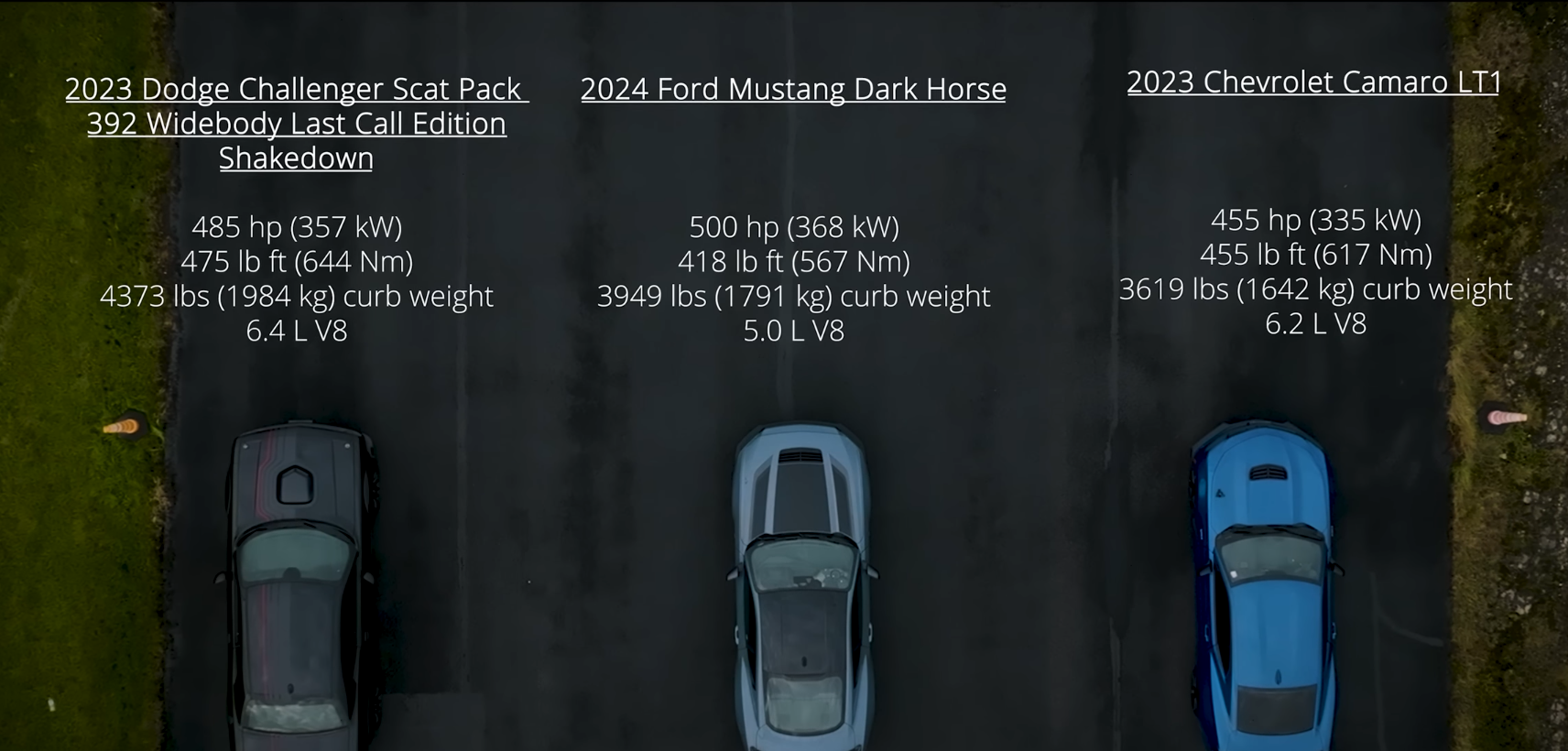
The Dark Horse uses a 5.0‑liter V8 producing 500 horsepower. It borrows its pistons and connecting rods from the GT500, giving it stronger internals than the regular Mustang GT. All three cars—the Mustang, Camaro LT1, and Challenger Scat Pack—feature manual transmissions and rear‑wheel drive. The Dark Horse’s Tremec six‑speed manual offers short, precise shifts and a solid feel that enhances driver confidence.
| Model | Engine | Horsepower | Transmission | Drive Type |
|---|---|---|---|---|
| Mustang Dark Horse | 5.0L V8 | 500 hp | 6‑speed manual | RWD |
| Camaro LT1 | 6.2L V8 | 455 hp | 6‑speed manual | RWD |
| Challenger Scat Pack | 6.4L V8 | 485 hp | 6‑speed manual | RWD |
Frame and Ride Control
The Dark Horse features unique chassis tuning with larger sway bars, reinforced front shocks, and Magneride adaptive dampers. These upgrades improve grip and stability on uneven surfaces. The Handling Package adds stiffer springs and a large rear wing for extra downforce. Together, these components create a more planted and predictable ride during aggressive driving.
Stopping Power and Brake Setup
Braking performance stands out with larger rotors and high‑performance calipers that deliver strong, consistent stopping force. Drivers noted how quickly the car shed speed on track, with a firm pedal feel and minimal fade. The braking system complements the chassis tuning, allowing precise control when entering corners at high speed.
Tires and Wheel Options
The Dark Horse comes with wide, high‑grip performance tires that provide excellent traction. With the Handling Package, the tires become even wider and stickier, designed for both street and track use. The combination of lightweight wheels and sticky rubber enhances cornering grip and steering response, giving the car a stable and confident stance through every turn.
Drag Race and Straight-Line Testing
Quarter-Mile Runs
Each car lined up with a manual transmission and rear-wheel drive. The Mustang Dark Horse led in power at 500 horsepower, while the Camaro LT1 brought 455 horsepower and the Challenger Scat Pack Widebody packed 392 cubic inches of muscle.
During the launch countdown—5, 4, 3, 2, 1—traction became the deciding factor. The Dark Horse pulled ahead early, showing stronger mid-range acceleration. The Challenger came close near the finish but couldn’t quite close the gap.
| Car | Horsepower | Transmission | Result |
|---|---|---|---|
| Mustang Dark Horse | 500 hp | 6-speed manual | First |
| Camaro LT1 | 455 hp | 6-speed manual | Second |
| Challenger Scat Pack | 485 hp | 6-speed manual | Third |
Grip and Launch Systems
Drivers noted that traction made or broke each run. The Dark Horse’s sticky performance tires and Magnaride suspension helped it stay planted, even on a rough surface. The Challenger’s wider body and heavy frame made launches trickier, while the Camaro’s lighter weight gave it quick starts but less stability under full throttle.
The Dark Horse’s handling package added stiffer springs and larger tires, improving grip but possibly adding drag from its large rear wing. Even so, its balance between power and control gave it the edge in straight-line consistency.
Manual and Automatic Comparisons
The team preferred the manual transmission experience. The Dark Horse’s Tremec six-speed felt crisp and direct, giving drivers more control over shifts. They agreed that while an automatic might deliver faster drag times on paper, the manual made the car feel more connected and rewarding to drive.
Some found the clutch slightly soft, but most agreed the manual setup suited the car’s character. The group concluded that unless chasing official drag records, the manual provided the most engaging and balanced performance.
Track Handling and Driving Experience

Adaptive Dampers and Suspension Setup
The Dark Horse uses adaptive dampers that adjust instantly to the track surface. This system keeps the car stable even on rough pavement. The suspension includes larger sway bars, stronger shocks, and stiffer springs from the optional handling package. Together, these parts reduce body roll and keep the tires planted through corners.
| Feature | Effect on Performance |
|---|---|
| Adaptive dampers | Smooth ride over uneven track surfaces |
| Stiffer springs | Better cornering stability |
| Larger sway bars | Less body roll |
| Sticky tires | Higher grip and faster corner exit speeds |
Steering Feel and Chassis Response
The steering feels heavier than the GT’s, giving the driver more confidence in the front end. The chassis stays firm and balanced through quick direction changes. While the steering feedback still trails behind the Camaro’s precision, the MagnaRide system and chassis upgrades make the Dark Horse far more composed than earlier Mustangs. Drivers notice that the car communicates grip levels clearly, helping them push harder without losing control.
Track Lap Performance
On the test track, the Dark Horse showed strong acceleration and grip. Its sticky track tires and upgraded brakes allowed short stopping distances and quick corner entries. The car demanded focus, but when driven smoothly, it produced fast and consistent lap times. Compared to the older GT, it felt sharper and more stable, especially under heavy braking and mid-corner load. The combination of power, manual control, and chassis tuning made it a serious performer for track use.
Interior and Comfort
Cabin Layout and Materials
The cabin uses a mix of soft-touch surfaces, blue contrast stitching, and Dark Horse badging on the seats and door sills. The shift knob feels solid and fits well in hand, adding to the car’s performance focus. The steering wheel design stands out with its bold shape and clear controls.
| Feature | Description |
|---|---|
| Seat Trim | Leather with blue stitching |
| Branding | “Dark Horse” logos on seats and door sills |
| Interior Accents | Matte and gloss black finishes |
| Shift Knob | Metal-topped, short-throw design |
Tech and Display Features
The digital instrument cluster offers sharp graphics and customizable layouts, though some drivers prefer a simpler gauge design. The infotainment screen responds quickly and integrates key performance data. Ambient lighting and clear menus make the cabin easy to use during both day and night driving.
Key Highlights:
- Fully digital display with performance modes
- Fast infotainment response
- Adjustable lighting for cabin mood
Seating Position and Visibility
The driving position places the driver low and centered, giving a strong connection to the car’s handling. The front visibility is decent, but the thick pillars can limit side views. The seats hold the driver firmly during cornering without feeling harsh on longer drives.
Pros:
- Supportive bolstering for track use
- Comfortable for daily driving
Cons:
- Limited rear visibility due to design
- High beltline reduces outward view
Distinct Qualities of the Dark Horse
Gearbox and Engine Improvements
The Dark Horse uses a six-speed Tremec manual transmission that delivers crisp and confident shifts. It stands out as the only new Mustang with this gearbox. The engine gains stronger forged connecting rods from the GT500, raising output to 500 horsepower. Specialized cooling systems manage heat for the engine, transmission, and differential to maintain performance during hard driving.
Key Upgrades:
| Component | Enhancement |
|---|---|
| Transmission | Tremec six-speed manual |
| Engine | 5.0L V8 with GT500 internals |
| Cooling | Dedicated systems for multiple components |
Performance-Oriented Additions
Ford tuned the chassis, suspension, and brakes for serious track use. The car includes larger sway bars, reinforced front shocks, and Magneride adaptive dampers as standard. These adjustments improve cornering grip and stability on uneven surfaces. The braking system provides strong stopping power, helping the car stay composed under pressure.
Notable Features:
- Adaptive suspension with Magneride
- Upgraded chassis stiffness
- High-performance brake setup
Handling Package Breakdown
Cars with the optional Handling Package receive even more aggressive equipment. This setup adds stiffer springs, wider and stickier tires, and a large rear wing with a Gurney flap for added downforce. The combination of these parts increases cornering traction and steering confidence, especially during fast track sessions.
Package Highlights:
- Stiffer suspension springs
- Wider performance tires
- Aerodynamic rear wing with Gurney flap
Comparison With Earlier Mustang Versions
Dark Horse Compared to the GT
The Dark Horse builds on the GT’s foundation but adds more power and sharper handling. It uses the same 5.0‑liter V8 but upgrades internal parts, raising output to 500 horsepower. The Tremec six‑speed manual gives quicker, more precise shifts than the GT’s transmission.
| Feature | Mustang GT | Dark Horse |
|---|---|---|
| Horsepower | 486 hp | 500 hp |
| Transmission | 10‑speed auto or 6‑speed manual | Exclusive 6‑speed Tremec manual |
| Suspension | Standard performance setup | MagneRide adaptive dampers, stiffer springs, larger sway bars |
| Brakes | Performance package brakes | Larger, track‑grade brakes |
| Tires | Performance summer tires | Wider, stickier tires (even more with Handling Pack) |
Drivers notice the Dark Horse feels more planted in corners and steadier under braking. The GT can still deliver strong acceleration, but the Dark Horse’s upgraded chassis and grip make it faster and more confident on track.
Dark Horse Compared to the Mach 1
The Mach 1 was already a capable track car, but the Dark Horse moves further toward a track‑focused setup. Both use high‑revving V8 engines and sticky tires, yet the Dark Horse benefits from newer tuning and improved cooling for extended sessions.
Key Differences:
- The Dark Horse’s MagneRide system offers a smoother balance between comfort and control.
- Enhanced chassis stiffness and cooling systems make it better suited for repeated hot laps.
- The Mach 1’s Cup 2 tires still deliver strong grip, but the Dark Horse’s handling package adds even more cornering stability.
While the Mach 1 impressed with precision and balance, the Dark Horse feels more aggressive and composed, reflecting Ford’s continued push to refine the Mustang’s track performance.
Final Thoughts and Takeaways
Each car delivered a distinct driving feel that highlighted its strengths. The Mustang Dark Horse stood out with its 500-horsepower engine, precise six-speed manual, and Magneride suspension that kept it stable on rough pavement. Its upgraded cooling, brakes, and chassis tuning gave it strong track performance and confident handling.
| Feature | Mustang Dark Horse | Challenger Scat Pack | Camaro LT1 |
|---|---|---|---|
| Horsepower | 500 hp | 485 hp | 455 hp |
| Transmission | 6-speed manual | 6-speed manual | 6-speed manual |
| Drivetrain | Rear-wheel drive | Rear-wheel drive | Rear-wheel drive |
| Suspension | Magneride adaptive | Standard | Sport-tuned |
| Tires | Track-spec, high grip | Wide performance | Low drag |
The interior details of the Dark Horse—blue stitching, bold graphics, and supportive seats—added a modern touch while keeping a driver-focused layout. The clutch feel divided opinions, but the manual gearbox earned consistent praise for its engagement and control.
During testing, the Dark Horse proved fast yet demanding. It required careful throttle use to manage traction, but once settled, it showed impressive balance and braking force. While the steering lacked the sharp feedback of the Camaro, its grip and stability made it a serious performer on the track.