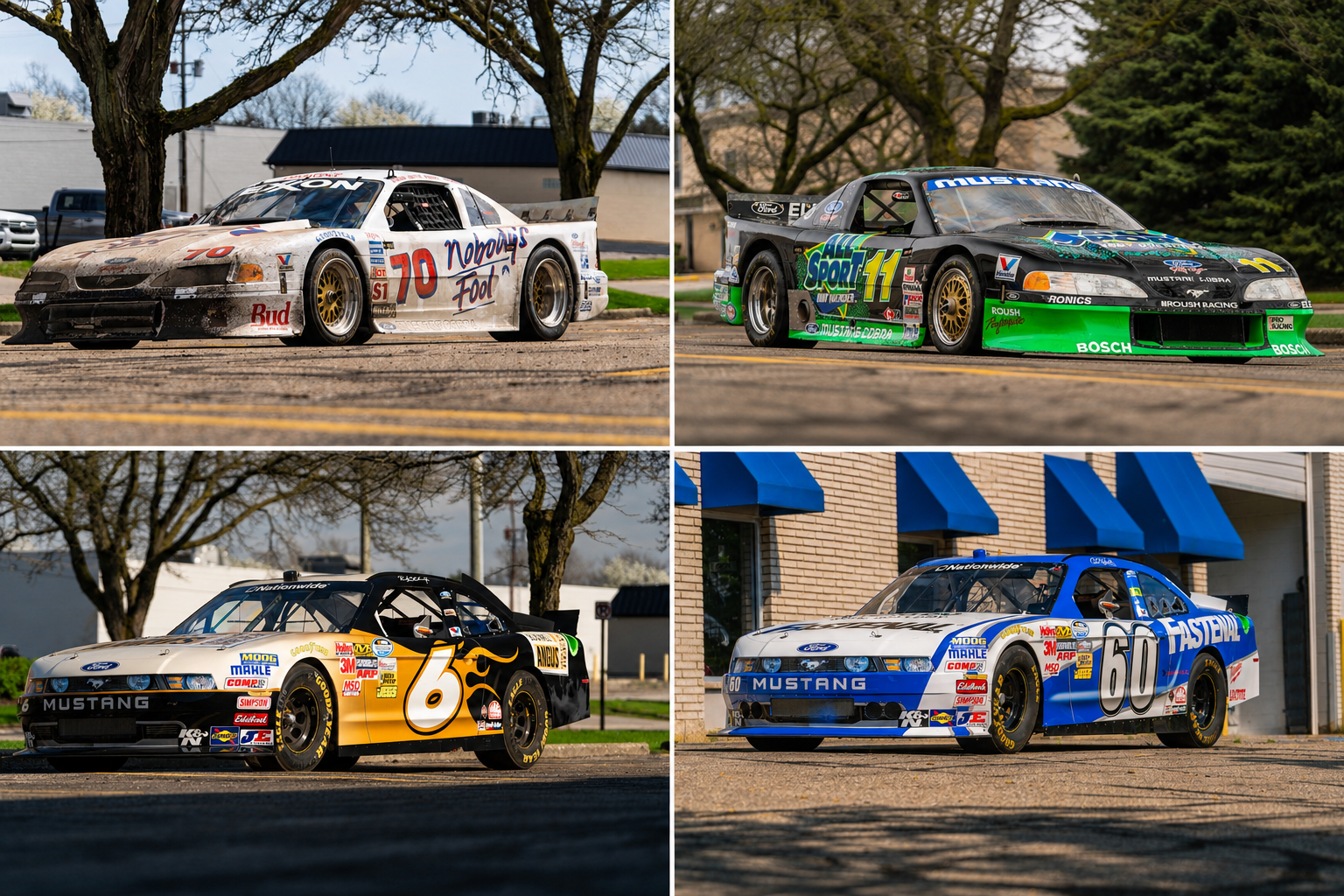
Four exceptionally significant Ford Mustang race cars from the Roush Racing stable are set to cross the auction block at Mecum Auctions on September 26, bringing together an extraordinary collection of machines that represent some of the most consequential moments in American road racing and NASCAR history.
The four cars are being offered as part of Mecum’s Nashville 2026 auction, with the sale scheduled for Saturday, September 26, 2026. Mecum’s current auction listings identify Nashville as the venue for its September 26 event.
For collectors, the significance of this offering goes well beyond the Mustang name. All four cars are directly connected to Jack Roush’s racing organization and preserve competition history involving championship-winning drivers, major endurance events and record-setting performances.
Spanning nearly two decades of competition, the cars illustrate the evolution of Roush’s engineering philosophy—from sophisticated Trans-Am road racers of the 1990s to the NASCAR Nationwide Series Mustangs that established Ford’s pony car as a winner at the highest level of stock-car competition.
2011 Ford Mustang NASCAR — Chassis RK-638
Among the most historically important lots is Roush Fenway Racing chassis RK-638, the first modern-era Ford Mustang to win a NASCAR Nationwide Series race.
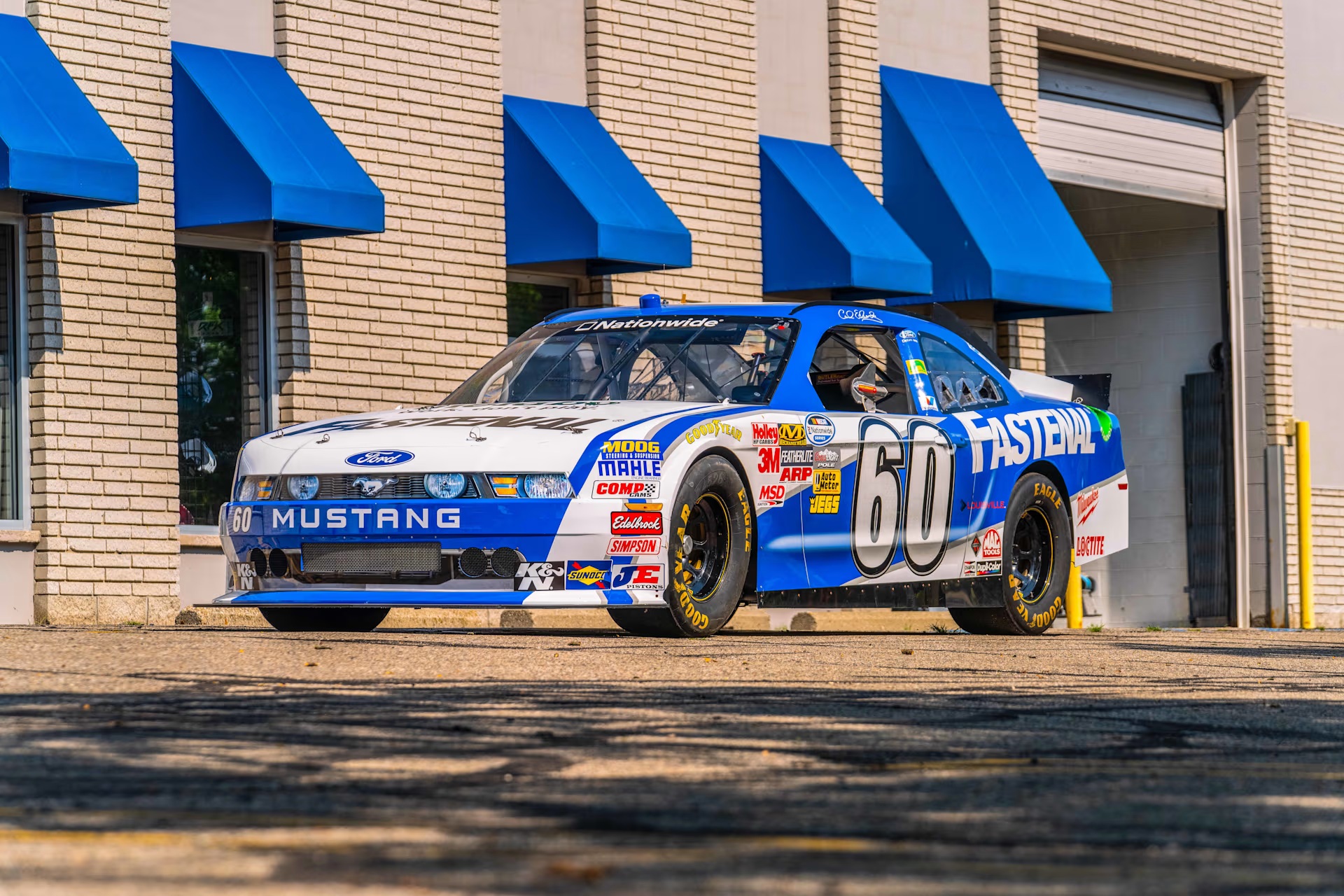
Carl Edwards drove the Mustang to victory in the 2011 O’Reilly Auto Parts 300 at Texas Motor Speedway, producing a milestone for Ford’s pony car in NASCAR. The achievement was particularly significant because it represented only the second NASCAR victory for a Mustang, following Bobby Allison’s landmark 1971 win at Bowman Gray Stadium.
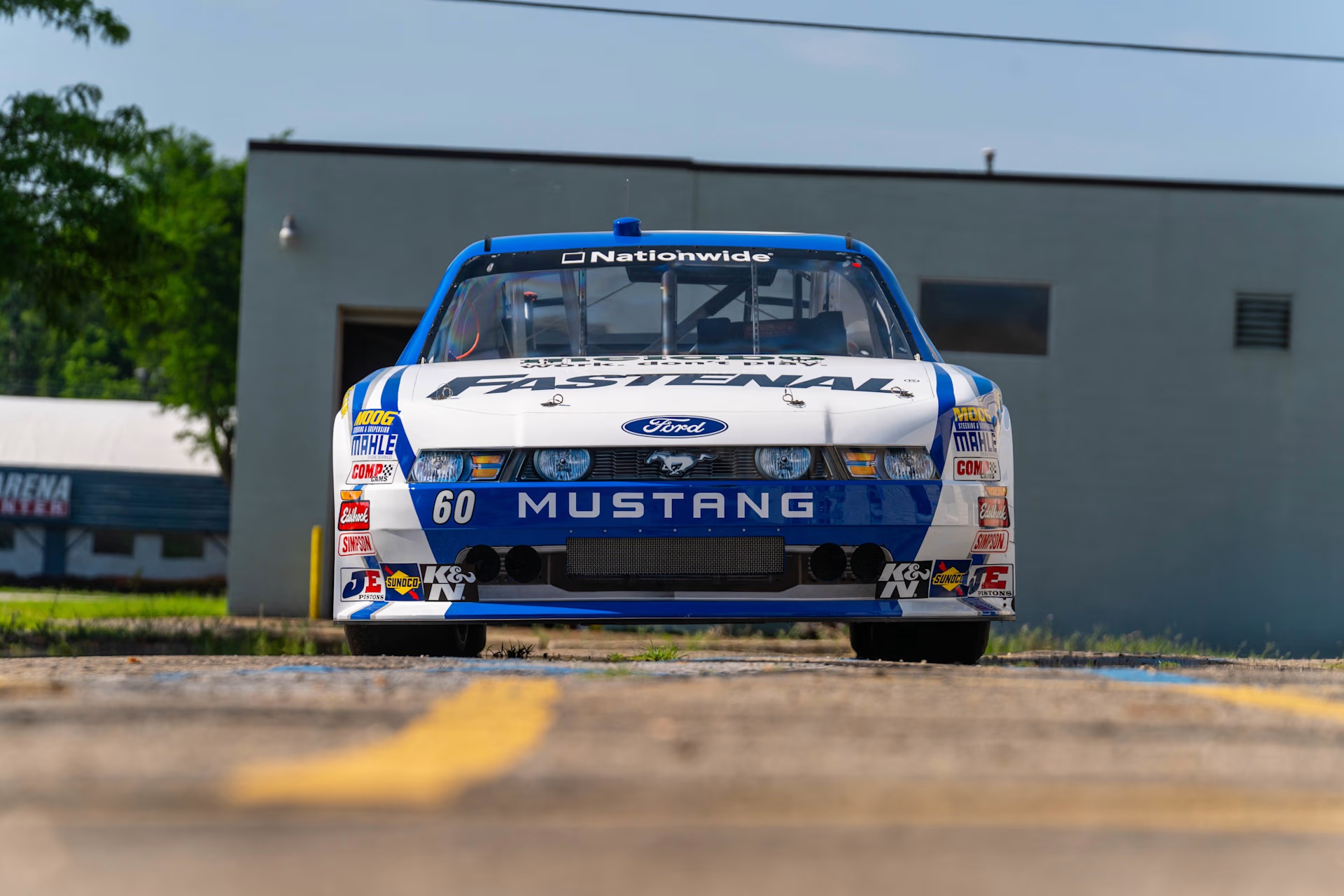
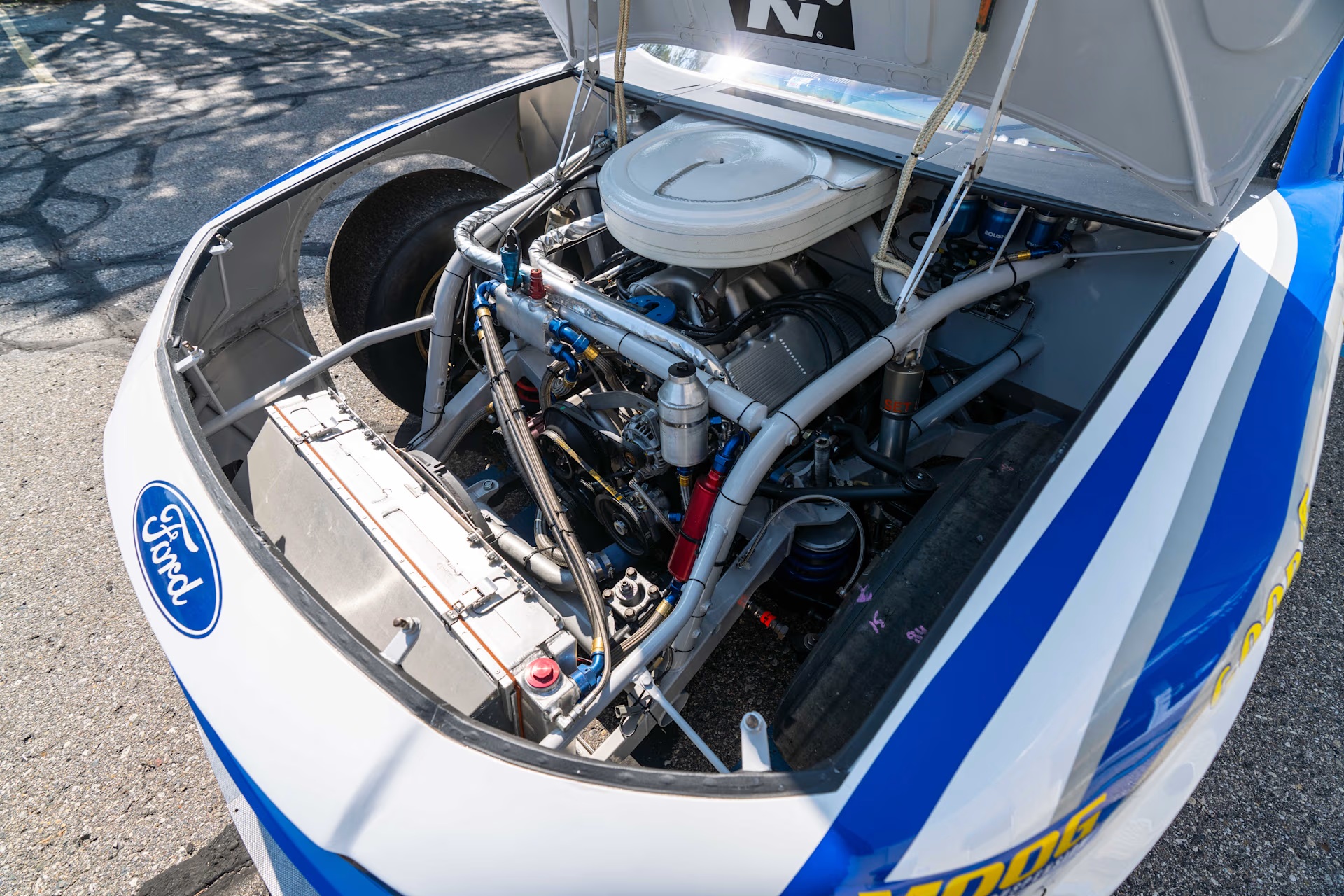
The car embodies the equipment used by Roush Fenway Racing during the period. Power comes from a Roush Yates 358-cubic-inch Ford V-8 connected to a four-speed manual transmission and supported by MSD ignition. A competition roll cage and fire-suppression system provide the required safety infrastructure, while four-wheel Brembo disc brakes with slotted rotors provide stopping capability.
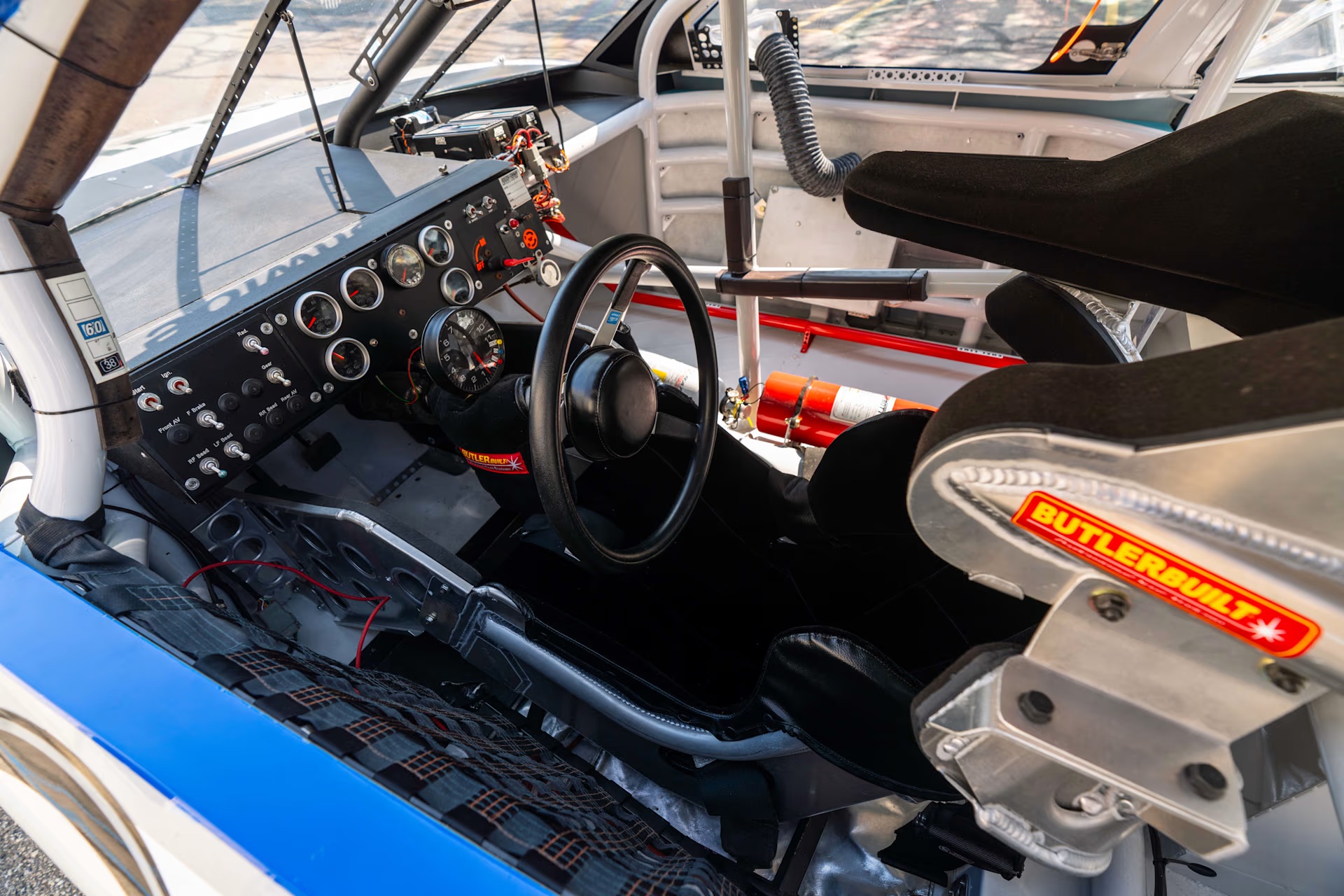
Inside, the race-focused cockpit includes a ButlerBuilt Professional Seat Systems racing seat, Safety Solutions harness, AutoMeter gauges and a column-mounted Spek-Pro tachometer.
Finished with Fastenal sponsorship markings, Edwards’ simulated signature and Mustang identification, RK-638 is more than a retired competition car. It is a documented piece of Mustang NASCAR history and a tangible representation of Ford’s return to victory lane with its iconic pony car.
2011 Ford Mustang NASCAR — Chassis RK-654
Another 2011 Roush Fenway Mustang, chassis RK-654, carries a different but equally important distinction. This was the car driven by Ricky Stenhouse Jr. to his first Nationwide Series victory at Iowa Speedway on May 22, 2011.
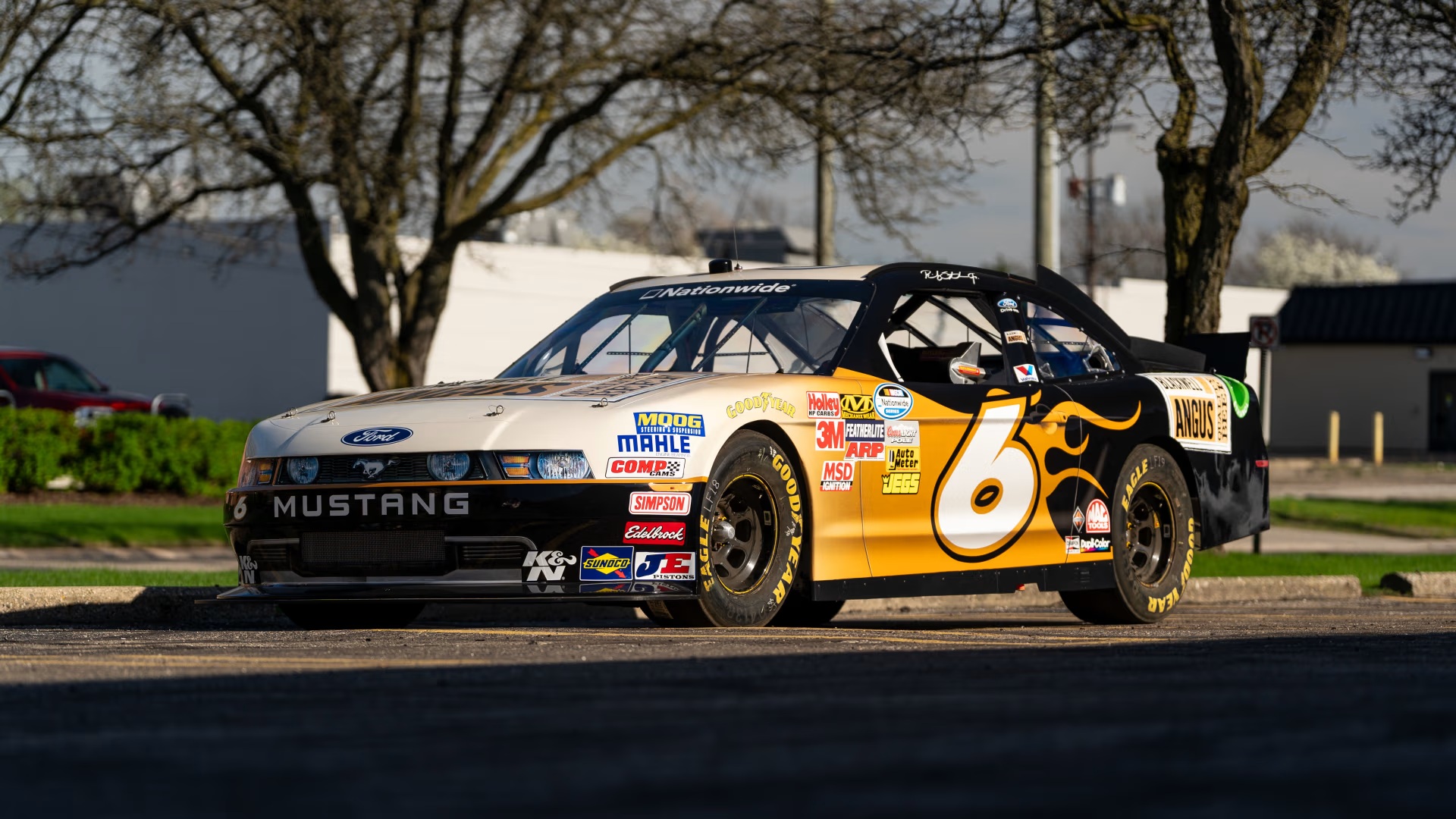
Stenhouse’s breakthrough came after an intense battle with Brad Keselowski and teammate Carl Edwards. The lead changed hands between Stenhouse and Edwards eight times before Stenhouse secured the victory. That win proved to be a defining moment in the young driver’s career. Later that season, Stenhouse captured both the Nationwide Series Drivers’ and Owners’ Championships for Roush Fenway Racing.
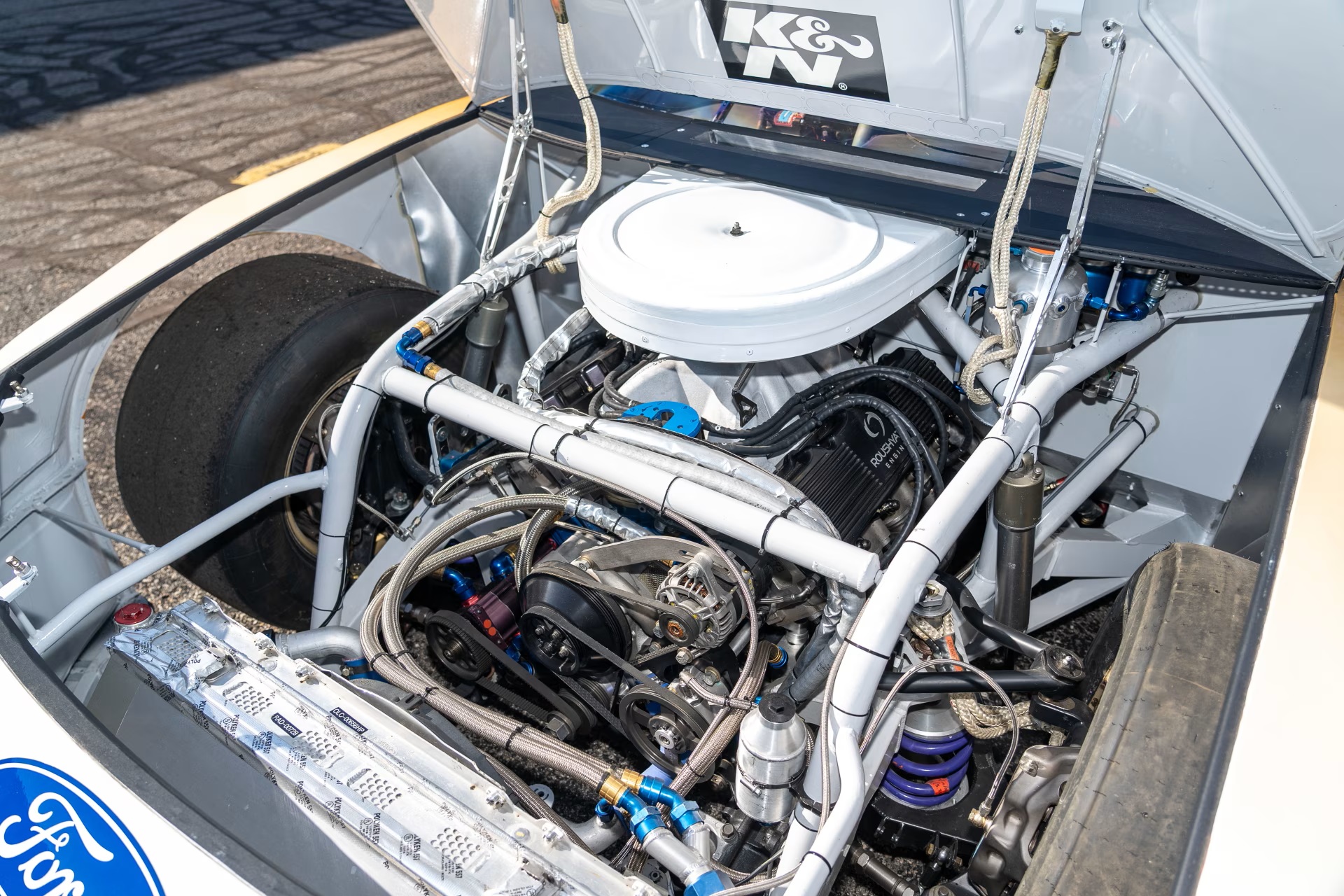
The Mustang is powered by a Roush Yates FR9 Carbureted 358 CI Ford V-8 featuring dry-sump lubrication and braided lines, with a four-speed manual transmission delivering power to the rear wheels. MSD ignition completes the competition-oriented engine package.
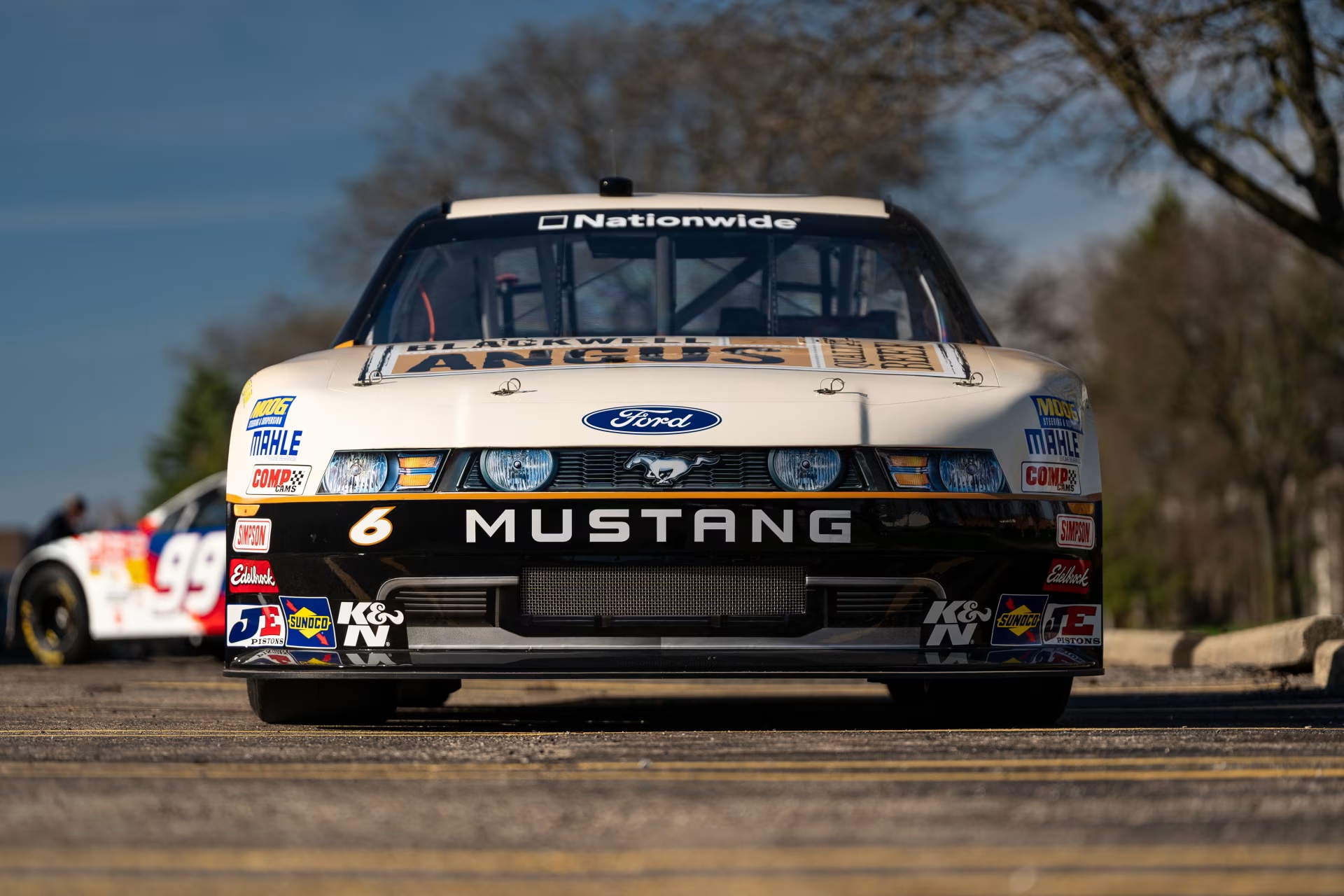
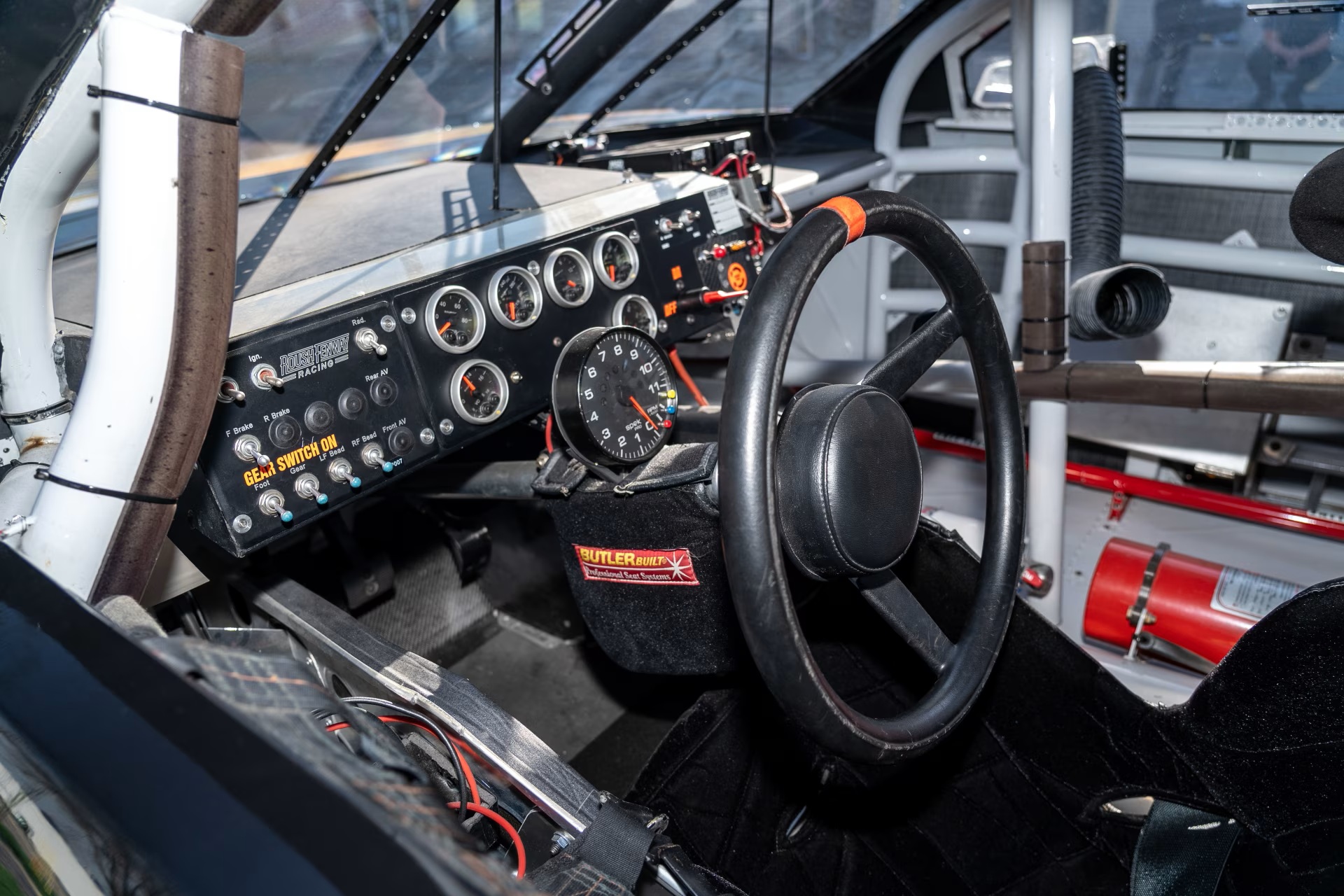
Its black No. 6 Blackwell Angus flame livery gives the car an unmistakable period NASCAR appearance. The cockpit retains a ButlerBuilt racing seat, Willans harness, AutoMeter gauges, SpekPro tachometer and fire-suppression system. Four-wheel disc brakes with slotted rotors, 15-inch black racing wheels and Goodyear Eagle radial tires complete the competition package.
Together, RK-638 and RK-654 document a pivotal year for the Mustang in NASCAR. One delivered Carl Edwards a historic first for the modern Mustang; the other launched Stenhouse’s championship-winning season.
1997 Ford Mustang Cobra SCCA Trans-Am — Chassis No. 33
Built for the SCCA Trans-Am Series, this 1997 Mustang Cobra was the final Roush Racing Trans-Am car and the product of years of accumulated engineering knowledge. Its significance is underscored by the achievements of Tommy Kendall during the 1997 season.
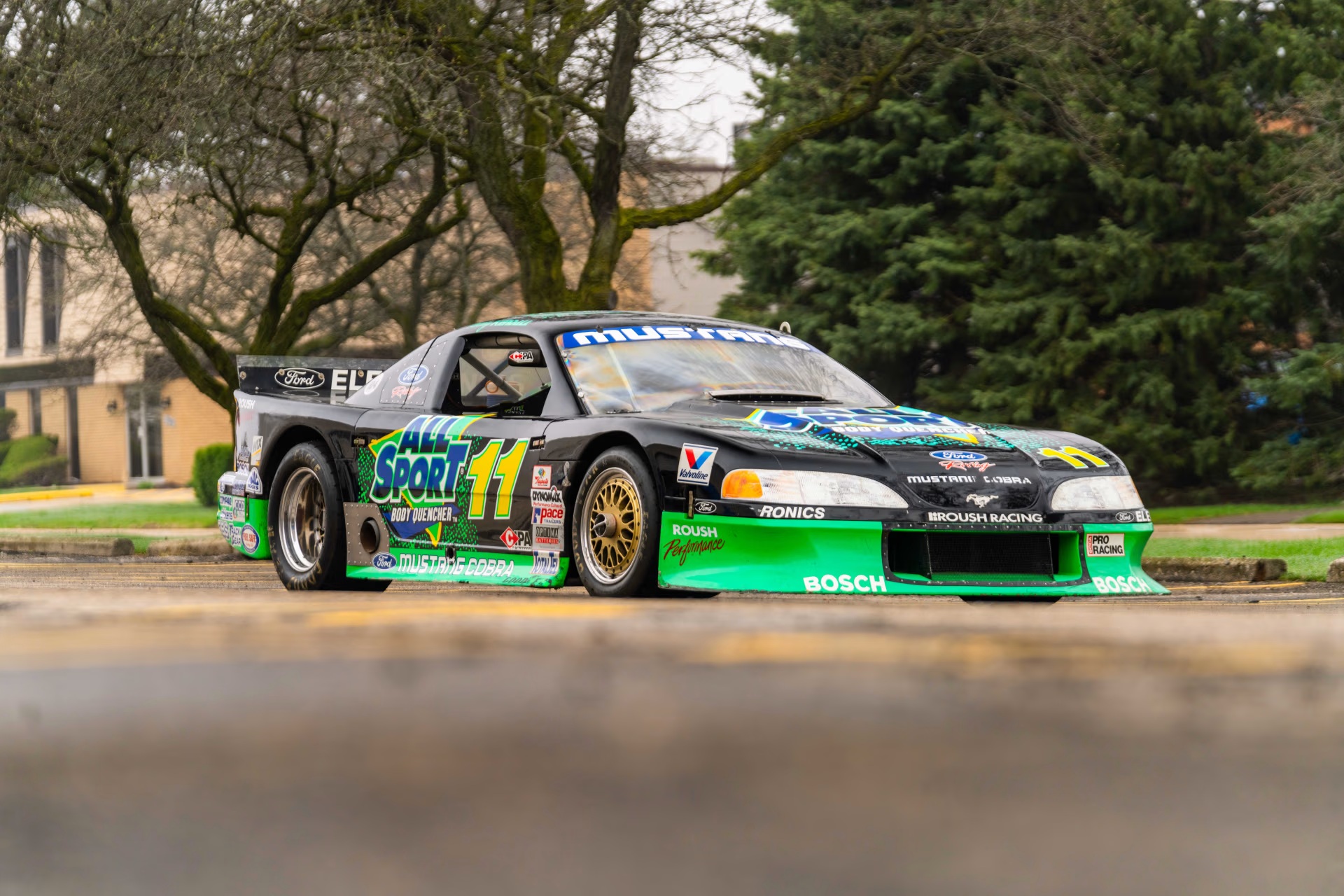
Kendall won the opening 11 of 13 races, securing Roush Racing’s third consecutive Trans-Am championship with Kendall and the team’s fourth overall. His remarkable streak established a professional road-racing record by surpassing Mark Donohue’s previous benchmark of eight consecutive Trans-Am victories.
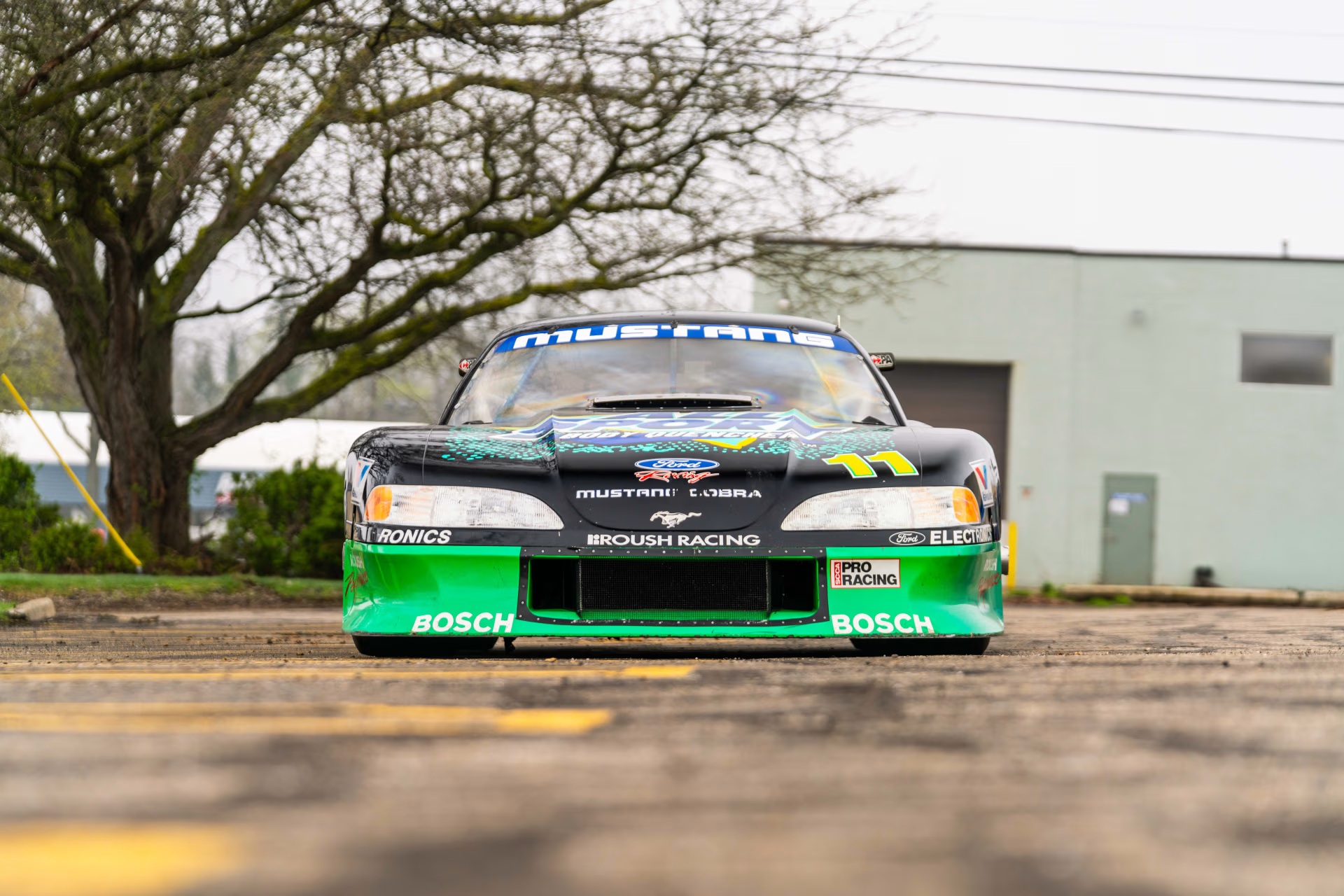
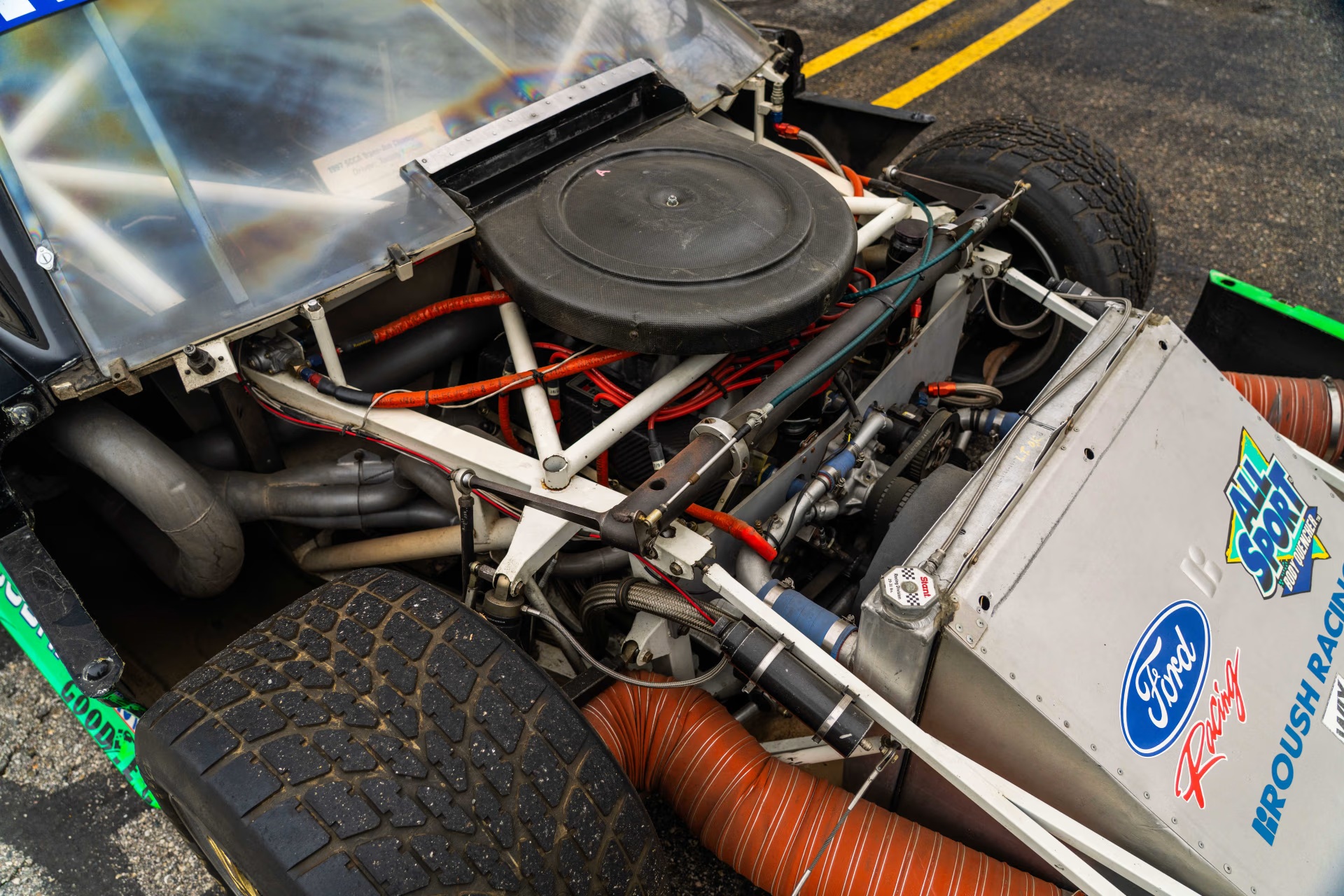
The Mustang was the final example of 33 silhouette racers developed by Roush in conjunction with Ford’s Special Vehicles Operation. Beneath its composite bodywork is a tube-steel space-frame chassis incorporating adjustable Roush-designed suspension and competition-grade four-wheel disc brakes.
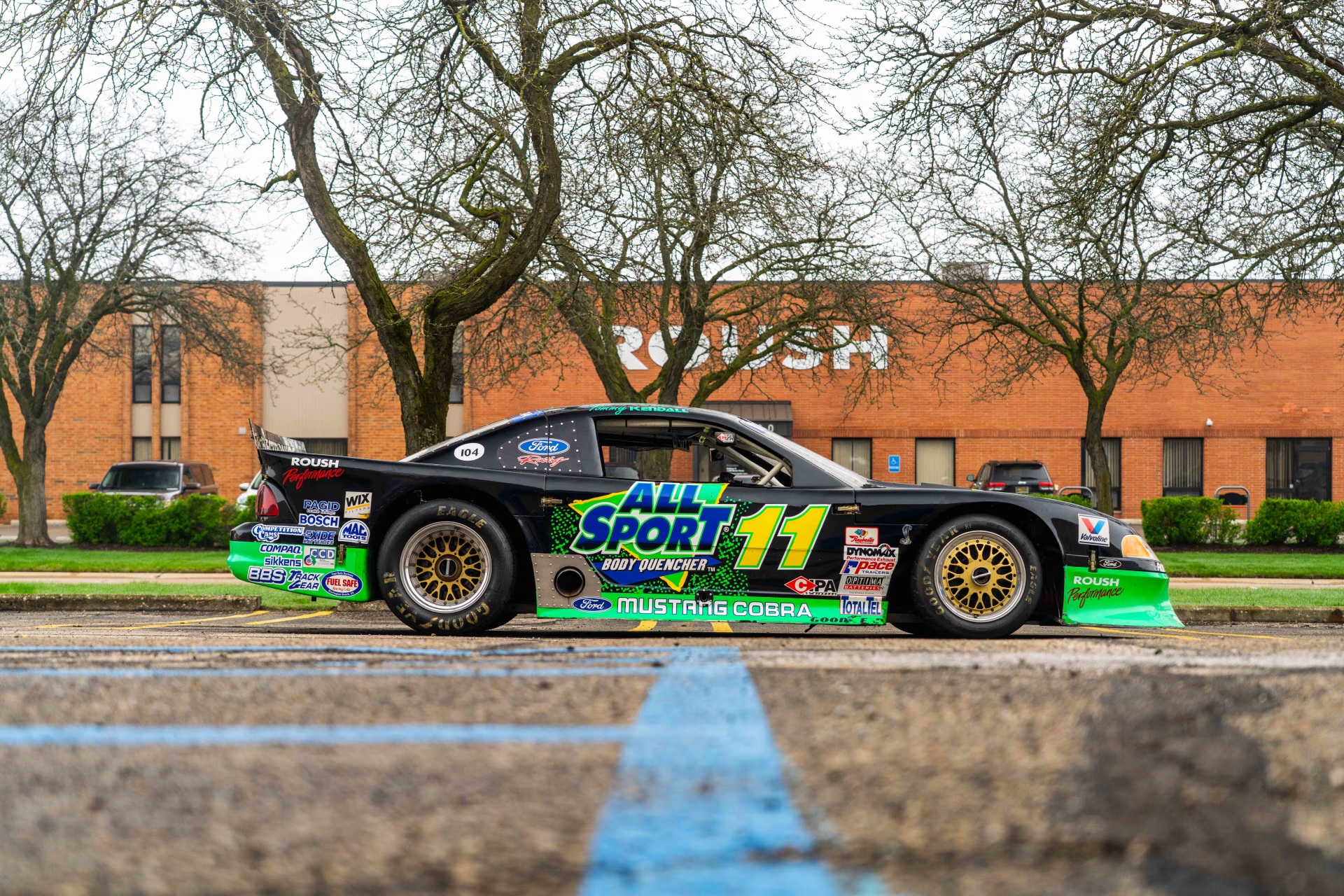
A Roush-built Ford small-block V-8 produces a reported 650 horsepower from 310 cubic inches, paired with a five-speed manual transmission and Ford 9-inch rear differential. The car rides on 16-inch two-piece BBS wheels with gold centers and Goodyear Eagle racing tires. Its cockpit contains a racing bucket seat, Sabelt TRW Sparco harness, AutoMeter Pro-Comp gauges and a memory tachometer.
The Mustang’s importance extends beyond its record-breaking season. Roush’s success in road racing played a major role in establishing the organization’s reputation before its transition into NASCAR, making this final Trans-Am chassis an important link between two eras of Roush’s racing career.
1995 Ford Mustang Cobra “Nobody’s Fool” IMSA — Chassis No. 23
Perhaps the most charismatic of the four is Roush Racing chassis No. 23, the 1995 Ford Mustang Cobra known as “Nobody’s Fool.” The car’s competition history is exceptional. It contested the 1995 Rolex Daytona 24 Hours with a driver lineup that included Paul Newman, Tommy Kendall, Mark Martin and Michael Brockman. The team won the GTS-1 class and finished third overall.
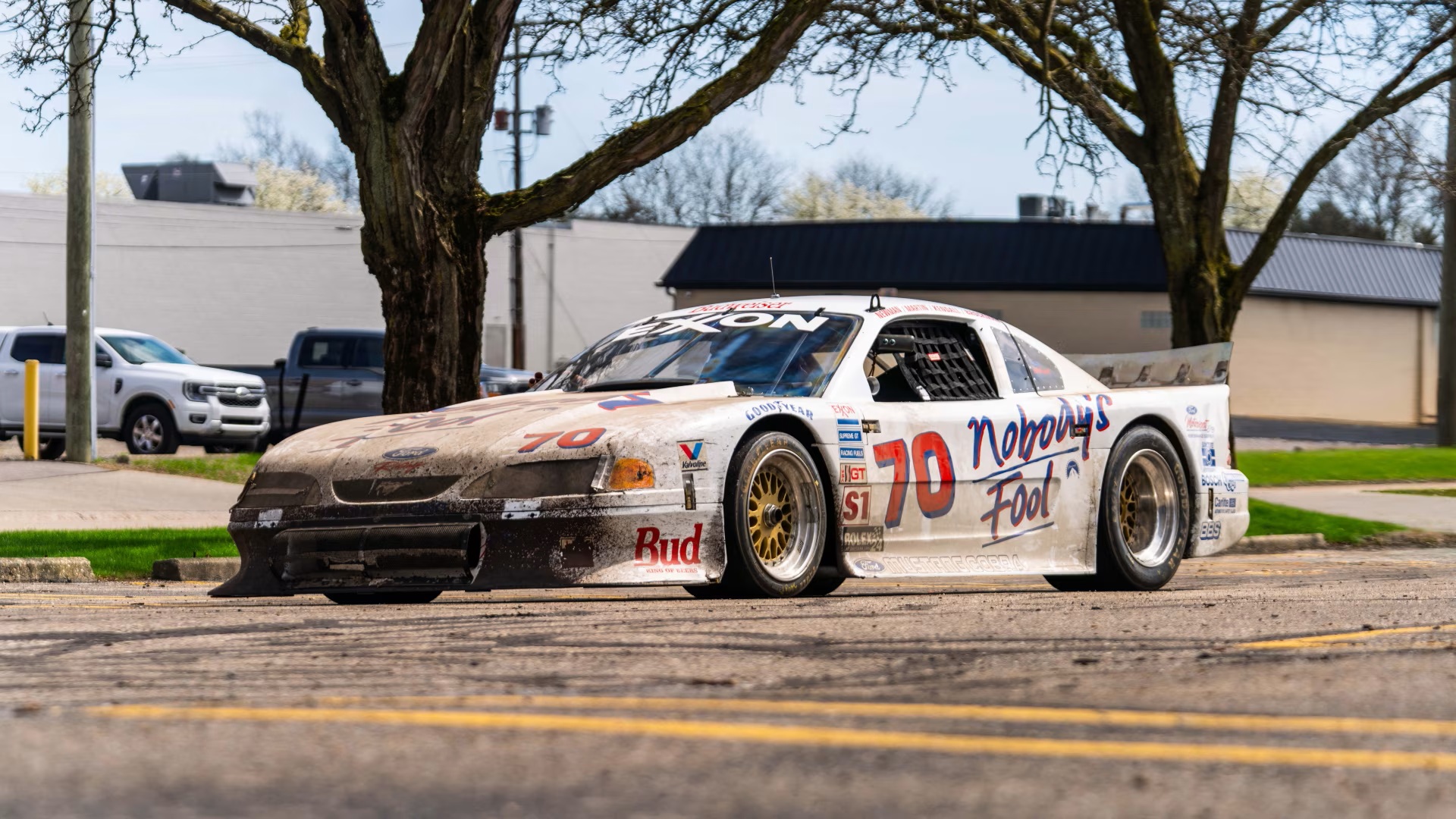
Newman’s participation adds another layer of significance. The celebrated actor was also a highly accomplished racing driver, and the No. 70 designation was selected in recognition of his 70th birthday. The car carried Paramount Studios sponsorship funded with remaining marketing money from Newman’s film “Nobody’s Fool.”
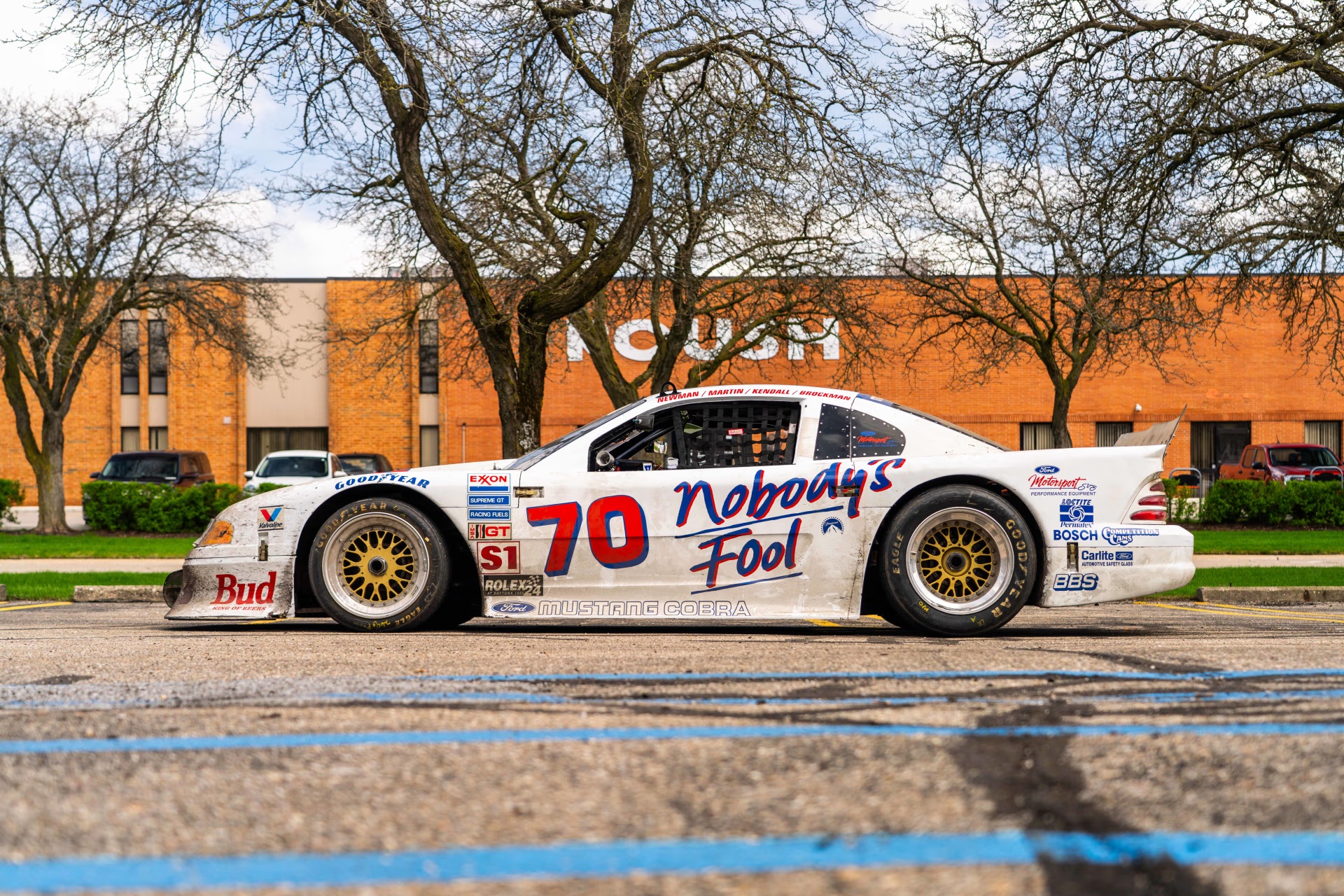
Technically, the Mustang followed Roush’s NASCAR-influenced philosophy. A tubular steel space frame supported the car, while a Roush-built 6.0-liter Ford V-8 reportedly produced approximately 750 horsepower. A five-speed manual transmission transferred that output, while Alcon four-wheel disc brakes provided braking performance.
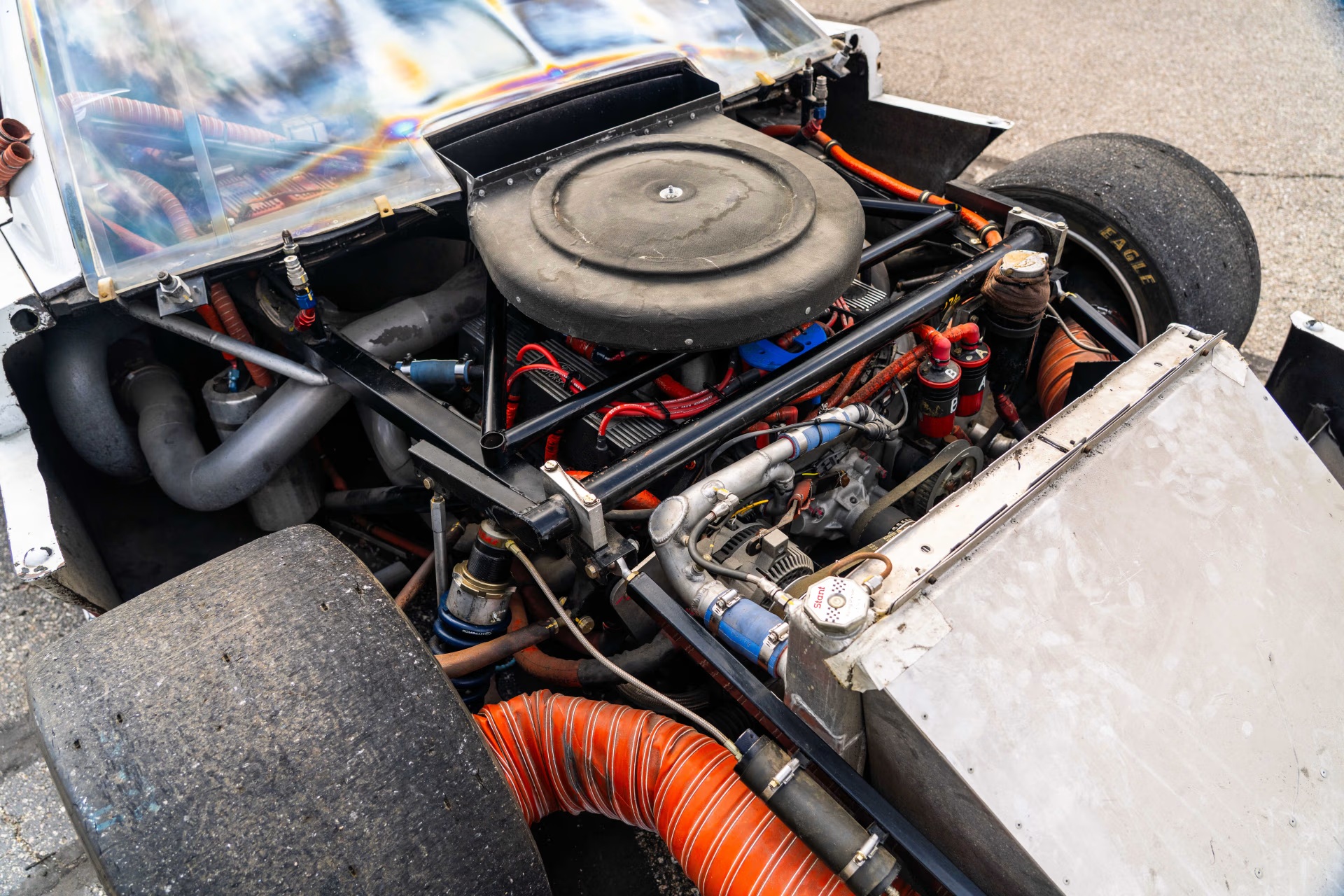
Two-piece 17-inch BBS gold wheels, Goodyear Eagle radial racing tires, AutoMeter gauges and a Ford Motorsport tachometer completed the competition package. The car’s bodywork history is equally compelling. After Daytona, the Mustang was fitted with unused spare panels and displayed at Daytona USA. Its original race-worn body panels were separately preserved at Roush’s Michigan headquarters.
Those original panels have since been reunited with the chassis, restoring the Mustang’s appearance from the 1995 Daytona endurance race. The replacement “show” body panels are included with the car.
Four Cars, One Roush Racing Legacy
Taken together, these four Mustangs provide an unusually comprehensive look at Jack Roush’s influence on American motorsport.
The 1995 “Nobody’s Fool” demonstrates Roush’s ability to engineer a Mustang capable of surviving and winning one of endurance racing’s toughest events. The 1997 Trans-Am Cobra represents the peak of Roush’s road-racing program, highlighted by Tommy Kendall’s unprecedented winning streak.
The two 2011 NASCAR Mustangs tell another story: Ford’s return to NASCAR competition with the Mustang and the emergence of a new generation of Roush Fenway drivers. Edwards’ Texas victory established a modern NASCAR milestone, while Stenhouse’s Iowa triumph became the foundation for his championship-winning campaign.
Their significance therefore extends well beyond specifications. Each chassis preserves a specific moment when engineering, drivers and competition came together to produce results that changed the Mustang’s racing narrative.
For collectors, historians and Mustang enthusiasts, Mecum’s September 26 auction consequently represents an unusually important opportunity. These are not merely race-prepared Mustangs; they are surviving artifacts of the Roush Racing era, each carrying a direct connection to victories, championships and records that helped define Ford’s American motorsport legacy.
Source: Mecum Auctions