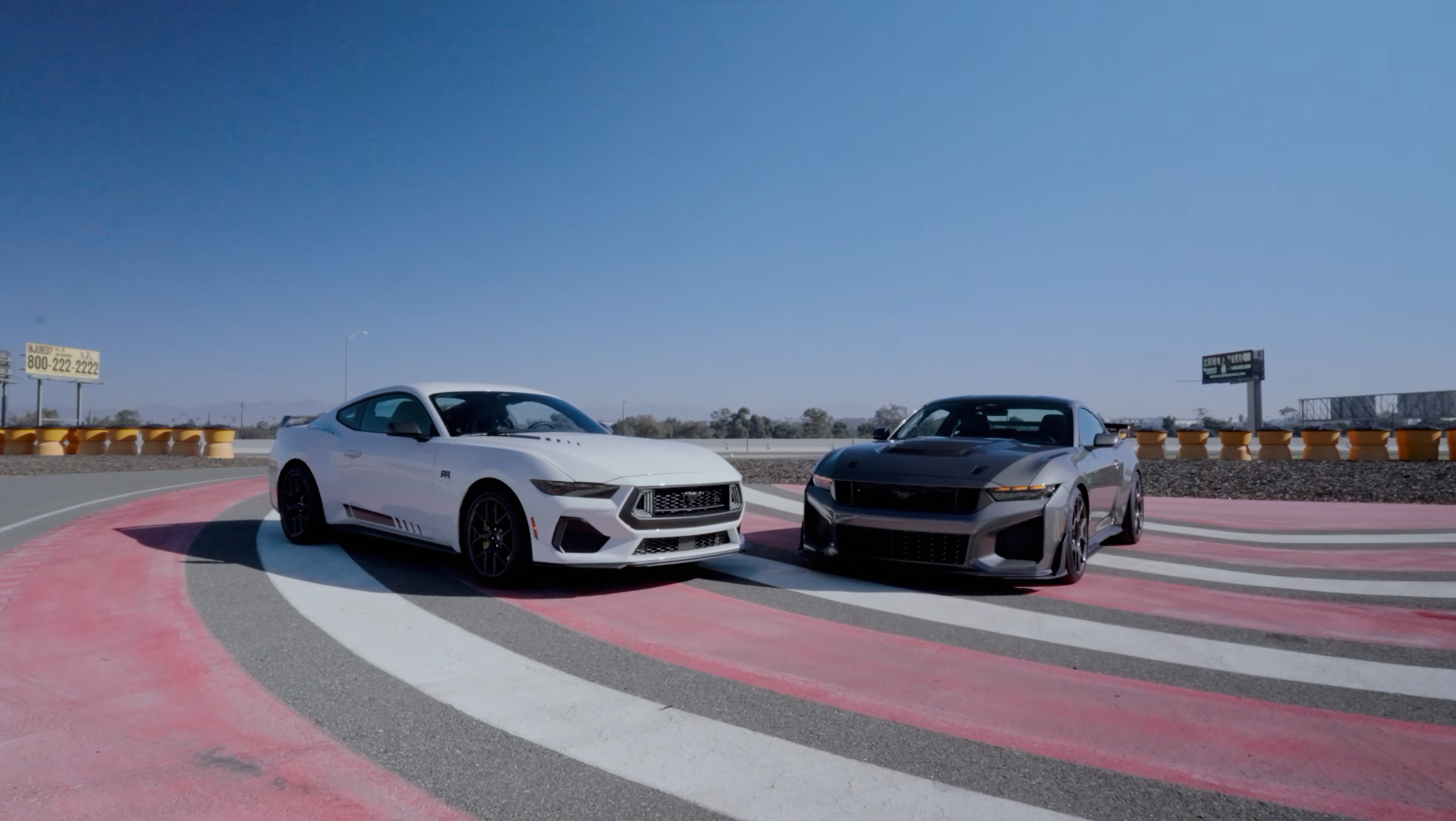
Ford continues to expand its Mustang lineup with increasingly specialized performance models, adding new engineering upgrades, distinctive hardware, and increasingly ambitious price tags. Two of the most interesting examples are the 2026 Mustang RTR and the supercharged Dark Horse SC. Although both are designed to deliver an enhanced driving experience, they approach performance from entirely different directions.
In a track evaluation, Edmunds put the two coupes through acceleration, braking, skidpad, and circuit testing to determine whether their respective upgrades justify their prices. The comparison involved a roughly $53,000 turbocharged four-cylinder Mustang and a nearly $150,000 supercharged V8 flagship.
2026 Ford Mustang RTR: EcoBoost Meets Performance Hardware
Based on the EcoBoost Mustang, the 2026 RTR retains its turbocharged four-cylinder engine without additional horsepower. Instead, its performance credentials come from chassis upgrades borrowed from more powerful Mustang variants.
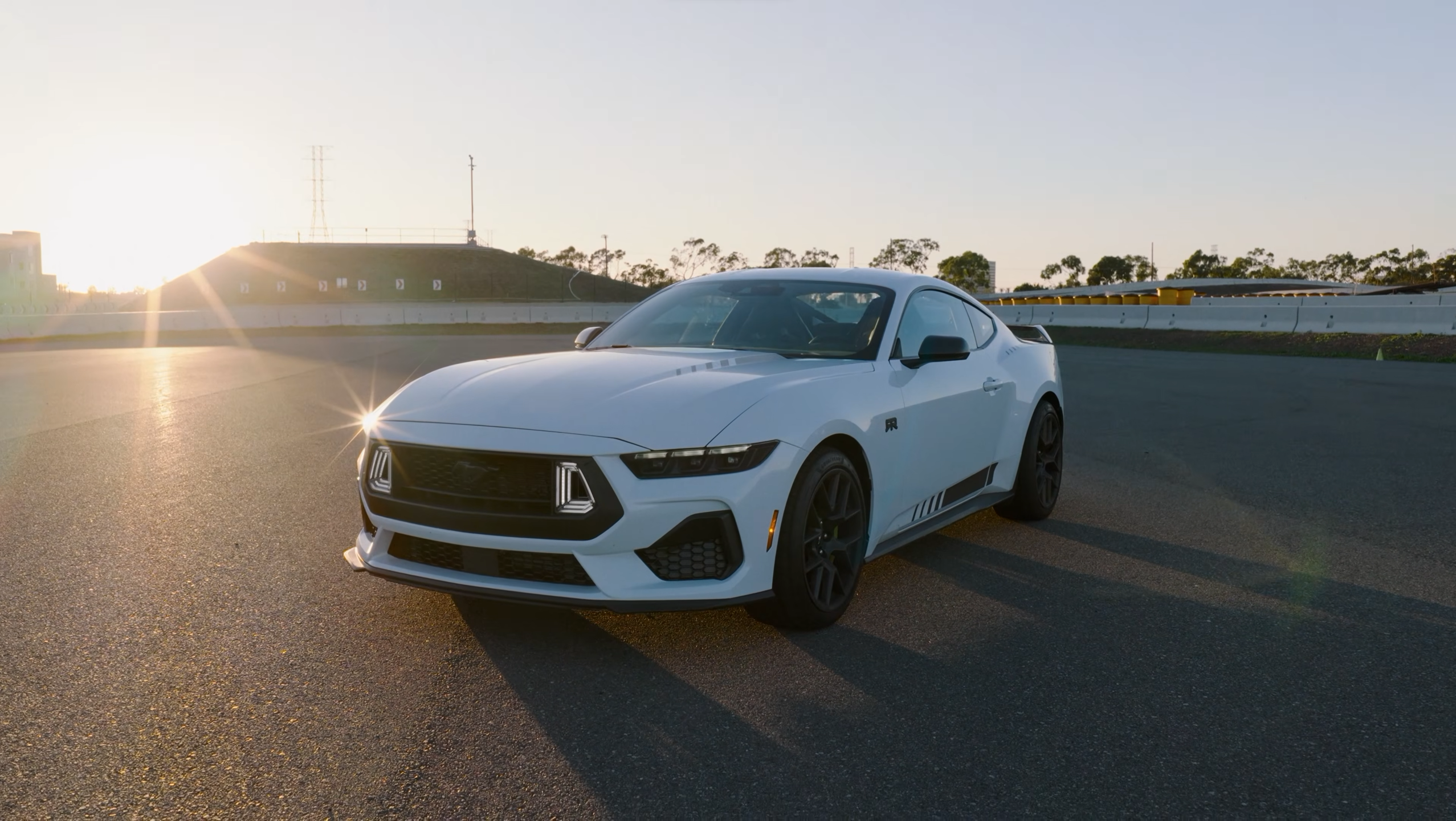
The RTR package costs slightly more than $6,000, while additional equipment, including MagneRide adaptive suspension, brings the tested car’s price to approximately $53,000.
Its hardware includes Dark Horse-derived rear subframe components and anti-roll bars, an upgraded Torsen limited-slip differential, and GT Performance Pack brakes with six-piston front and four-piston rear calipers. An electronic drift brake adds another distinctive feature, making controlled rear-wheel slides more accessible.
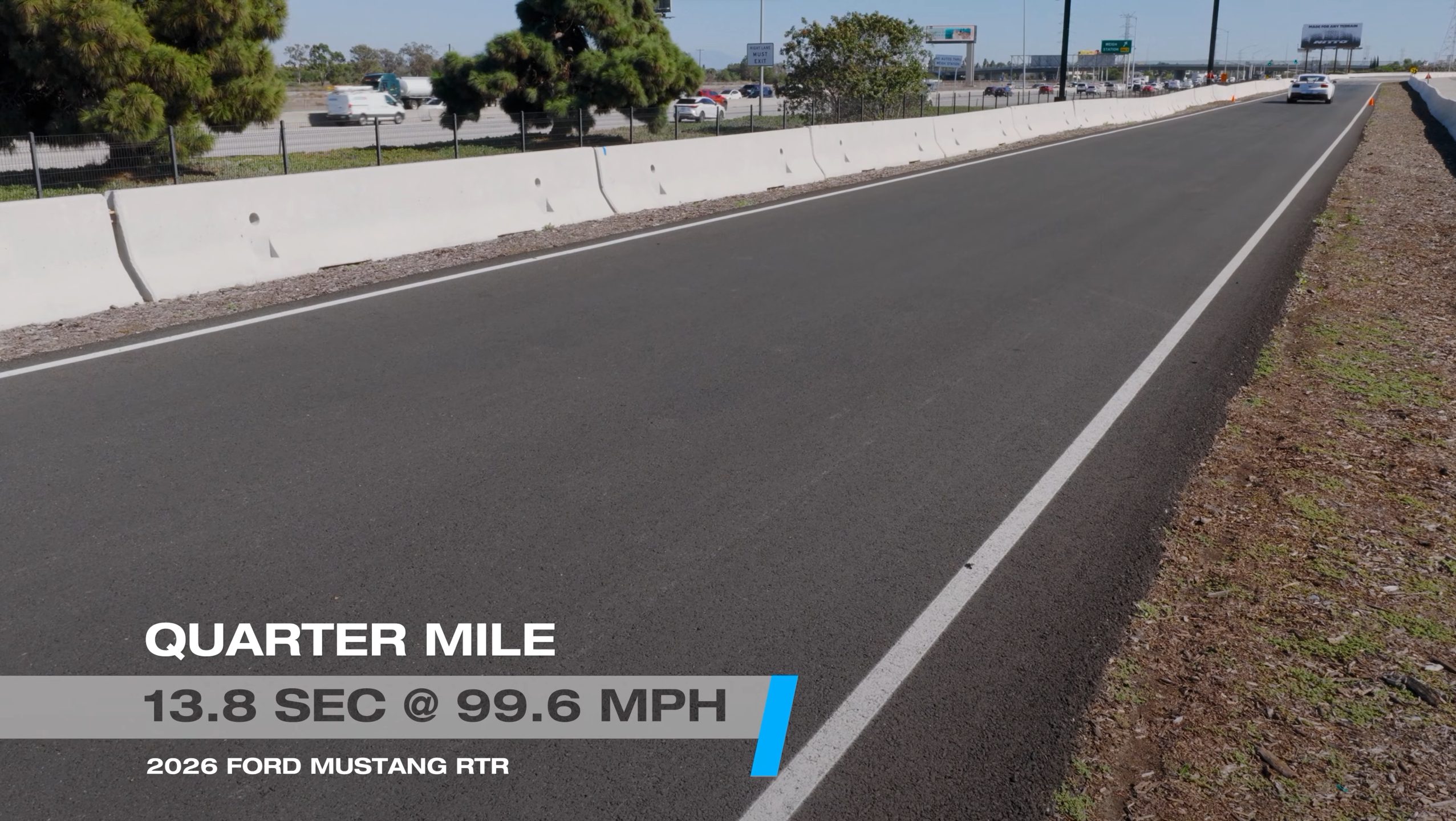
On the Edmunds test track, the RTR recorded a 5.5-second 0-60 mph time and completed the quarter mile in 13.8 seconds. Weighing 3,776 pounds, it generated 0.98 g on the skidpad and stopped from 60 mph in 105 feet.
The lighter four-cylinder engine gives the RTR a relatively agile front end. Its aggressive front-wheel camber and responsive steering contribute to sharp turn-in, while the upgraded brakes provide impressive stopping performance.
However, several shortcomings become apparent when pushing the car harder. Edmunds noted that the MagneRide suspension allows noticeable front-end movement during trail braking, potentially unsettling the chassis as the driver releases brake pressure entering a corner.
The 10-speed automatic transmission is another weakness. Its relatively slow responses and disruptive gear changes interfere with corner-exit stability. Turbo lag also requires drivers to anticipate throttle application well before reaching an apex.
The electronic drift brake, meanwhile, proved entertaining during separate testing on an airstrip. Nevertheless, Edmunds suggested that a manual transmission would make the RTR considerably more engaging for enthusiasts who prioritize driver involvement.
2026 Ford Mustang Dark Horse SC: Supercharged V8 Power
The Dark Horse SC operates in an entirely different performance category. Serving as a spiritual successor to the Shelby GT500, it combines an Eaton-supercharged 5.2-liter V8 with a Tremec seven-speed dual-clutch transmission.
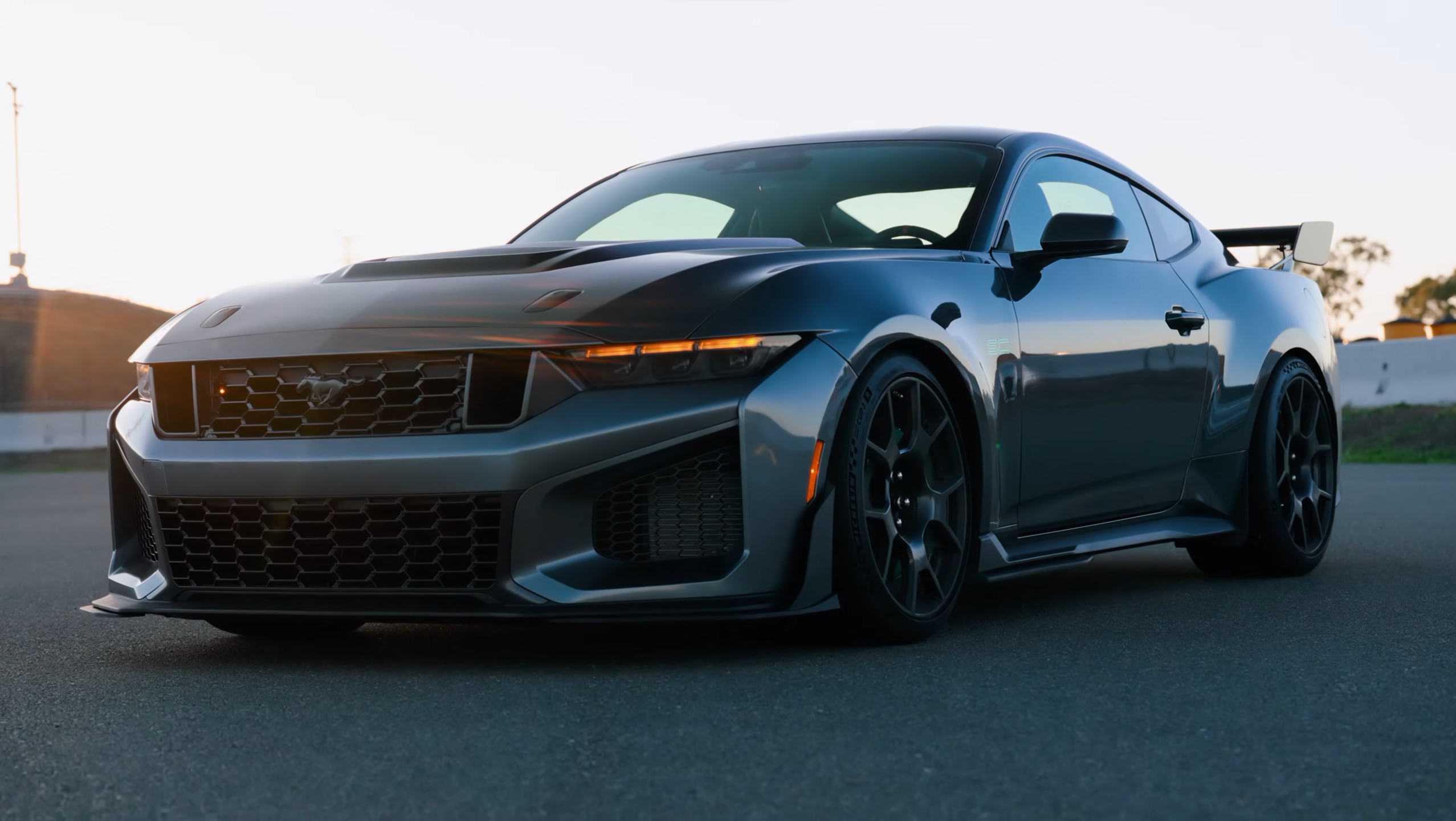
Unlike the Whipple-supercharged Dark Horse in Edmunds’ long-term fleet, the SC uses an Eaton supercharger and a larger-displacement engine. Its dual-clutch transmission also provides substantially quicker shifts than the RTR’s 10-speed automatic.
The tested example featured the optional $36,000 Track Pack, which adds carbon-ceramic brakes, carbon-fiber wheels, Michelin Pilot Sport Cup 2 R tires, thinner Recaro front seats, and a rear-seat delete. These upgrades collectively reduce weight by approximately 150 pounds.
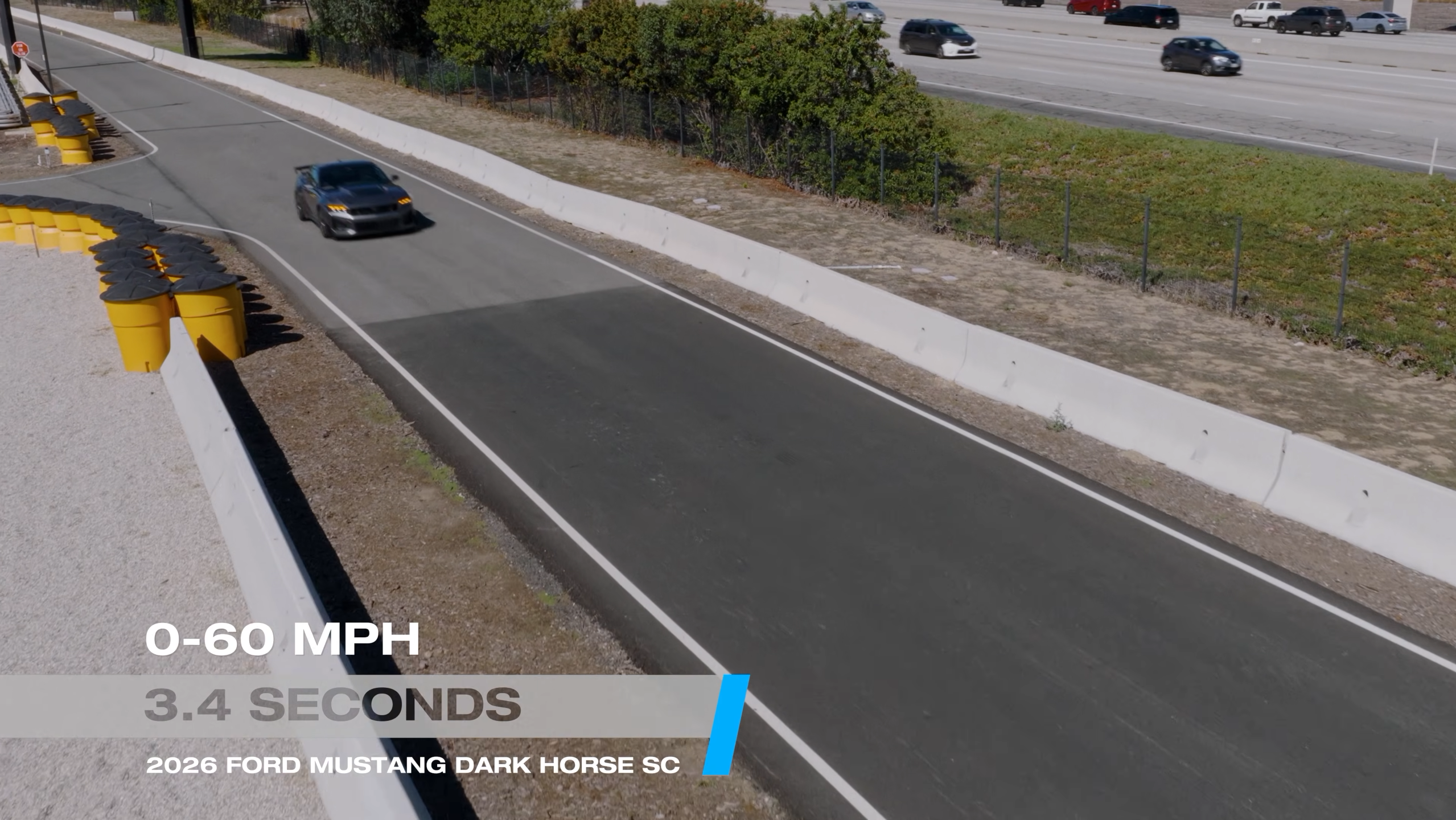
Despite weighing 4,091 pounds, the Dark Horse SC delivered extraordinary results. It accelerated from 0-60 mph in just 3.4 seconds and completed the quarter mile in 11.1 seconds at 128.3 mph, establishing a new Mustang acceleration record for Edmunds.
Its braking and cornering performance were equally impressive. The carbon-ceramic system, featuring 16.5-inch front rotors, delivered a 97-foot stopping distance from 60 mph. Meanwhile, the Michelin tires helped it achieve 1.12 g on the skidpad.
Chassis Engineering Separates the Two Mustangs
The Dark Horse SC benefits from more than its supercharged V8. Ford has substantially revised its front suspension compared with the standard Dark Horse, introducing different steering knuckles, stiffer stabilizer bars, and firmer dampers. MagneRide comes standard, with an even stiffer configuration included in the Track Pack.
Although its heavier front end makes initial turn-in slightly less immediate than the RTR’s, the SC delivers considerably greater overall composure. Edmunds praised its predictable handling, powerful braking, and impressive grip, particularly during repeated track sessions.
Its five-stage stability-control system, borrowed from the Mustang GTD, also allows drivers to progressively reduce electronic intervention as their confidence increases.
With stability control fully disengaged, the SC becomes an exceptionally entertaining track machine, allowing controlled rear-end movement under acceleration while delivering the unmistakable soundtrack of its supercharged V8.
Are These Mustang Performance Packages Worth the Money?
Ultimately, the two Mustangs appeal to different audiences. At approximately $53,000, the RTR offers interesting chassis upgrades and accessible drifting capabilities, but its automatic transmission and inconsistent track behavior leave room for improvement. Edmunds suggests that the Subaru BRZ and Mazda MX-5 Miata offer more engaging alternatives for enthusiasts seeking affordable, manual-transmission driving experiences.
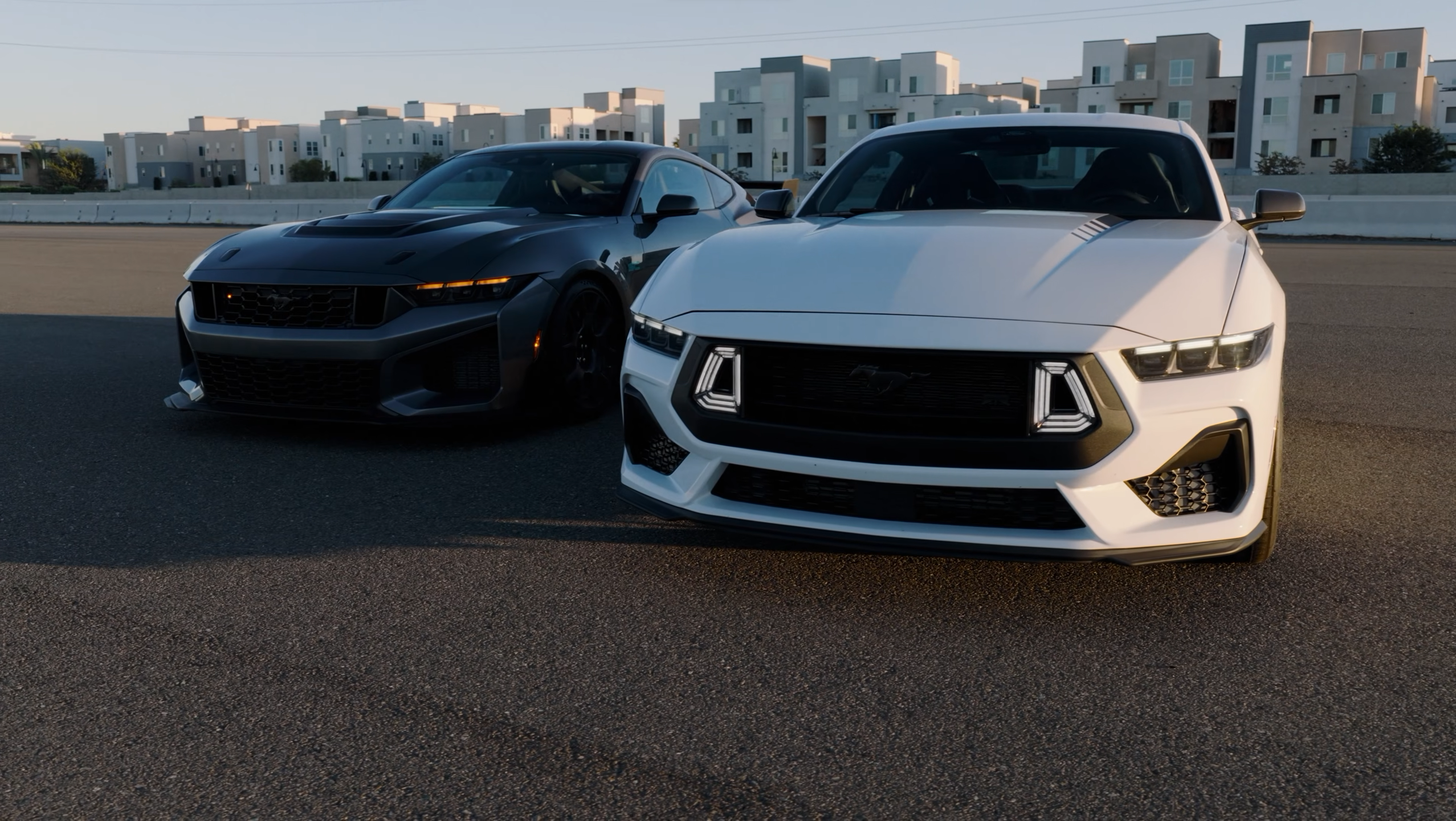
The nearly $150,000 Dark Horse SC is considerably more expensive, but its performance is difficult to dispute. Its acceleration, braking, grip, and sophisticated transmission create a much more complete track package.
For enthusiasts with six-figure budgets, the Dark Horse SC delivers an exhilarating modern interpretation of the Shelby GT500 formula. The RTR, meanwhile, demonstrates that excellent hardware alone cannot compensate for a powertrain that sometimes gets in the way of the driving experience.
Source: Edmunds Cars