

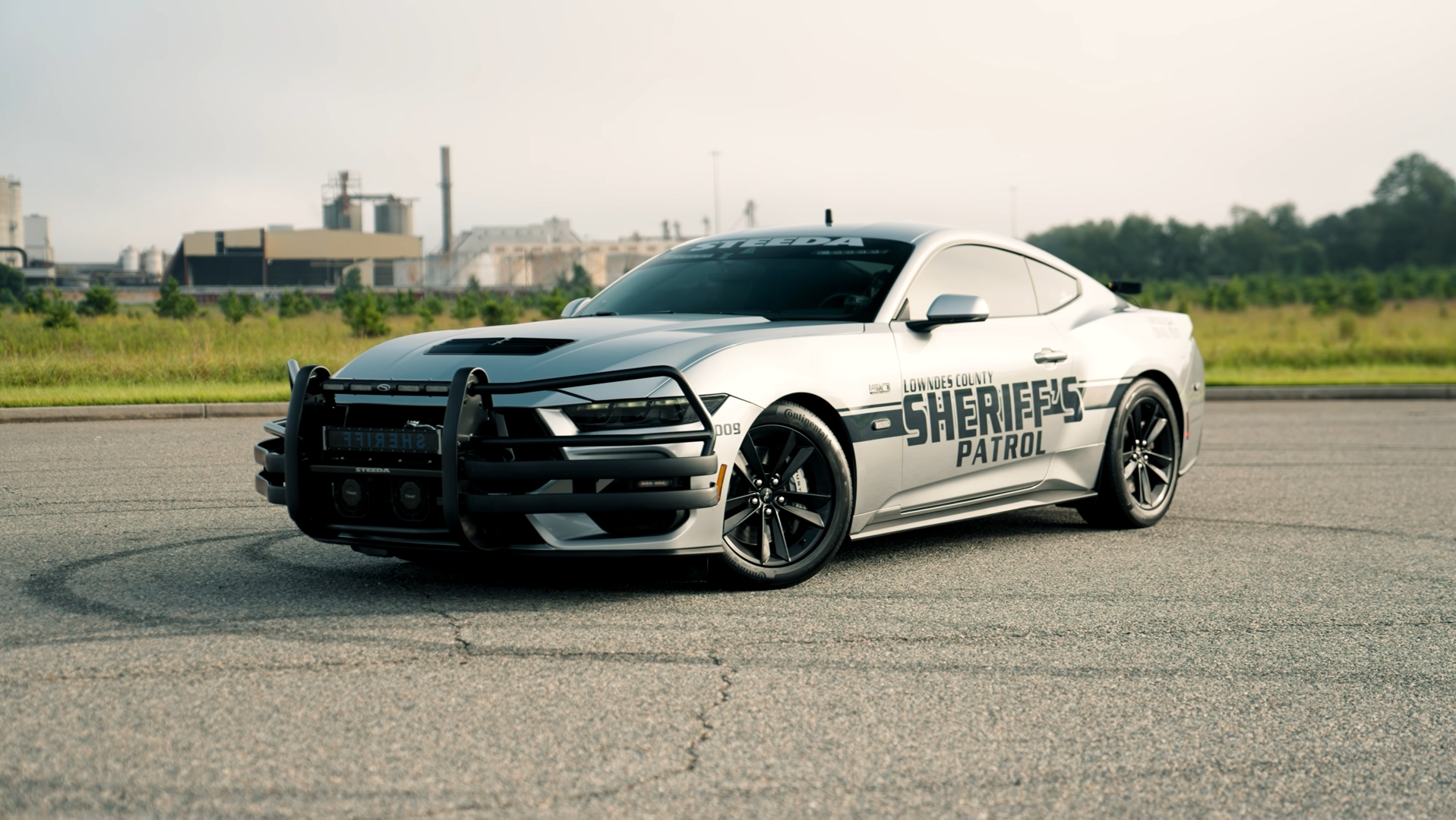
The Ford Mustang is returning to law-enforcement duty in a modern form, and Steeda is helping bring the concept into the S650 generation. The performance specialist has completed an S650 Mustang GT for the Lowndes County Sheriff’s Office in Georgia, equipping the car with a chassis, suspension and braking package designed around the demands of police work rather than outright track performance.
The project is part of Steeda’s Special Service Vehicle program, which has previously involved Ford Police Interceptor Utility models and other Ford platforms. The Lowndes County car is the latest interpretation of the company’s effort to revive the purpose-built Mustang patrol car concept that became familiar during the Fox-body era. Steeda says the objective is straightforward: improve control, traction, stability and braking so officers have a more predictable vehicle when driving under demanding conditions.
Built Around Handling Rather Than Horsepower
The Lowndes County Mustang begins with a base Mustang GT and receives a comprehensive rear-suspension package. Steeda installs its IRS subframe support braces, patented subframe bushing support system and alignment components to reduce movement and deflection within the independent rear suspension.
That distinction matters for a police vehicle. Officers are not launching the Mustang at a drag strip, but they can repeatedly accelerate from a standstill while monitoring traffic or responding to calls. Reducing wheel hop and controlling rear-subframe movement can provide more consistent traction when substantial throttle is applied.

Steeda also installs adjustable front and rear sway bars. Unlike some of the company’s civilian performance builds, the Sheriff’s Office Mustang does not receive lowering springs. The reason is practical: the car carries additional equipment, including a front push bar and trunk-mounted law-enforcement equipment, while the S650 already sits lower than previous-generation Mustangs. Lowering it further could compromise ground clearance.
The sway bars instead increase roll control without sacrificing the additional clearance required for service use. Steeda says the resulting setup is intended to make the Mustang flatter and more predictable through corners.
Front-End Reinforcement and Airflow
At the front, Steeda adds a strut-tower brace to reduce flex around the upper suspension mounting points. Adjustable camber plates are also part of the package, allowing the alignment to be controlled more precisely.
The engine receives Steeda ProFlow high-flow air filters rather than a complete cold-air intake. That approach keeps the modification relatively simple and serviceable, an important consideration for a vehicle expected to accumulate significant mileage in demanding conditions.
The company also fits a stainless-steel resonator-delete H-pipe. Unlike the chassis and braking upgrades, this component is primarily an exhaust-sound modification, although Steeda notes that it does not require removal of the Mustang’s emissions-control equipment.
Braking Becomes a Priority
Perhaps the most consequential upgrade is the braking system. Rather than replacing the Mustang’s calipers and rotors with an expensive competition package, Steeda worked with G-Loc to install upgraded brake components while retaining the factory Brembo front-caliper hardware.
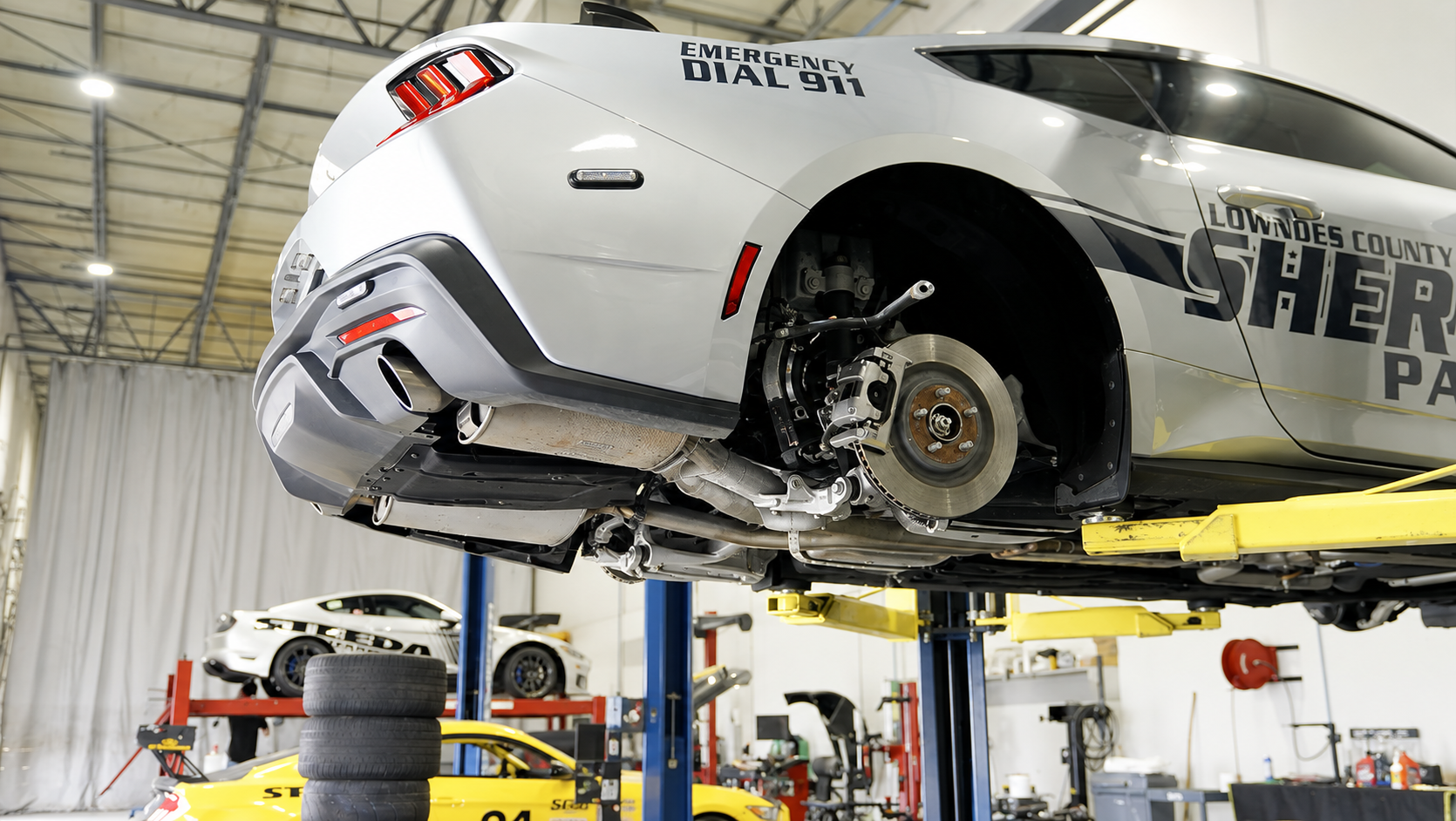
The philosophy is consistent with the rest of the build: improve the areas that matter in service without unnecessarily increasing costs. A police Mustang may encounter repeated high-speed braking, emergency responses and abrupt changes in speed, making brake consistency and resistance to fade particularly important.
Steeda describes the overall package as a balanced system rather than a horsepower exercise. The company’s Special Service Vehicle program can be configured according to an agency’s requirements, with suspension, chassis, braking, powertrain, wheel and tire upgrades available across compatible Ford platforms.
A Modern Take on the SSP Mustang
The S650 project also represents a continuation of an unusual Mustang tradition. Ford’s Fox-body Mustang became particularly associated with law enforcement during the 1980s and 1990s, most famously through the Florida Highway Patrol’s Mustang SSP program. Steeda is effectively applying that same basic philosophy to a modern independent-rear-suspension Mustang.
For Lowndes County, the first Mustang is only the beginning. Steeda says the project represents the first of five vehicles planned for the Sheriff’s Office. Deputy Hudson, who had accumulated roughly 10,000 miles on his Mustang before the modifications, reported noticing a substantial difference in handling and braking after the work, including during an emergency response.
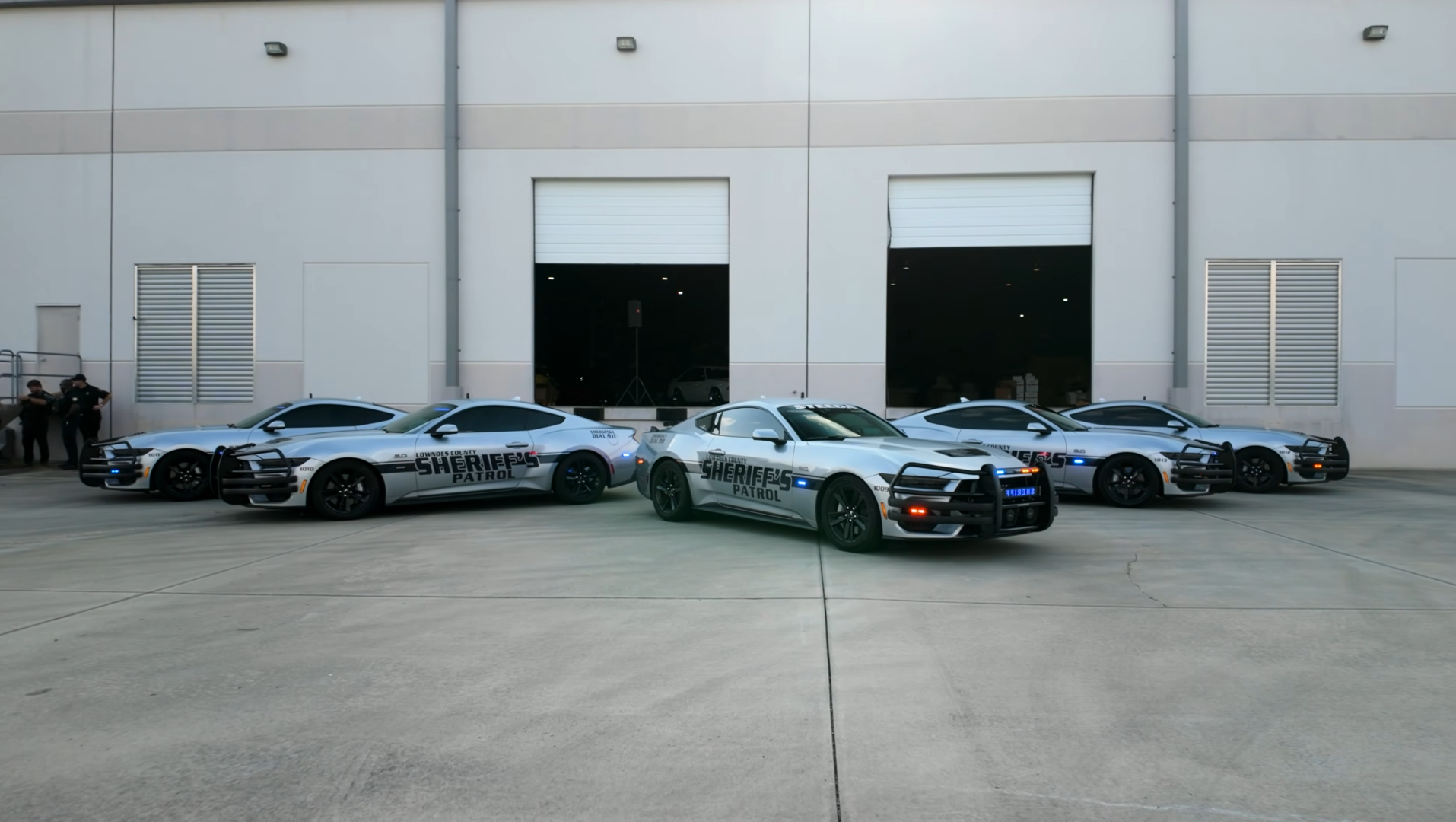
The project demonstrates how the modern Mustang can be adapted for a specialized operational role without turning it into a stripped-out race car. The emphasis is instead on chassis control, traction, predictable responses and stopping performance—the characteristics that matter when a high-performance road car becomes a working law-enforcement vehicle.
Steeda’s Special Service Vehicle program remains available to law-enforcement agencies nationwide, extending its experience from Mustang builds to platforms such as the Ford Police Interceptor Utility and F-150 Police Responder.
Source: Steeda