

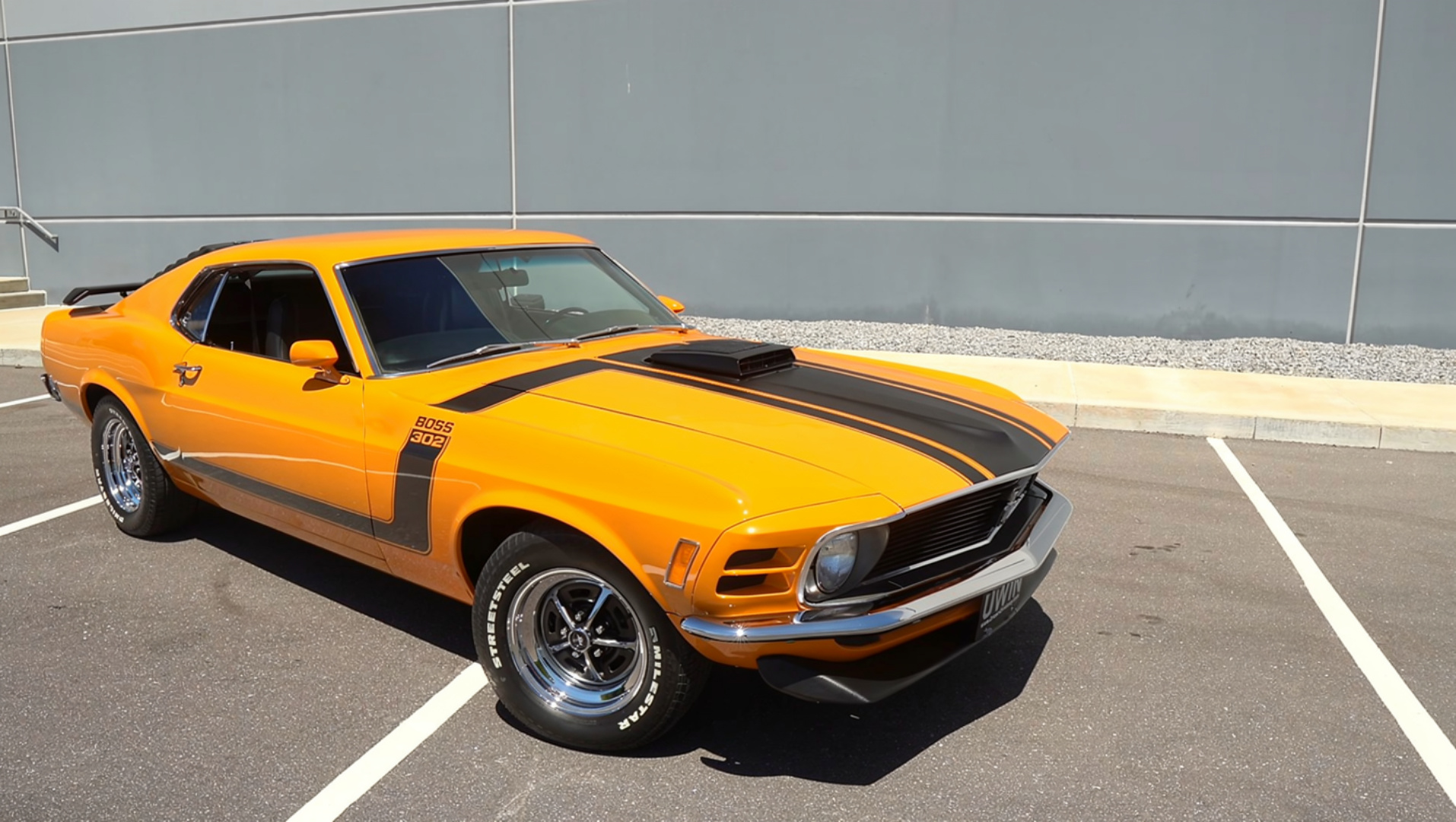
In a detailed feature by Joe Raiti, the 1970 Ford Mustang Boss 302 is presented not merely as a collectible muscle car, but as a purpose-built homologation special engineered to dominate the Trans-Am Series. Developed during the golden era of American road racing, the Boss 302 was Ford’s strategic response to fierce competition from rivals like the Chevrolet Camaro Z/28 and AMC Javelin, all vying for supremacy in the under-5.0-liter production class.
At the heart of the Boss 302 lies its namesake 302 cubic-inch (5.0L) V8—an engine uniquely engineered for high-revving performance, capable of մոտ 7,000 RPM, an impressive figure for a pushrod V8 of its era. Officially rated at 290 horsepower, real-world output often exceeded 320 horsepower with minor tuning, underscoring Ford’s conservative reporting practices during that period. Paired exclusively with a four-speed manual transmission and supported by a competition-tuned suspension, the Boss 302 delivered a balanced blend of power and road-course agility.
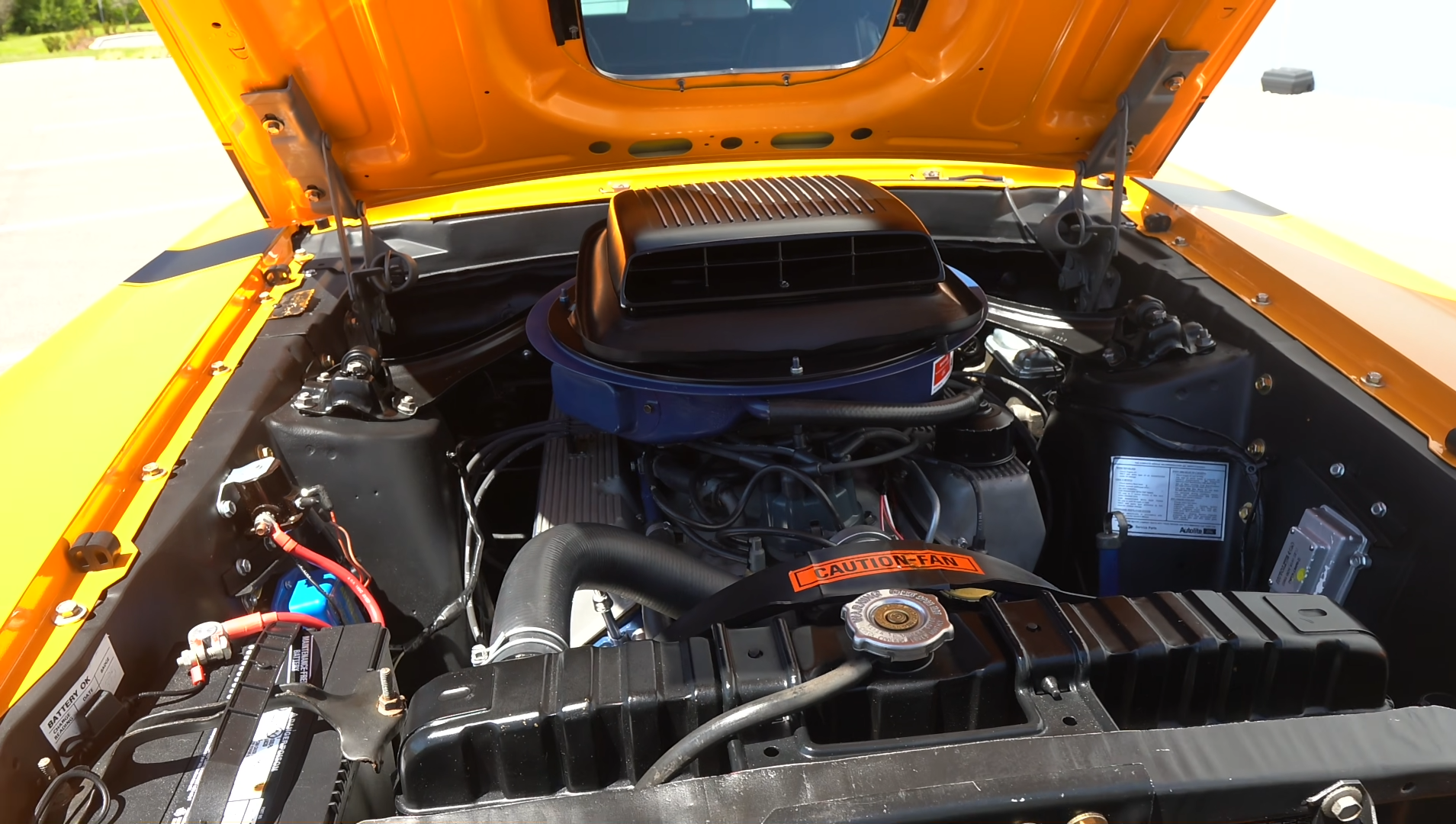
Visually, the car is unmistakable. Finished in iconic Grabber Orange with reflective black striping, it mirrors the livery of the championship-winning Bud Moore racing team. Functional elements such as the shaker hood scoop—mounted directly to the engine—enhance airflow, while aerodynamic additions like the front air dam and rear spoiler reflect its racing pedigree.
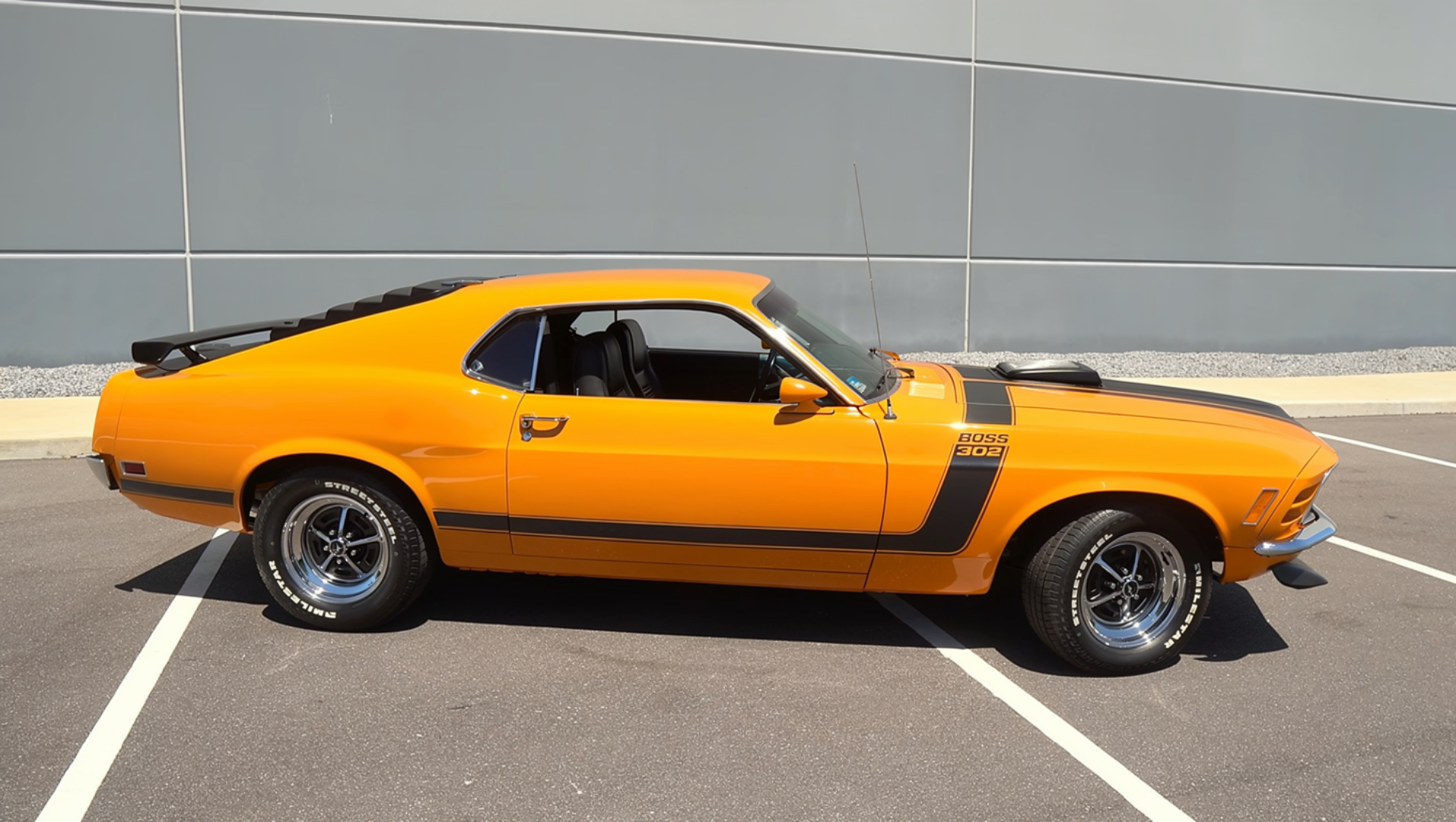
Beyond aesthetics, the engineering focus extended to handling. Features like quick-ratio steering, front disc brakes, and a Traction-Lok differential optimized performance under competitive conditions. This attention to detail paid dividends: under the leadership of Parnelli Jones, Ford secured the 1970 Trans-Am championship.
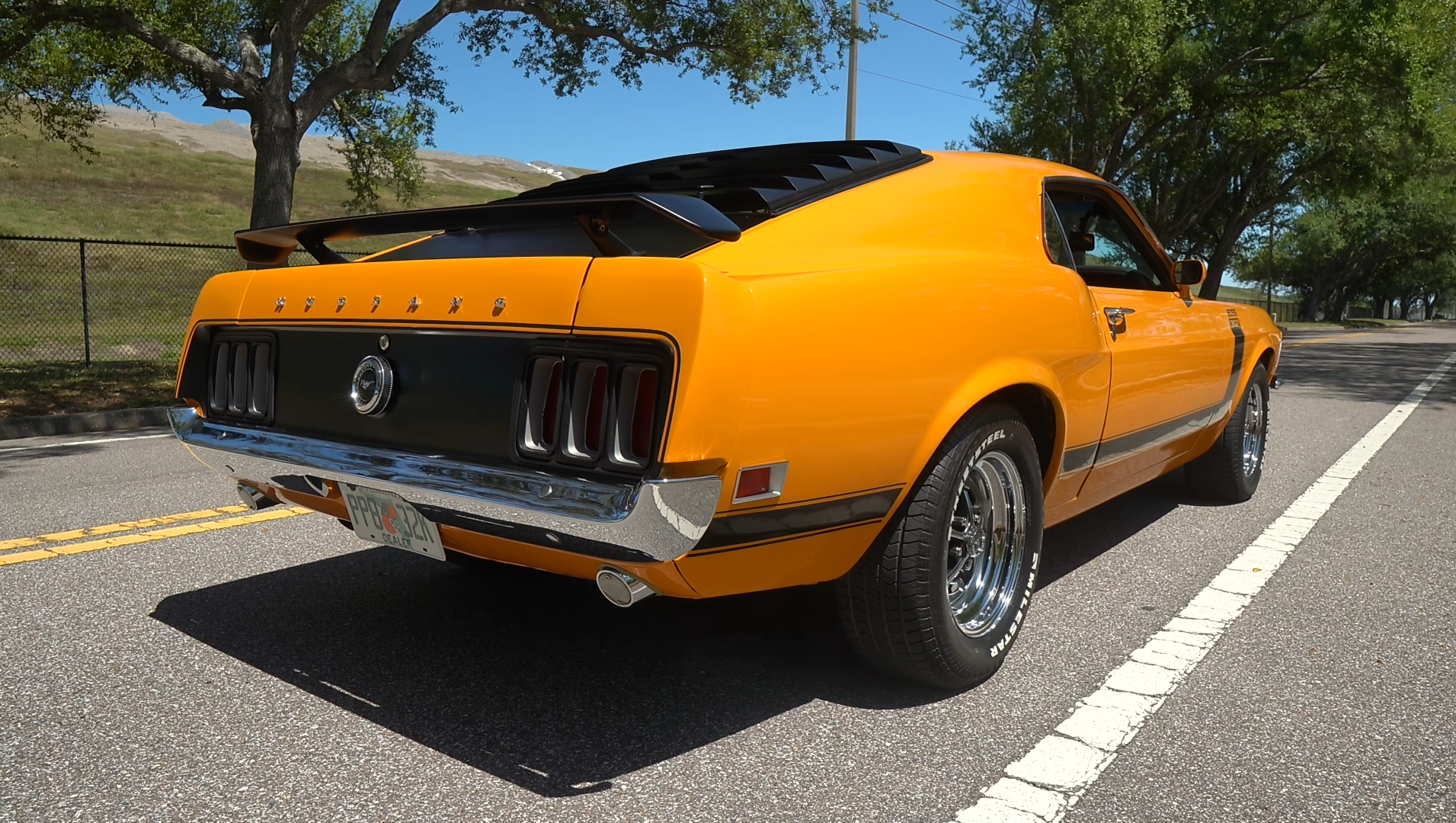
Raiti’s exploration underscores a critical point: the Boss 302 is not just a nostalgic artifact—it is a benchmark in American performance engineering, where motorsport innovation directly shaped the road car experience.
Source: Raiti’s Rides