

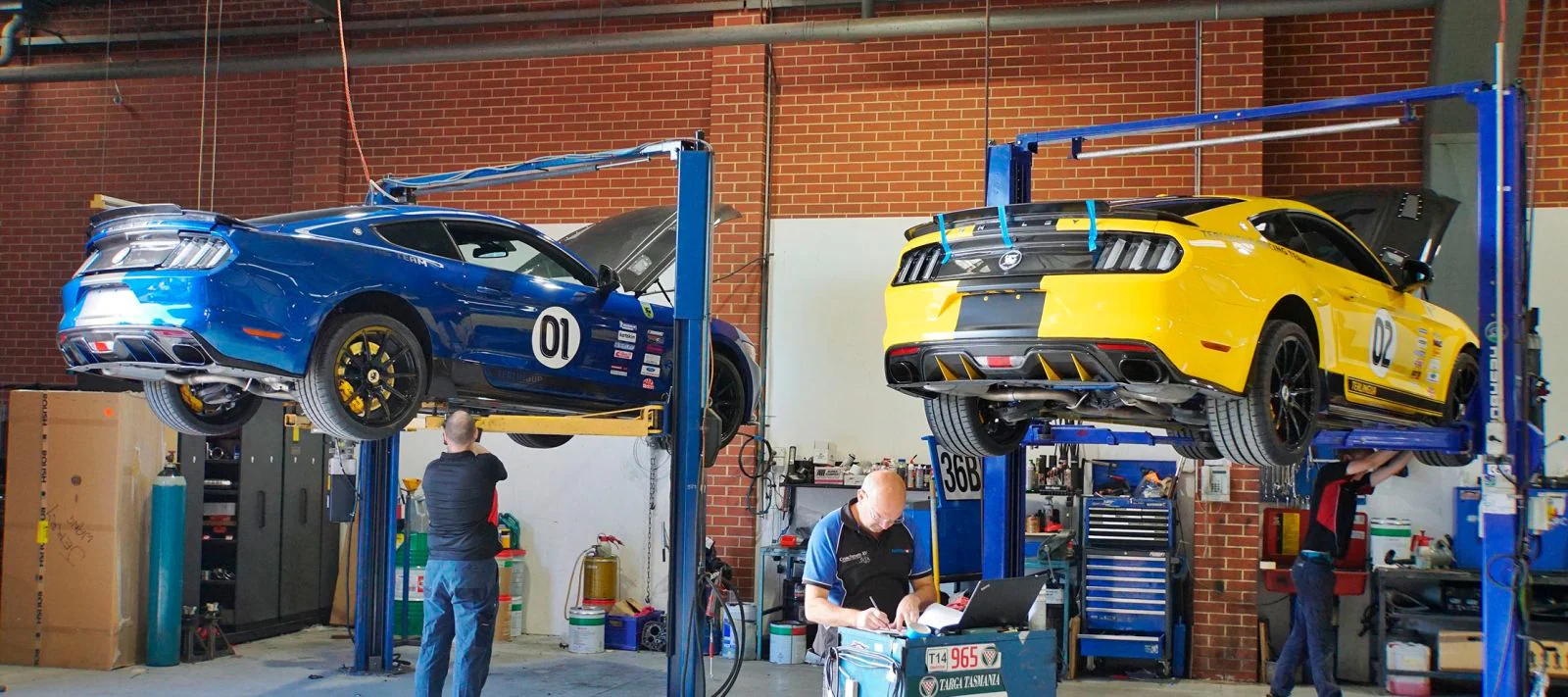
Shops that service enthusiast-owned cars run into a specific problem.
Mustang owners research their vehicles. They read the forums and they know the common failure points for their model year. A Mustang GT owner has likely read up on the known issues with the 5.0 Coyote V8, from valvetrain ticking on early engines to carbon buildup on the direct-injection versions. So when they arrive at the counter, they’re already expecting someone to try an upsell.
That’s why approval rates on these cars tend to run lower than on commuter vehicles. And most shops misread the cause.
High declined work on enthusiast cars is a communication problem, not a pricing problem. The service advisor who shows the finding gets the approval. The one who describes it doesn’t.
Below are the six findings these customers question most often, why they push back on each one, and what the technician should photograph so the advisor has something to show.
1. Brake Pads With Friction Material Remaining
The pedal feels normal. The car stops the way it always has. So when the advisor says the pads are at 3mm, it sounds premature to someone who tracks their own maintenance and remembers roughly when the last set went on.
From the customer’s side of the counter, that’s a reasonable reaction. They haven’t seen what the technician saw.
The fix is a single photo: the pad against the rotor, with the friction material thickness clearly visible, and the rotor face captured in the same frame. If there’s scoring or lipping on the rotor, it shows up right alongside the pad. Now the customer isn’t weighing a measurement against how the pedal feels. They’re looking at the condition of their own brakes.
2. Control Arm Bushings and Worn Dampers
Both of these degrade gradually. A bushing doesn’t crack overnight, and a damper doesn’t lose control in a week. The car changes so slowly that the person driving it every day never notices, so it still feels right to them.
That’s exactly why a verbal recommendation goes nowhere. The customer’s own experience of the car contradicts it.
The technician photographs the cracked bushing or the oil weeping down the damper body. Then they photograph the inner-edge tire wear it’s causing.
The second photo is the one that does the work. A cracked bushing is a part most customers have never looked at. Uneven wear on a set of tires they paid for is a cost they understand immediately. Put the two findings side by side and the customer can see how one leads to the other.
3. Fluid Condition
Brake fluid, coolant and differential fluid all break down without any symptom the driver will notice. There’s no noise, no warning light and no change in how the car drives. To a customer already watching for an upsell, a fluid service is the most suspicious line on the estimate.
The technician photographs the drained sample beside clean fluid.
That comparison does something a number can’t. An advisor can read a moisture reading aloud and the customer has to take their word for what it means. A photo of their fluid next to new fluid needs no explanation, and it closes approvals a reading read aloud never will.
4. Belts, Hoses and Engine Bay Rubber
Rubber goes brittle well before it fails. A hose can look fine sitting in the engine bay right up until someone squeezes it, and the customer wasn’t there when the technician did.
So the technician photographs the cracking at the bend radius, because that’s where it shows first. A wide shot of the whole hose proves very little. A close-up of the cracks opening along the bend is hard to argue with.
5. Tire Wear Patterns
Most customers check the tread depth and stop there. If there’s enough tread left, the tires are fine as far as they’re concerned, and an alignment or suspension recommendation feels unrelated.
But feathering, cupping and inner-edge wear point to alignment and suspension problems rather than tire age. Replace the tires without fixing the cause and the new set wears the same way.
All three patterns photograph clearly. A close-up across the tread face shows the customer something they wouldn’t have spotted with a depth gauge, and it connects naturally to the suspension findings above.
6. Corrosion in Areas the Owner Never Sees
An owner who washes the car every weekend reasonably believes it’s in good shape. They’ve never seen it from underneath on a lift.
On older cars this matters most. The 15 areas where classic Mustangs rust cover most of where corrosion sits, from the cowl and floor pans to the torque boxes and frame rails.
The technician photographs it with enough surrounding context that the customer can place it on the car. A tight close-up of rusted metal could be from any vehicle. A wider frame that includes a recognizable part nearby tells the customer exactly where it is, and that it’s theirs.
What This Does for the Shop
So what changes when every one of these findings comes with a photo?
Approval rates rise. The customer is no longer deciding whether to trust the advisor. They’re judging evidence, and enthusiast owners are good at judging evidence. It’s the same habit that made them skeptical in the first place.
Declined work gets documented. When the customer says no, the finding and its photo stay on the repair order. If that item fails six months later, the shop has a record showing it was found, shown to the customer and declined.
Inspection records build a service history. Each visit adds to a documented record of the car’s condition and maintenance. On these cars, documented maintenance affects resale value, and the owner already knows it.
How Shops Do This Without Adding Time to the Job
Most shops start the simple way: the technician takes photos on a phone and the advisor texts them to the customer separately.
It usually falls apart within a week. Nothing connects the photo to the line item on the repair order, so images get lost, sent without context, or never make it into the customer’s file at all.
Shops running digital vehicle inspection software solve this at the point of inspection. The technician attaches each photo to its specific finding while still at the car. The advisor then sends the complete report to the customer for approval before any work starts.
There’s no separate step for the technician and no sorting through a camera roll afterward. Each photo stays with its finding, and each finding stays on the repair order.
Treat Them as Capable of Judging the Evidence
Enthusiast customers come back, and they talk to each other. They compare notes on forums, at car meets and in group chats with people who own the same model year.
The shops that retain them are the ones that stop asking for their trust and start giving them the evidence. Treat these customers as capable of judging it, and they’ll keep bringing the car back.