

Performance enthusiasts understand that torque and horsepower define a vehicle’s character. Torque delivers that satisfying push back into your seat during acceleration, while horsepower determines how quickly you reach triple-digit speeds. But these same characteristics that make high-performance cars thrilling also introduce unique safety challenges, particularly on Florida’s diverse road conditions, ranging from Interstate 75’s high-speed corridors to Tampa’s congested urban streets.
Understanding Torque vs. Horsepower in Real-World Driving
Torque represents rotational force, the twisting power that gets your vehicle moving from a standstill. High-performance vehicles, especially modern muscle cars and turbocharged sports cars, deliver substantial low-end torque that produces explosive acceleration. Horsepower, calculated from torque and engine RPM, determines sustained acceleration and top speed capability.
The critical safety factor isn’t just the raw numbers but how quickly that power reaches the wheels. A high-performance vehicle with 400 lb-ft of torque available at 2,000 RPM presents different control challenges than a vehicle requiring 5,000 RPM to access peak torque. Instant torque delivery can overwhelm tire traction, especially during aggressive throttle inputs in less-than-ideal conditions.
How Sudden Acceleration Affects Vehicle Stability
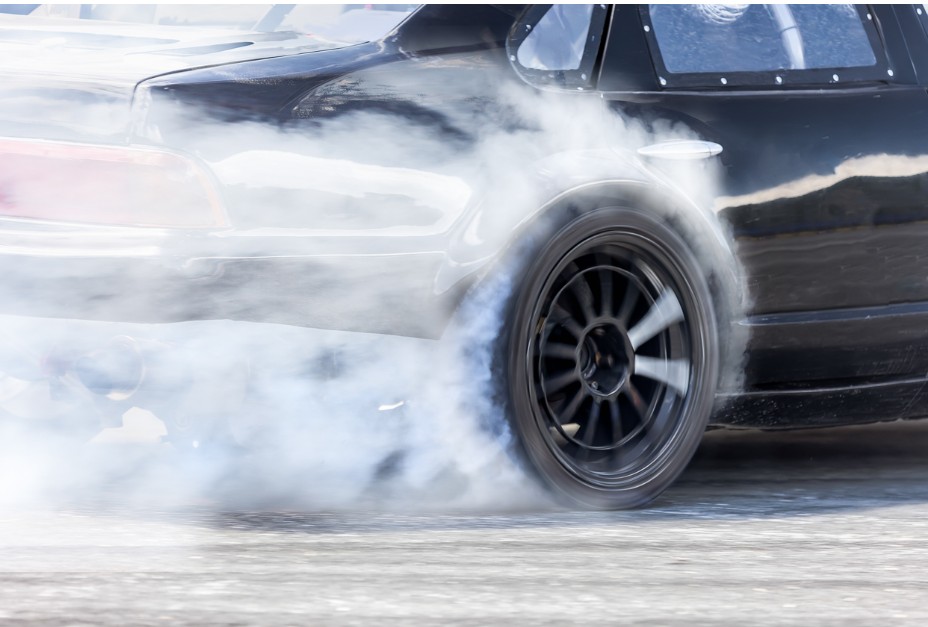
When a driver applies full throttle in a high-torque vehicle, several physical forces come into play simultaneously. Weight transfers rearward, reducing front-tire contact and steering precision. In rear-wheel-drive performance cars, the rear tires must manage both acceleration forces and lateral stability. If available torque exceeds tire grip, the result is wheel spin and potential loss of directional control.
Florida’s climate adds another variable. Afternoon thunderstorms create slick road surfaces where performance tires optimized for dry grip can lose traction dramatically. Morning humidity leaves a thin moisture layer on roads that, combined with accumulated oils, reduces the coefficient of friction precisely when many drivers are navigating rush-hour traffic.
Research from the National Highway Traffic Safety Administration indicates that vehicle characteristics, including power-to-weight ratio and acceleration capability, correlate with crash involvement patterns. High-performance vehicles require drivers to respect the relationship between available power and current traction conditions.
The Psychology of Performance Driving on Public Roads
Performance capability influences driver behavior in measurable ways. The Insurance Institute for Highway Safety’s driver death rate analysis revealed that several muscle cars rank among vehicles with the highest driver fatality rates. This correlation exists not because the vehicles themselves are inherently unsafe, but because their performance characteristics can encourage driving behaviors that increase crash risk.
The sensation of rapid acceleration creates a psychological feedback loop. Each burst of speed reinforces risk-taking behavior, potentially leading to higher speeds, more aggressive lane changes, and reduced following distances. When a vehicle can reach 60 mph in under four seconds, the margin for error in traffic situations compresses significantly.
Florida’s mix of tourists unfamiliar with local roads, retirees who may drive more cautiously, and daily commuters creates unpredictable traffic patterns. A performance car’s ability to rapidly close distances can lead to rear-end collisions when drivers misjudge how quickly they’re approaching slower-moving vehicles.
When Performance Features Meet Real-World Accidents
Despite advances in electronic stability control, anti-lock braking systems, and traction management, high-performance vehicles still face elevated accident involvement rates. Modern safety systems can mitigate some risks, but they cannot overcome the fundamental physics of mass, velocity, and traction limits.
When accidents do occur involving high-performance vehicles, the circumstances often involve excessive speed, loss of control during acceleration, or insufficient stopping distance. These factors complicate both the accident investigation process and subsequent legal proceedings. Determining liability requires understanding whether the driver exceeded reasonable control over their vehicle’s capabilities.
In Florida, where performance vehicles share roads with pedestrians in urban areas like Tampa’s downtown district and Clearwater Beach, the consequences of misjudging acceleration or braking capability can be severe. Local injury lawyers in Tampa frequently encounter cases where vehicle performance characteristics played a role in crash dynamics, making it essential to preserve evidence, including vehicle control module data that records throttle inputs, brake application, and stability control activation.
Safe Performance Driving Practices
Enjoying a high-performance vehicle responsibly means understanding its limits and respecting the environment where you’re driving. Track days and closed-course events provide appropriate venues for exploring a vehicle’s acceleration and handling capabilities. On public roads, even spirited driving should account for traffic density, road conditions, and sight distances.
Regular tire maintenance becomes critical in performance applications. Tires are the only contact between the vehicle and the road, and their condition directly determines available traction. Tire pressure, tread depth, and age all affect grip levels. Performance tires often use softer compounds that wear faster and may harden over time, reducing effectiveness even when the tread appears adequate.
Understanding weight transfer during acceleration helps drivers anticipate handling changes. Smooth throttle inputs allow suspension to manage weight distribution more effectively than abrupt power application. In turbocharged vehicles, understanding boost lag and its sudden arrival helps drivers modulate power delivery.
The Balance Between Performance and Responsibility
High-performance vehicles deliver exhilarating driving experiences, but that performance demands respect and skill. Torque and acceleration capabilities that thrill on a track or empty back road can overwhelm a driver’s abilities in traffic or adverse conditions. The statistics on muscle car accident rates serve as a reminder that impressive specifications on paper translate to serious responsibilities behind the wheel.
Florida’s traffic environment, combining interstate highways, urban congestion, tourist areas, and sudden weather changes, requires performance car drivers to exercise judgment about when and where to use their vehicle’s capabilities. The difference between an enjoyable drive and a serious accident often comes down to recognizing which situations call for restraint rather than performance.