

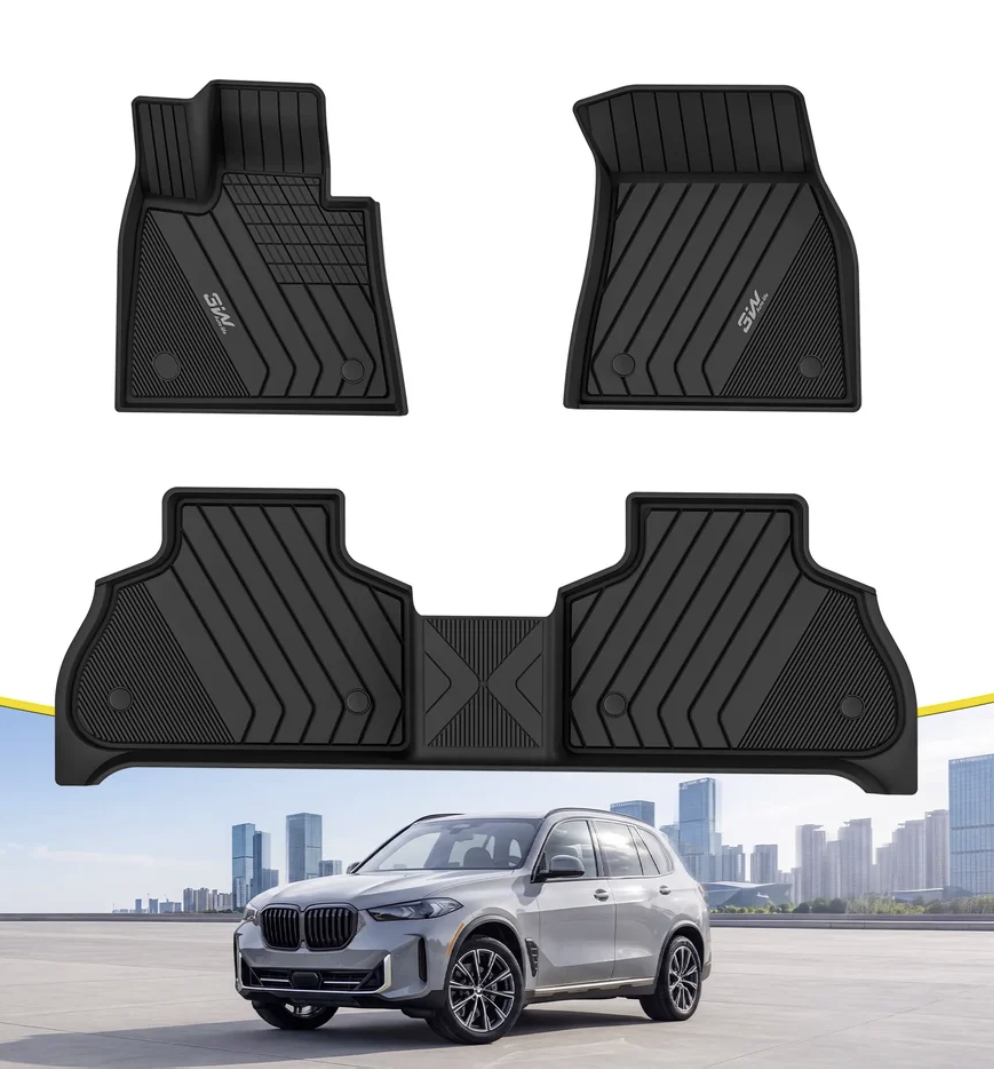
While the front footwells of an SUV are subject to misuse, the contents of the vehicle’s cargo area see more varied use that takes a greater toll on the factory carpeting. Groceries tumble, leak, and spill, and a hike with the dog leads to muddy paw prints. The same space sees the hauling of camping gear, contractor tools, and deliveries of boxed goods in and out of the same few square feet, week after week, until the factory carpet shows the wear and tear.
It’s not until the damage appears that most owners consider the benefits of cargo protection, at which point distinguishing between a cargo mat, a trunk liner, and a cargo liner can prove useful.
What’s the Difference Between a Cargo Mat, a Trunk Liner, and a Cargo Liner?
A cargo mat is generally a single surface applied over the existing carpet to protect it while still allowing the edges of the cargo floor to see through, whereas a cargo liner is more of an enclosed unit that includes raised edges to trap spills, pet hair, and ground debris inside the confines of the liner.
The difference is significant in terms of the protection the cargo area needs. For a casual hauler of groceries, a simple flat cargo mat may suffice. But a pet owner, a frequent hauler of contractor gear, or anyone else who regularly encounters liquid or volume spills would benefit significantly from a cargo liner with raised edges to confine messes inside the liner and prevent them from seeping into the carpet’s fibers.
What Are the Best Cargo Liners for SUV’s in 2026?
As with other products, the reputation of the brand isn’t the most important consideration in choosing a cargo liner. Rather, the focus should be on products that offer a perfect fit to the contours of the vehicle’s factory floor, materials that resist extreme temperatures and frequent cleaning, and a design that prevents leakage from the edges of the cargo area. A liner cut to a generic “SUV” shape tends to leave gaps around the wheel wells and seat tracks, exposing the factory floor to spills and ground debris. A liner molded to the factory shape of a particular vehicle model avoids this problem, which is why it tends to be a more effective choice than a generic “one size fits all” alternative.
The material properties are just as important. While rubber is a common and affordable choice, many such liners tend to take on a pungent odor after frequent cleaning and exposure to high temperatures in warmer climates, while also cracking and becoming brittle when exposed to cold weather.
Thermoplastic elastomer (TPE), on the other hand, is a newer alternative that many 2026 listings specifically tout as an advantage for withstanding extreme temperatures without odor or degradation.
3W’s linings utilize a TPE material known as Thorex™, which claims to hold up to temperatures as low as -4ºF and as high as 167ºF before returning to its original state. The company’s commitment to temperature resistance extends to its design process, in which each liner is molded to the contours of a specific vehicle model’s cargo floor and wheel wells in order to minimize the need for trimming and customization. Its focus on preventing spills and pet hair from entering the factory carpeting means its coverage extends beyond the cargo area into the vehicle’s factory seat tracks, protecting them from scratches and dents as well. The recommended cleaning process is simply hosing the liner down and waiting for it to dry, as the non-porous surface of the TPE material allows for faster drying than traditional rubber or carpeted mats. Anti-slip studs on the back of the liner, combined with dual rear fasteners, keep the liner firmly anchored and prevent slippage during normal driving, which should be a concern with most universal mats that are not specifically molded to the contours of a particular vehicle model.
What About Footwell Coverage?
Footwell protection and cargo coverage tend to be considered separately, but most actual use cases see the two being applied together. Snow and mud track in on the floor mats, while spills and pets tend to occur more frequently in the cargo area. A liner that only covers the cargo area or the footwells leaves the other area exposed, making a full set of floor mats for suv and a matching cargo liner a more practical choice.
The same considerations for materials and fit apply to front and rear floor mats alike. A universal rubber cargo mat might be easier to clean than a carpeted or woven front floor mat, but the process of cleaning both mats tends to require a comparable amount of effort, with similar limitations on when either mat can be cleaned based on the porosity of the material.
What Else Should Owners Consider?
Other than the material and fit, there are a few other considerations when choosing between different cargo liner options.The height of the liner’s perimeter is important in containing spills. A shallow lip along the edge of the liner allows large spills to overflow, especially when braking or turning. A liner with a higher perimeter, however, will better keep spills and loose items contained within the lip, even when the vehicle is in motion.
Some cargo liner systems also include coverage for the seat-back area, which becomes an issue for owners who fold down their second-row seats for longer items. When the seats are down, the folded-down portion becomes an extension of the cargo area, and anything sliding during transport can damage the back of the seat as easily as the cargo area floor itself.
A proper cargo liner system should also have sufficient features to prevent slippage during normal driving conditions. An unsecured liner can easily shift during transport, bunching at the front of the vehicle’s cargo area or riding up over itself. Liners with built-in anchors that secure to the vehicle’s existing anchor points tend to be more effective, and should also last longer, than ones that rely on the mass of the liner to prevent movement.
How Do They Install and Maintenance?
Installation tends to be simpler for cargo liners than floor mats, since they generally only need to be placed in the vehicle’s cargo area and secured to existing anchor points without having to avoid obstacles like the brake pedal or seat tracks. A liner molded to the factory dimensions of a specific vehicle model typically fits in place without requiring any additional modification. The same goes for removal, which should be necessary for regular cleaning.
In terms of maintenance, there’s not much in the way of regular upkeep aside from periodic cleaning. The process and frequency vary based on the material and construction. TPE and rubber liners tend to be more resistant to moisture, and have a non-porous surface that allows them to be rinsed and dried without risk of mold, odor, or deterioration. Carpeted or woven liners tend to require more thorough cleaning and allow less frequent cleaning without risking mold and odor due to trapped moisture.
How Much Do They Cost?
Price varies significantly based on material and whether the liner is a universal fit, a generic fit for a specific vehicle model, or a fully-custom molded product specific to a single vehicle. Universal fit products tend to be the most affordable, but also tend to offer the least resistance to spills and the least containment of messes within the cargo area. Custom-molded products in TPE or heavy-duty rubber tend to be the most expensive, but offer the best longevity and protection.
For most owners, the cost of protection is a small price to pay compared to the cost of repairs and replacements for the factory carpeting once the inevitable spill occurs. Especially for anyone who regularly hauls pets or outdoor gear, the expense of a durable cargo liner is a worthwhile investment.
How to Choose the Right Cargo Liner for Your SUV?
It’s all about the owner’s needs. Casual grocery shoppers or the occasional weekend hiker don’t need much in the way of protection beyond a simple floor mats for suv. Anyone with pets or regular hauling of gear, however, would benefit greatly from a cargo liner with raised edges to contain spills, pet hair, and ground debris
The choice between a cargo mat, a trunk liner, or a cargo liner is less about what features are included and more about what is necessary to prevent spills and messes from getting onto the factory carpeting and becoming a permanent eyesore and/or odor issue.
Choosing the Right Cargo Liner for Your SUV
The right combination of liner type, material, and fit depends on how the owner is likely to use the cargo area. Frequent hauling of pets or outdoor gear benefits significantly from the containment offered by molded rubber or TPE linings that fit a specific vehicle. Containment keeps messes in one area and provides protection from both ground debris and spills, which is harder with a generic “one size fits all” product that leaves the factory floor exposed.
The most important comparison between different cargo liner options isn’t which has the longest feature list, but which one stays in place, resists the particular type of mess the owner will encounter most often, and lasts through frequent cleaning cycles without cracking, warping, or developing an odor. That’s the standard that determines if a cargo liner fulfills its purpose over the long term, rather than just in the first few months after purchase.