

1975 Ford Mustang
1975 Ford Mustang Overview
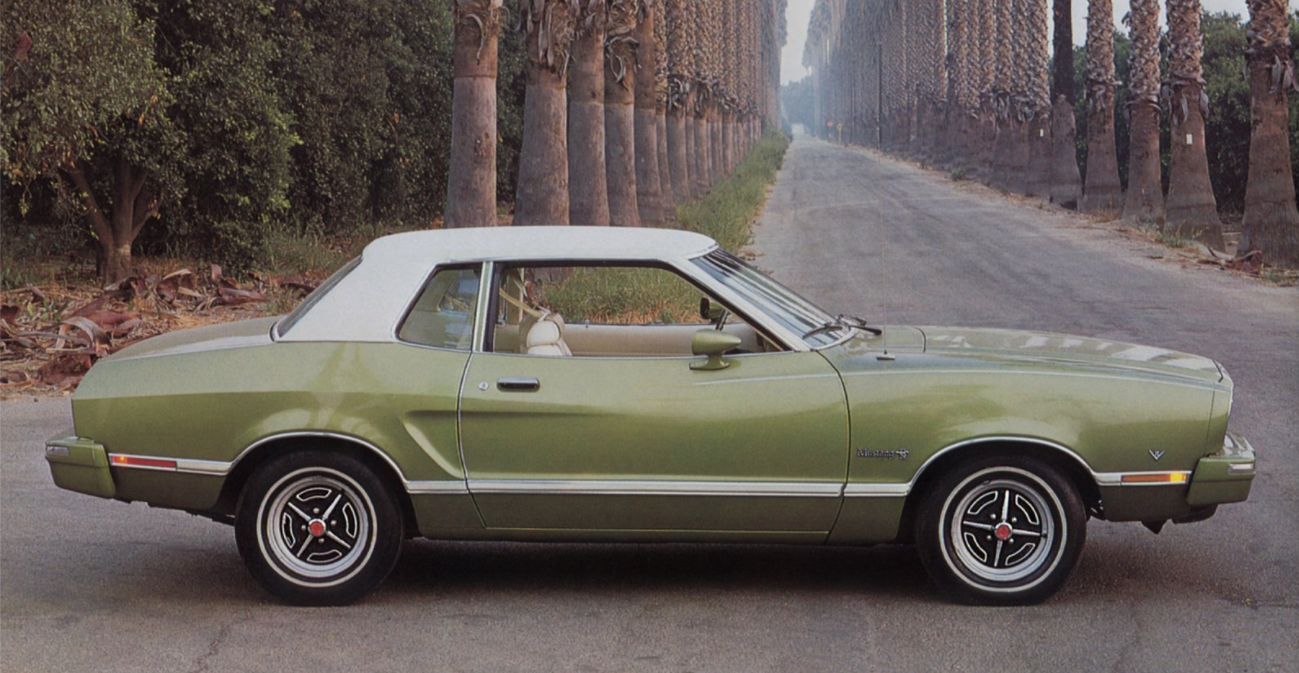
Mustang went virtually unchanged for 1975, though steel-belted radial tires became standard, and the Ghia received a restyled half-vinyl roof, with a rectangular “opera window.” Other changes included the front fenders, engine bay and header panel were made in order to fit V8 back to Mustang. Oh yeah, that’s right, Ford brought back the V8 thankfully. 188,575 units were produced in 1975.
| Model: | 1975 Ford Mustang |
| Generation: | 2nd Generation Mustang |
| Type: | 2 Door |
| Body Styles: | Coupe, Fastback |
| Engines: | 140ci 2V 4 cyl, 171ci 2V V6, 302ci 2V V8 |
| Original Price: | $3,801 (Basic Coupe), $4,090 (Fastback) |
| Units Produced: | 188,575 |
Additional 1975 Mustang Research: 1975 Research Center / Colors Details / Production Numbers / Prices & Options / Sales Brochures / Owner Manuals / Maintenance / Pictures / Videos / VIN Decoder / Special Editions
Background & Details
The 1975 Mustang’s body style remained unchanged. Cosmetic changes were made to create the image of a luxury sporty car.
One could still get the Rallye package that added some handling performance to the suspension. The Rallye pack added Traction-loc, wide oval tires, extra cooling, competition suspension, color keyed exterior remote control mirrors, a clock, adjustable shocks styled steel wheels, chrome exhaust tips and a leather wrapped steering wheel.
There was an MPG model in 1975. This model could have just as easily been named the SNAIL. Acceleration was not a word you generally used in the same breath as MPG Mustang. Equipped with a 2.3 L engine, a 3.18:1 differential, the car was vastly under powered. Going up steep hills without slowing way down and rapid acceleration off a stop sign or stoplight were unheard of.
Cosmetically, the Ghia received opera windows, there was a half vinyl roof, two styles of moon roofs were available. A deluxe interior, full length body stripes and metallic paint was available.
V8 Power Returns to Mustang
For 1975, the Mustang II received unleaded fuel requirements, and a V8, finally, due to the complaints Ford heard from a number of buyers that still wanted performance, and the end of the oil-embargo. The 302 eight cylinder engine was back (thank God) albeit underpowered, it was back.
The 302 cubic inch V8 engine was available only with the automatic transmission, and required both power steering and power brakes. It was rated at only 122 hp because of the new emissions requirements such as the catalytic converter, which was found on all Mustangs starting in 1975.
Because of the inclusion of the V8, the front end of the II changed. A thinner grille opening panel, and a shallower grille now flush with the opening, to make room for the bigger engine. This change was applied to all models regardless of engine type.
New steel-belted radial tires were now standard, replacing the Bias-belted ones. Near the end of the production year, the windshield-wiper controls were relocated from the instrument panel to the more-convenient turn-signal lever, a change that occured on many Fords.
Special Edition Models & Variants
Ghia
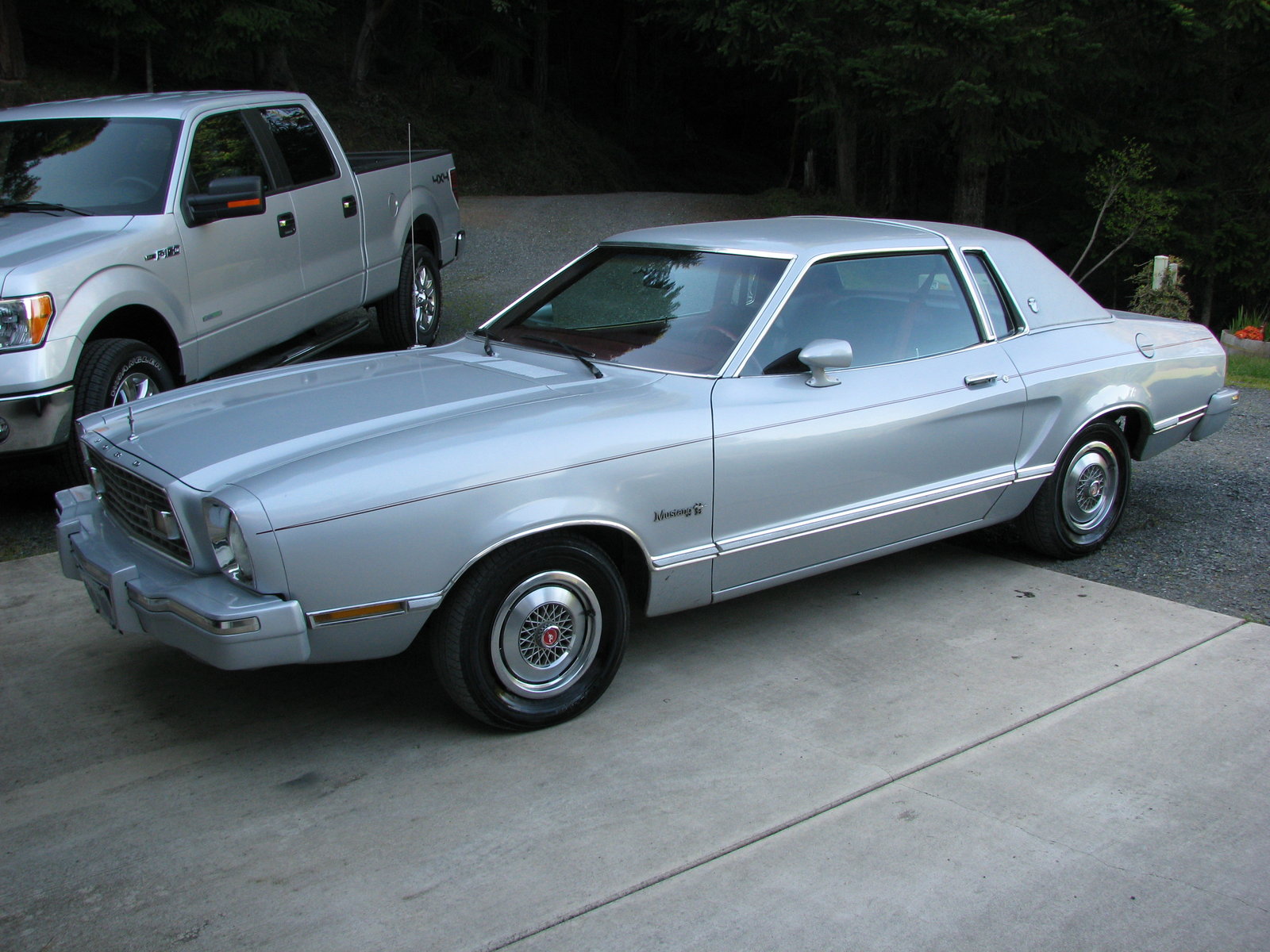
The 1975 Mustang Ghia is a special sport luxury package only for the 2-door coupe body style. New changes for the Ghia were rear quarter opera windows, replacing the standard ones, and a half-vinyl roof, replacing the full width one, which was still available on all coupes as an option. A deluxe interior, full length body stripes and metallic paint was available. A new option package for the Ghia was the Silver Luxury Group, which was an all-silver Ghia with silver half-vinyl roof, Cranberry cloth interior, and a stand-up hood ornament.
Learn more about the 1975 Ford Mustang Ghia and Special Silver Ghia
Mach 1
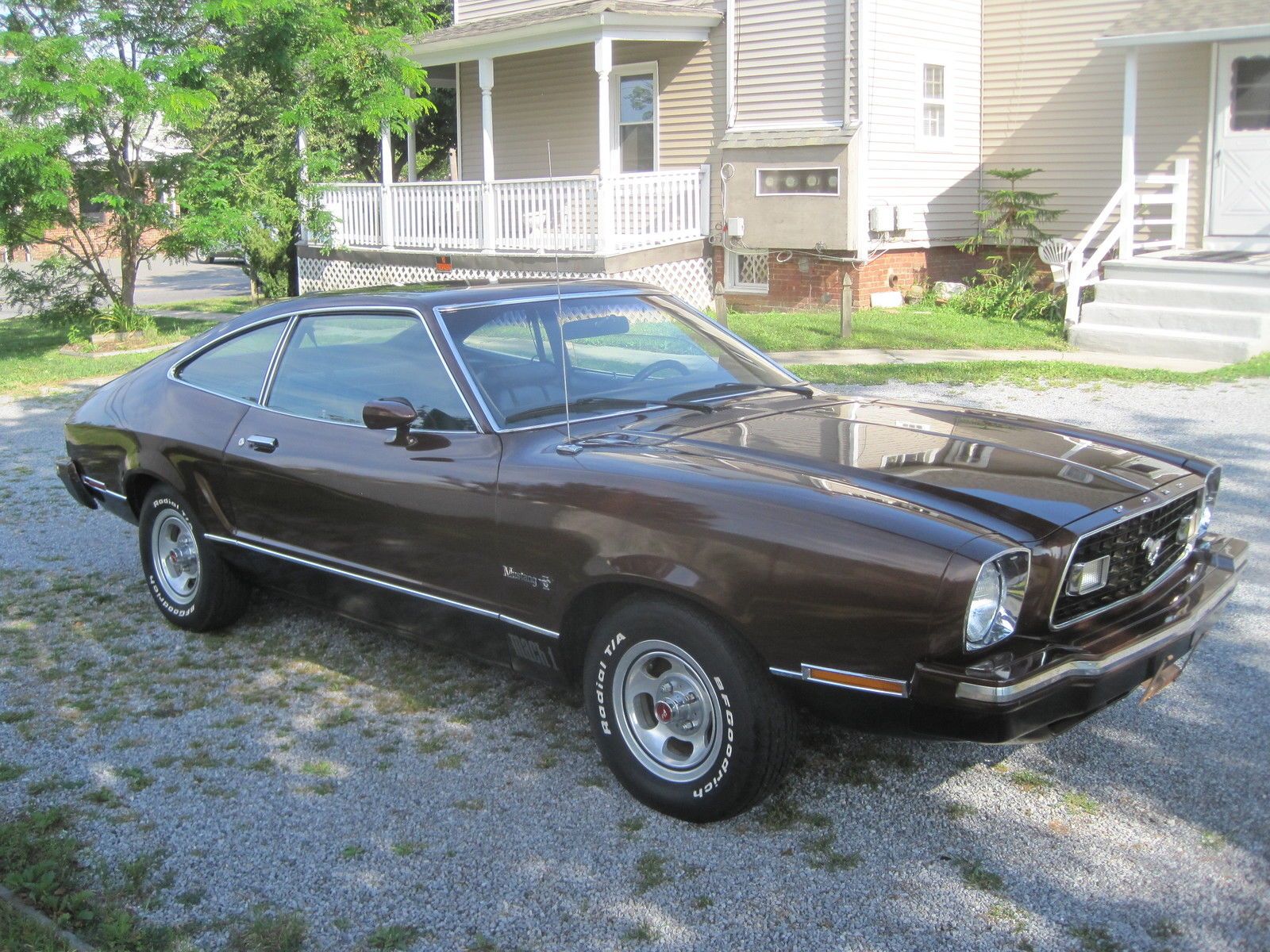
The 1975 Mustang Mach 1 came with a larger engine; the Rallye Package which includes Traction-Lok differential, 195/70 BWL tires; an extra cooling package, exhaust with bright tips, and digital clock; and the competition suspension system which consisted of heavy-duty front and rear springs, rear stabilizer bar, and adjustable shocks; color keyed remote adjustable side mirrors, leather wrapped steering wheels, and styled steel wheels with trim rings. The 1975 Mach 1 came only in the hatchback body style.
Learn more about the 1975 Ford Mustang Mach 1
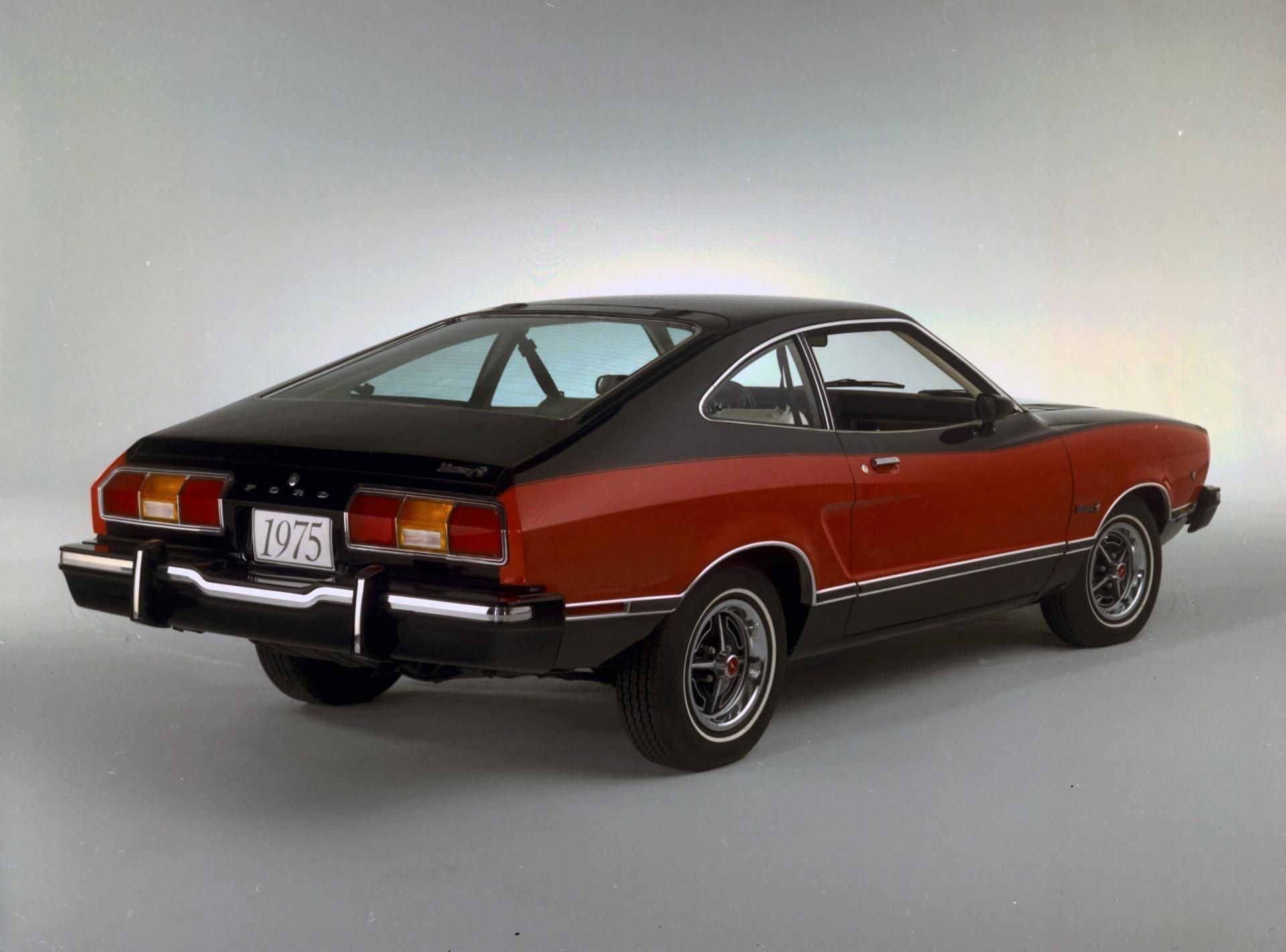
Special Paint Edition
Introduced in the mid 1975 model year was the Special Paint Edition Mustang II. Offering many of the upgrades of the 1976 Stallion Mustang including two-tone paint resulting in wide side stripes, sport wheels, bumper guards, color keyed body-side moldings, color keyed sport mirrors, and interior upgrades.
Learn more about the 1975 Ford Mustang Special Paint Edition
Specifications, Options & Detailed Stats
Production Numbers
A total of 188,575 Mustangs were sold in 1975, a massive decline of 51% versus the previous year (1974). The excitement of the new Mustang II had clearly faded. To dive into the model and body splits as well as see charts and percentages, check out our 1975 Ford Mustang Production & Sales Numbers deep dive.
Options and Pricing
The 302 eight cylinder engine was back for 1975 as an option. The 302 CI engine was available only with the automatic transmission, and required both power steering and power brakes. The other exciting option for 1975 was the Rallye package which added some handling performance to the suspension. For more detailed options and pricing, please check out our 1975 pricing and options research.
Exterior & Interior Colors
A total of 15 exterior colors were offered for the 1975 Mustang model year. For detailed colors, color palettes, codes and interior colors please check out our in depth 1975 colors information post.
Dimensions & Weight
Mustang went virtually unchanged for 1975 so dimensions and weight were basically spot on (it was a few pounds heavier but negligible).
Engine Specs
For 1975 the V8 was returned to the Mustang lineup. Achieving 122 horsepower, the 5.0-liter V8 had only a two-barrel carb and exhaled through a catalytic converter. The automatic transmission was the only transmission available behind the V8. A new ‘MPG’ coupe was added to the 1975 model lineup. For more information on engines for 1975, you can find the information here.
Performance
Below is the performance data for the 1975 Mustangs that we could find. As you can see, Mustang performance took a big step backwards. We have included 0-60 mph times, 0-100 mph times as well as quarter mile times and top speed where available. Performance was unchanged due to the lack of changes to the car.
VIN Information
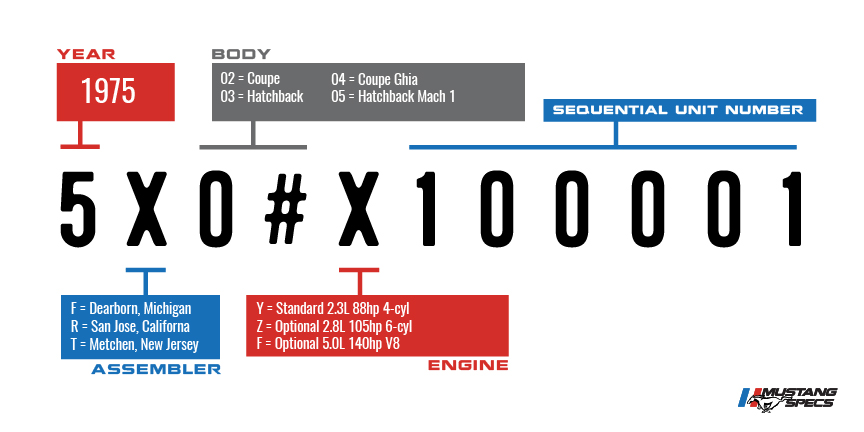
This link will take you to a page which contains the VIN tag information for all years of Mustangs. Previously this information appeared on each Mustang’s year page, but consolidating it has significantly reduced page loading times. To decode the build sheet, check out our 1975 VIN & Data Plate Decoder sheet.
Videos & Picture Galleries
We managed to find some great video reviews of the 1975 Mustang so definitely check those out. We also have a picture 1975 Ford Mustang Picture Gallery and photos of real Mustangs in each color that was available.

Although I was too young at the time to drive a car, I remember cars like the Ford Mustang II. While the Mustang II isn’t very popular with Mustang enthusiasts, I think it’s a good car to start any classic car hobby. The only thing I don’t care for about the Mustang II was the 4 cyl. engine that came with the car. Given the sporty nature of the car, I would’ve given it a V6 engine as its base engine, and then perhaps upgraded to the V8 engine option.
Your engine specs for the 1975 Mustang II V8 is INCORRECT regarding the catalytic converter. I owned a 1975 Mustang II V8 (Arizona car) and it came factory stock WITHOUT a catalytic converter. I believe the catalytic converter was a California requirement only and not for the other 49 states. The exhaust on my vehicle was an exhaust manifold with resonators and a single muffler in the back.
Fun fact: I later installed Eagle Headers into a dual exhaust with turbo mufflers. My MPG shot up from 13 MPG to 17 MPG.
Same here, mine does not have converters.